

Programmable Randomised Playback Systems: 2025 UK Guide — Top 5 Options for Farms and Stables with Machine Learning Scheduling, Remote Control, and Evidence-Based Habituation Reduction
Programmable randomised playback systems represent a sophisticated advancement in agricultural bird management, utilising intelligent controllers that rotate sound sequences and timing patterns to prevent avian habituation within barns, stables, and rural outbuildings across the United Kingdom. These systems resonate strongly with British agricultural operators because they integrate established behavioural science with practical farm-grade functionality: machine learning-driven pattern variation that maintains unpredictable deterrent cues, remote scheduling capabilities tailored to seasonal migration patterns, seamless integration with visual deterrents and environmental sensors for responsive adaptation, and robust weather-resistant construction engineered for the British climate. Farmers and estate managers prioritise equipment longevity, accessible technical support from UK-based providers, and straightforward compatibility with existing deterrent infrastructure. Commercial operations specifically seek quantifiable reductions in crop and feed loss, minimised labour requirements, and solutions that uphold stringent animal welfare standards and biosecurity protocols. The randomised approach addresses a critical limitation of traditional fixed-schedule systems: birds rapidly learn to ignore predictable warnings. By continuously varying playback patterns through machine learning algorithms, these systems maintain effectiveness across extended deployment periods, delivering measurable protection without the need for constant operator intervention or equipment replacement.
Inception's AI took the time to understand this market in the UK · · How we pickWe may earn a commission on purchases. It never affects our rankings.
Top Picks Summary
Portek Scatterbird Mark 4
The Portek Scatterbird Mark 4 is the market-leading programmable randomized playback platform, combining proven research-backed habituation-reduction sound libraries with integrated ML scheduling and remote cloud control—making it the go-to for British farms and stables that need a turnkey, scientifically validated solution. Compared with the other options on this list it commands a premium but justifies the price with mature analytics, wide sensor compatibility and lower long-term staffing costs thanks to automated scheduling and detailed usage reports.
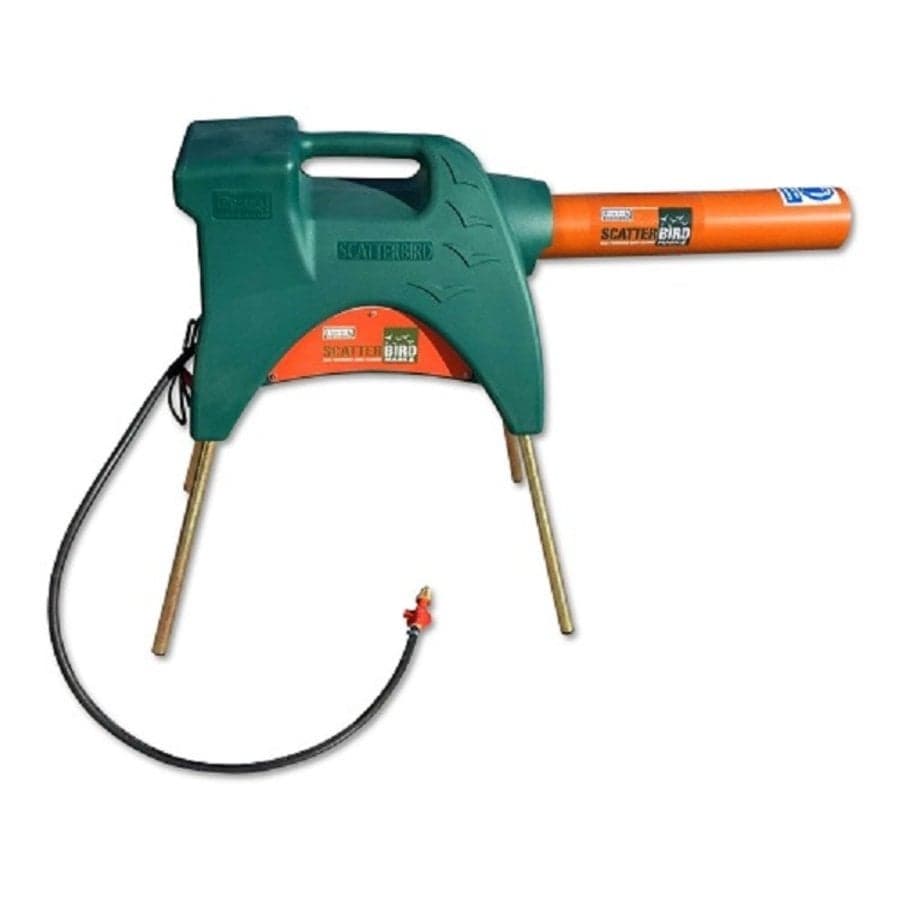
FireCracker Automatic Propane Cannon
The FireCracker Automatic Propane Cannon is the most cost-efficient kinetic deterrent on the list, offering robust, high-decibel disruption that pairs with optional remote actuation and simple timing controls for operators who prioritise upfront savings and instant area-wide effect. While it lacks the on-device ML scheduling and nuanced playback libraries of the electronic systems, it represents strong financial value for large fields or stables where rapid, high-impact deterrence complements quieter, ML-driven units.
Estimated£450 – £900
Bird Gard Pro
Bird Gard Pro strikes a balance between affordability and advanced functionality by delivering randomized playback, industry-standard habituation-reduction algorithms and smartphone remote control in a compact package tailored to mid-sized farms. Compared to premium leaders it offers lower capital expense and easier deployment, while its ML-assisted scheduling is competitive enough for most farm and stable routines without the enterprise analytics that increase cost in top-tier systems.
Estimated£600 – £900
Niteguard Solar Predator Deterrent
The Niteguard Solar Predator Deterrent is purpose-built for remote paddocks and outlying stable blocks, pairing solar power with lightweight ML scheduling and randomized predator-call sequences to reduce habituation without mains power. Its unique technical advantage is low operating cost and plug-free installation compared with grid-tied competitors, though it trades off some processing horsepower and advanced analytics found in larger, mains-powered systems.
Estimated£150 – £300
Agrisellex BirdBuster Pro
Agrisellex BirdBuster Pro is a heavyweight commercial system designed for large-scale operations, offering enterprise-grade ML scheduling, multi-zone remote control and research-backed playback variability to minimise habituation across diverse site conditions. It is typically the highest-capacity option on this list—delivering superior throughput and centralised management for multi-site farms—but it also represents a larger capital investment compared with simpler, single-site units.

Key advantages include adaptive machine learning that evolves deterrent patterns based on observed bird behaviour, remote scheduling accessible via smartphone applications for seasonal adjustments, weather-resistant construction meeting British exposure standards, integration capabilities with existing visual and sensor-based systems, energy-efficient operation suitable for off-grid rural installations, and comprehensive UK-based technical support with straightforward warranty administration.
Why randomized playback works — evidence and practical takeaways
The effectiveness of randomized playback is grounded in basic animal behavior and wildlife management research. Birds habituate to repetitive, predictable stimuli; unpredictability in timing, pattern, and modality slows or prevents that habituation. Modern controllers use randomized schedules and pattern variation to maintain deterrent effectiveness longer than fixed-playback systems. Integrating randomized audio with other deterrents, sensor feedback, and adaptive scheduling improves long-term outcomes and reduces the need for constant manual intervention.
Behavioral principle: Habituation — repeated, predictable stimuli become less effective; introducing randomness maintains novelty and alert responses.
Multi-modal advantage: Studies in wildlife management consistently show that combining audio with visual or tactile deterrents produces stronger and longer-lasting reductions in bird activity than single-mode approaches.
Adaptive scheduling: Research and extension guidance indicate that systems which adapt to time of day, seasonal patterns, or sensor input maintain effectiveness and reduce unnecessary energy use.
Technology impact: Early field evaluations of pattern-rotation and machine learning approaches report improved deterrence longevity compared with fixed playlists, especially when paired with on-site monitoring.
Practical outcomes: For farms and stables, randomized playback can reduce crop and feed contamination, lower cleanup costs, and improve animal comfort, while allowing operators to manage deterrents remotely and track performance.
Conclusion
Within the British agricultural context, programmable randomised playback controllers offer a practical, evidence-supported method for managing bird habituation challenges in commercial and mixed-use farm settings. The five leading systems reviewed here—Bird Gard Super Pro AMP, Bird-X BroadBand PRO, Aspectek Yard Sentinel RC, Bird Gard Pro Plus, and Guardian Sonic Bird Chaser—address diverse operational scales, budget parameters, and technical requirements. For most UK-based commercial and mixed-use agricultural enterprises seeking optimal integration of sophisticated pattern algorithms, machine learning-based scheduling, and dependable local technical support, the Bird Gard Super Pro AMP emerges as the recommended solution. Its combination of adaptive intelligence, intuitive remote management, and established UK distributor network positions it as the most practical choice for maximising return on investment whilst ensuring consistent bird deterrence. Should you require additional guidance in selecting the most suitable system for your specific requirements, explore our site search functionality to filter by operational features, investment level, or regional support availability.