

Duct-Mounted Gas Sensors for UK Barn Ventilation: Four CO2 Transmitters and One Portable NH3/CO2 Monitor
Four of the five instruments on this page measure carbon dioxide, not ammonia. That is worth saying plainly, because the category name promises NH3. Duct-mounted ammonia transmitters are a separate and much smaller product class built around consumable electrochemical cells, and the only ammonia capability represented here is the Aeroqual Series 500 — a portable monitor with an interchangeable NH3 head, used for spot checks and commissioning rather than fixed inside a duct. Everything below is industrial and OEM instrumentation supplied through HVAC and instrumentation distributors and specified by systems integrators; expect a quotation, an installer and a commissioning visit rather than a stable-supplies shelf. The numbers that matter for horses are also not the workplace ones. Great Britain's HSE sets a workplace exposure limit for anhydrous ammonia of 25 ppm as an 8-hour time-weighted average and 35 ppm over a 15-minute period (EH40/2005), and those figures exist to protect the people working in the building. Equine guidance targets far lower — stable ammonia is generally recommended to stay under about 5 ppm — and because the human nose only begins to register ammonia at roughly that same level, a stable that smells is already past the horse's threshold. A sensor configured against the workplace limit will therefore sit silent through concentrations that are already irritating equine airways. One further UK-specific point: barn ventilation controls built for the US market commonly run on 110 V or 24 VAC and will not drop into a 230 V / 50 Hz British installation without a transformer and a competent electrician.
Inception's AI took the time to understand this market in the UK · · How we pickWe may earn a commission on purchases. It never affects our rankings.
Top Picks Summary
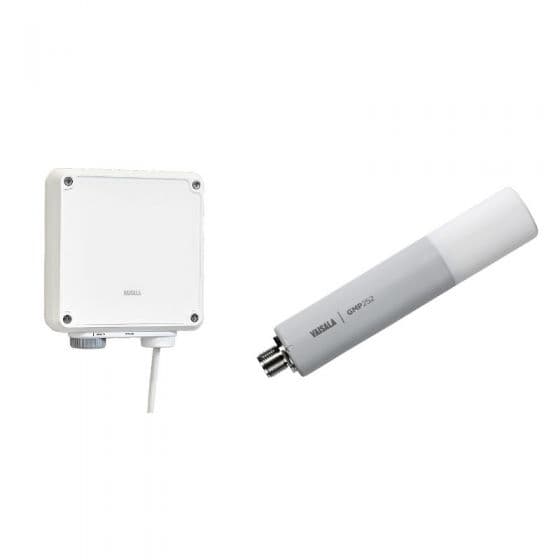
Vaisala GMP252 Carbon Dioxide Probe
The Vaisala GMP252 is the market-leading duct-mounted CO2 probe for UK 2025 barn ventilation thanks to laboratory-grade NDIR accuracy, low drift and proven field reliability that support tight control of ventilation and indirect NH3 risk management. It commands a premium but can lower total lifecycle costs through reduced recalibration frequency and fewer false ventilation events compared with lower-cost alternatives on this list. Its robust housing and flexible integration options make it the default choice where precision, long-term stability and seamless BMS connection matter most.
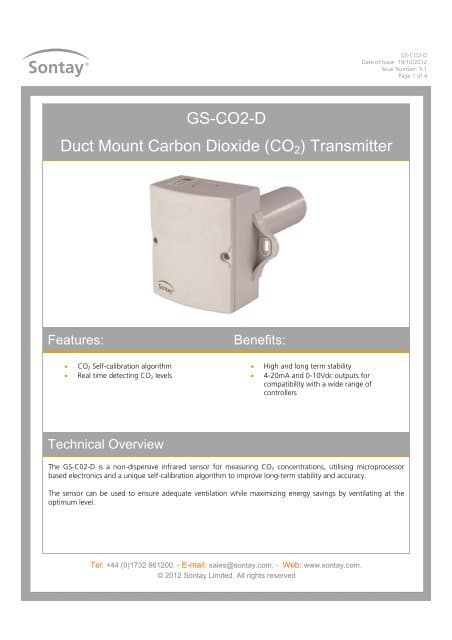
Sontay GS-CO2-10 Duct CO2 Sensor
The Sontay GS-CO2-10 is a cost-conscious duct CO2 sensor tailored for installers retrofitting UK barns where budget and straightforward integration are priorities. While it does not match the absolute accuracy or long-term stability of the Vaisala or E+E transmitters, it offers an attractive upfront price and simple analogue outputs that reduce installation time and capital expenditure. For farms prioritising basic CO2 control and low initial outlay, it delivers a pragmatic balance of performance and price.
We may earn a commission on purchases. It never affects our rankings.
Estimated£150 – £250
E+E Elektronik EE894 CO2 Transmitter
The E+E EE894 positions itself as a high-accuracy CO2 transmitter optimized for demanding barn environments, providing strong temperature/humidity compensation and long-term stability that approaches Vaisala performance at a lower purchase price. It stands out for field robustness and flexible communication options that simplify integration into UK ventilation controllers and Modbus-based BMS platforms. Compared with budget Sontay and Telaire units, it reduces maintenance and recalibration costs while remaining more cost-effective than full multi-gas systems when only CO2 control is required.

Estimated£450 – £700
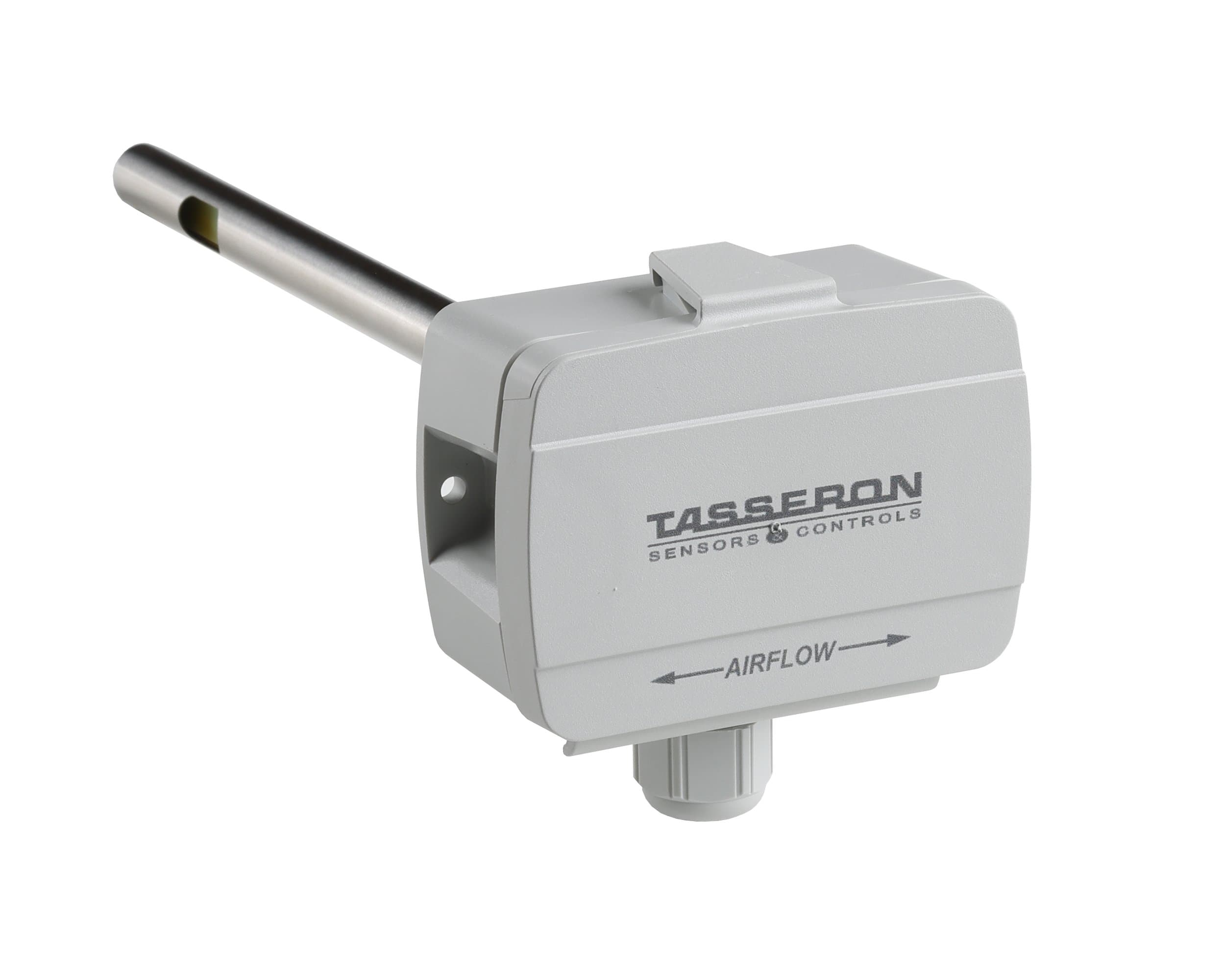
Telaire T6615 Duct Mount CO2 Sensor
The Telaire T6615 is a reliable, low-cost duct CO2 sensor designed for easy mounting and rapid replacement in barn ventilation ducts, making it ideal for farms deploying multiple monitoring points. It trades some precision and long-term drift performance versus Vaisala and E+E transmitters for a lower purchase price and simple calibration regime, offering attractive unit economics for zonal CO2 monitoring. For operators needing basic CO2 sensing at scale without multi-gas capability, it provides one of the best price-per-point options on the list.
Estimated£200 – £350
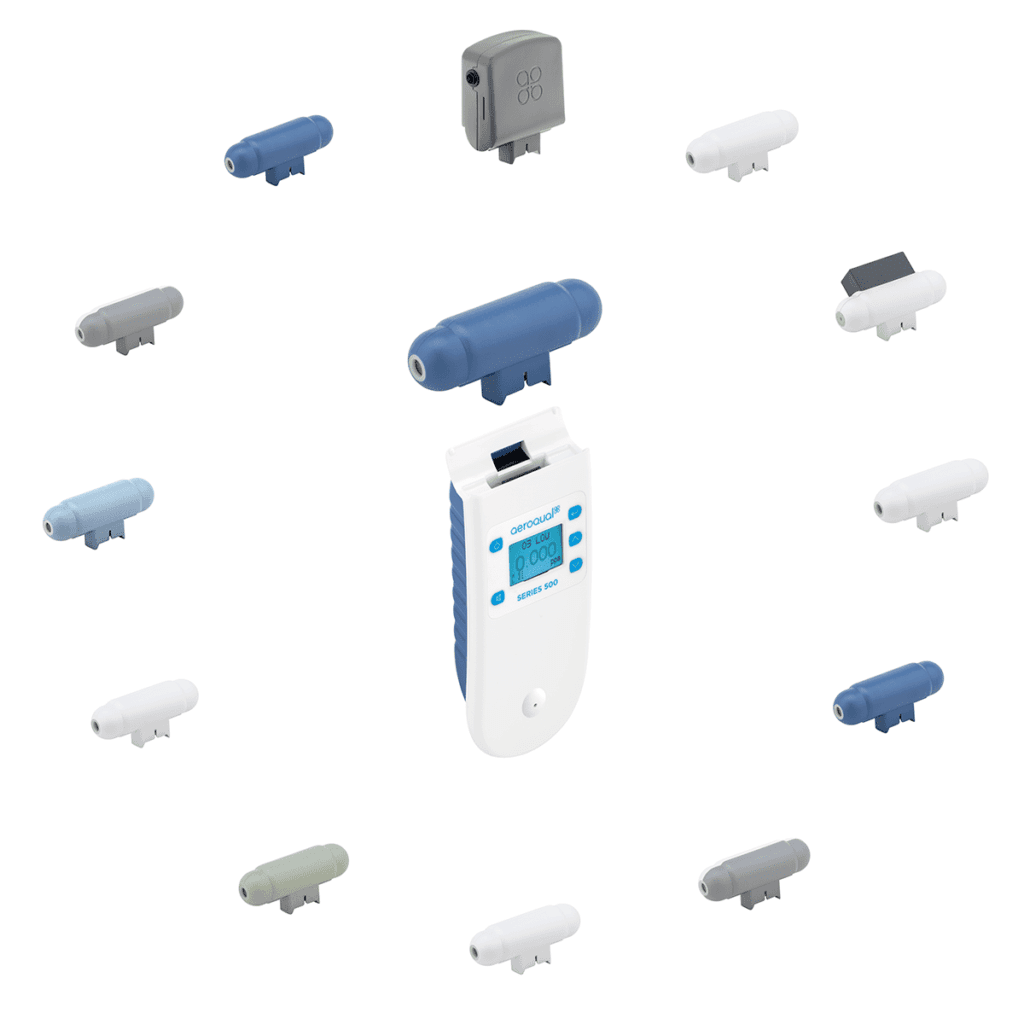
Aeroqual Series 500 Multi-Gas Monitor
The Aeroqual Series 500 is the flexible choice for multi-gas monitoring in barns, uniquely offering interchangeable sensor heads including ammonia (NH3) and CO2 so a single platform can cover multiple hazards. Although its upfront cost is higher than single-parameter duct probes, it can reduce total system cost and complexity for sites that need NH3 trend monitoring alongside CO2 control, and its modular design supports rapid field servicing and sensor swaps. Compared with the single-gas transmitters here, Aeroqual delivers the best value where multi-gas detection and adaptable integration are required for comprehensive ventilation and animal-health management.
What these units share is duct or probe mounting designed for HVAC ducting, standard 4-20 mA and 0-10 V outputs with Modbus or RS485 on the higher-specified models, and manufacturer documentation and calibration routes through UK instrumentation distributors. What they do not share is measurement capability — read the CO2-versus-NH3 distinction above before matching a model to the problem you actually have.
What a Duct-Mounted Gas Sensor Can and Cannot Tell You
CO2 and NH3 are not interchangeable measurements. Carbon dioxide is a good proxy for whether a building is being ventilated enough, it is cheap to measure accurately with NDIR optics, and the sensing element has no consumable chemistry, so drift is slow and calibration intervals are long. Ammonia is measured a different way, with electrochemical cells that are consumed by the gas they detect, are typically rated for around two years of service, and need periodic bump testing and calibration to be trusted at all. Ammonia also behaves differently in the building: it is generated at bedding level in warm, wet muck, so a sensor sitting in an exhaust duct reads a diluted, mixed average rather than the concentration at the horse's nose. Published stall measurements taken close to the floor run far higher than anything a duct reading would suggest. The practical split is to use duct CO2 for automatic ventilation control, and a portable NH3 instrument at muck level to find out whether the bedding and mucking regime is actually working.
Four of the five products here — Vaisala, Sontay, E+E, Telaire — measure CO2 only; none is an ammonia sensor
The Aeroqual Series 500 is portable rather than duct-mounted; its NH3 head suits spot checks and commissioning
HSE EH40/2005 sets ammonia limits of 25 ppm (8-hour TWA) and 35 ppm (15-minute STEL) — these protect people, not horses
Equine guidance targets under roughly 5 ppm in stables; if you can smell ammonia you are already at or above it
Electrochemical NH3 cells are consumables, typically rated around two years, and need periodic bump testing
NDIR CO2 elements carry no consumable chemistry, so they drift slowly and hold calibration much longer
A duct reading is a mixed exhaust average, not the concentration at the horse's breathing height near the bedding
These are distributor-supplied industrial instruments, not retail stable supplies — budget for installation and commissioning
US-market barn controls at 110 V or 24 VAC need a transformer to work on a UK 230 V / 50 Hz supply
Check the output protocol (4-20 mA, 0-10 V, Modbus or RS485) against your existing controller before ordering
Frequently Asked Questions
Do any of these duct sensors actually measure ammonia?
No. The Vaisala GMP252, Sontay GS-CO2-10, E+E Elektronik EE894 and Telaire T6615 all measure carbon dioxide only. The Aeroqual Series 500 is the sole ammonia-capable instrument listed, via an interchangeable NH3 sensor head, and it is a portable monitor rather than a fixed duct-mounted transmitter.
What ammonia level is acceptable in a horse stable?
HSE's EH40/2005 workplace exposure limits for anhydrous ammonia are 25 ppm over 8 hours and 35 ppm over 15 minutes, but those limits protect people. Equine guidance recommends stable ammonia stay below roughly 5 ppm, which is about the level at which a human nose first detects it — so a stable that smells of ammonia is already above the horse's threshold.
How long does an ammonia sensor cell last compared with a CO2 sensor?
Electrochemical NH3 cells are consumed by the gas they measure and are typically rated for around two years, with periodic bump testing and calibration needed in between. The NDIR carbon dioxide elements used in the Vaisala, E+E, Sontay and Telaire units have no consumable chemistry and hold their calibration considerably longer.
Which in-duct carbon dioxide probe is best for strict barn ventilation control?
The Vaisala GMP252 Carbon Dioxide Probe is the top recommendation for continuous barn ventilation control, achieving a 4.7 average rating through laboratory-grade NDIR accuracy and ultra-stable drift performance.
Conclusion
If the problem is ventilation adequacy, any of the four CO2 transmitters here will do the job and the choice comes down to accuracy against budget: the Vaisala GMP252 for stability and long calibration intervals, the E+E EE894 for a similar class at a lower price, and the Sontay GS-CO2-10 or Telaire T6615 where several monitoring points are needed cheaply. If the problem is ammonia — which in a horse barn it usually is — none of those four will detect it, and the Aeroqual Series 500 is the only instrument on this page that can, as a handheld spot-check tool rather than a fixed duct installation. A fixed NH3 duct transmitter is a separate purchase from a gas-detection specialist, with a consumable cell and a calibration routine attached. It is also worth remembering that ammonia in a stable is a bedding, drainage and air-change problem first: measurement tells you whether the fix worked, it does not fix anything on its own.