

Leading Programmable Multi-Channel Controllers for Reptile and Amphibian Environments in the UK — Complete 2026 Buyer's Guide
Most "multi-channel" control in a British vivarium is done by a thermostat with more than one output, not by a lighting controller. The two jobs are different and should stay that way: a dimming or pulse thermostat regulates the heat source from a probe inside the enclosure, while a timer switches the lighting and the UVB lamp to a fixed photoperiod. Confusing them is the most dangerous mistake in vivarium wiring — a heat mat, cable, ceramic emitter or basking lamp running on a timer alone has nothing measuring the enclosure, and can overheat the animal or the woodwork. Every unit here is supplied for 230 V mains on a standard BS 1363 plug, and vivarium circuits are best run from an RCD-protected socket. This page compares five units UK keepers actually buy, what each output is rated to drive, and where each one stops.
Inception's AI took the time to understand this market in the UK · We may earn a commission on purchases. It never affects our rankings.
Top Picks Summary
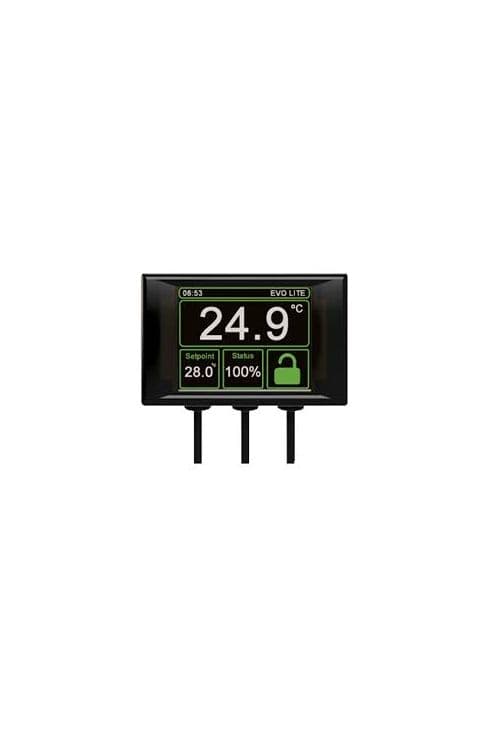
Microclimate EVO Lite
The EVO Lite is a single-channel touchscreen thermostat rather than a lighting controller: one 600 W output, switchable between dimming and pulse-proportional control. What earns it a place here is that it holds up to four temperature settings across a 24-hour period, so a daily thermal profile can come from one box instead of a stack of timers. The on-screen graph and high/low alerts show whether the gradient is actually holding, which is the part most keepers only discover has drifted after the animal changes behaviour. Lighting and UVB still need a separate timer, and the dimmed output must only drive non-light heat or a dimmable filament basking lamp. RRP £69.99, with Microclimate's 5-year guarantee.
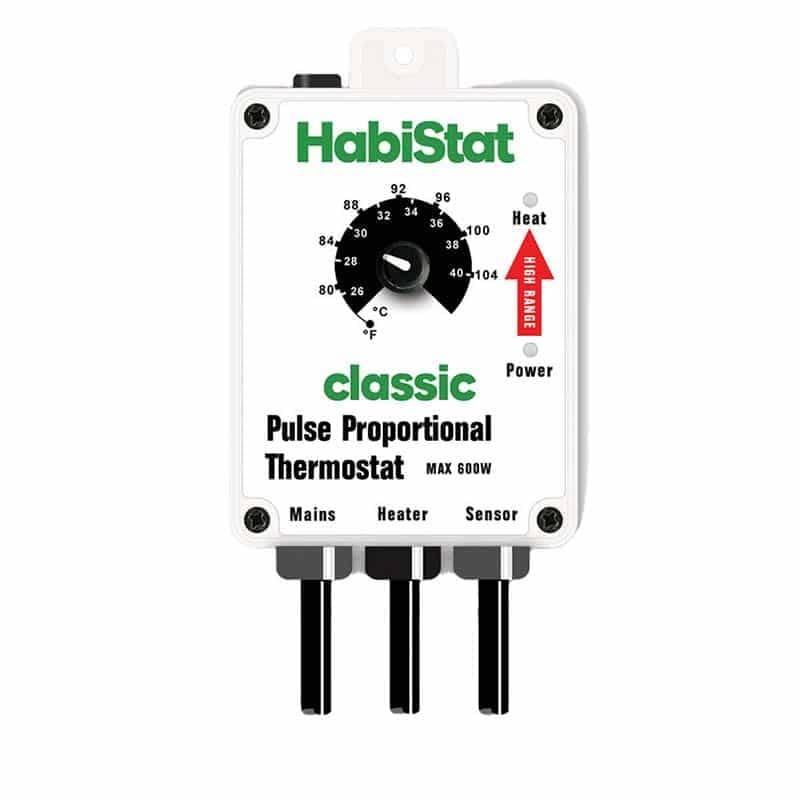
Habistat High Range Pulse Proportional Thermostat
The Habistat High Range Pulse Proportional Thermostat stands out as a popular high-range proportional heater controller for larger or high-output setups, offering extremely stable, energy-efficient heating control for ceramic heat emitters and heat mats. While it lacks the multi-channel lighting choreography of dedicated lighting controllers, its durable pulse-proportional technology, 5-year guarantee and lower upfront cost make it the financially sensible option for keepers prioritising tight thermal control over complex lighting schedules. Note that pulse-proportional thermostats should only be used with non-light-emitting heat sources, not basking bulbs or UV lamps.
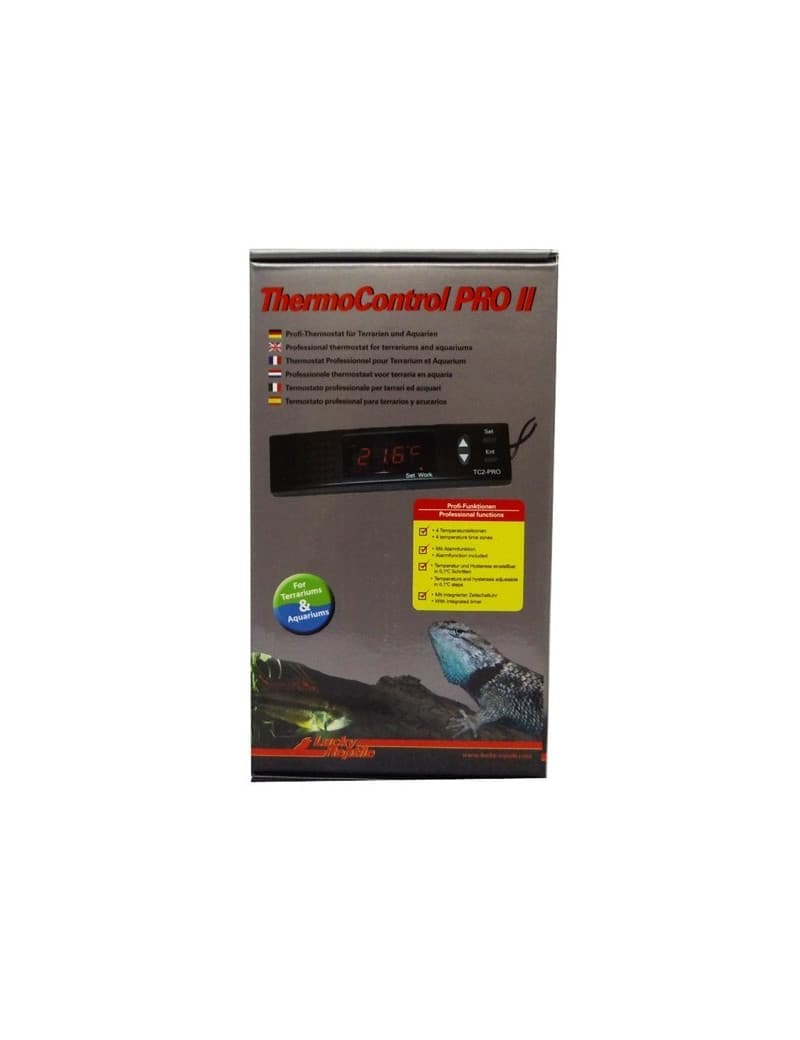
Lucky Reptile Thermo Control PRO II
Lucky Reptile's Thermo Control PRO II is the two-outlet option here, which is what makes it practical for splitting a daytime basking lamp from a night-time ceramic emitter, or a lamp from a mat, without a second thermostat. It offers both on/off and dimming control, so the mode can be matched to the heat source on each side. It sits above the entry-level units on price and its programming menus take some reading, but the build is aimed at long service in permanent installations. As with every unit on this page, lighting and UVB belong on a separate timer, not on a dimmed output.
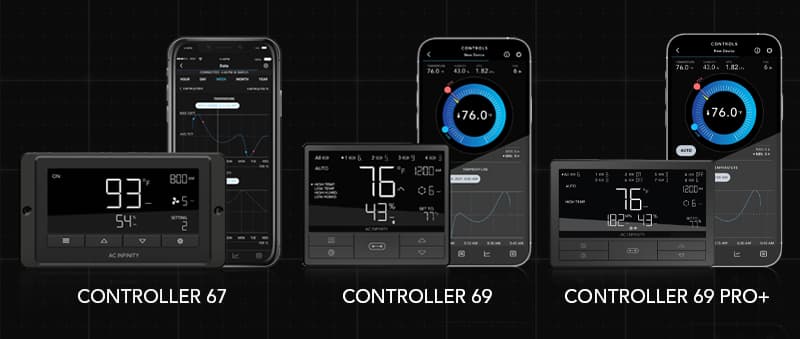
Arcadia T-Control Pro
Arcadia T-Control Pro is optimised for lighting-centric naturalism, offering smooth programmable channels, easy integration with Arcadia LED fittings and a user-friendly app for UK keepers focused on biologically accurate photoperiods. Compared to thermostat-first models such as Habistat or ProRep, the T-Control Pro brings superior lighting scene creation and ecosystem presets at a mid-range price, making it attractive for hobbyists who prioritise light spectrum and timing alongside reliable environmental control.
ProRep Day/Night Timer Thermostat
The ProRep Day/Night Timer Thermostat is the budget-conscious option of the lineup, offering simple independent day/night outlets, basic timer scheduling and straightforward temperature control that makes it ideal for beginners and smaller enclosures. It doesn't have the advanced logging or ecosystem integrations of Microclimate or Arcadia, but its low cost, ease of use and adequate feature set deliver solid value for keepers seeking dependable control without specialist features or a large investment.
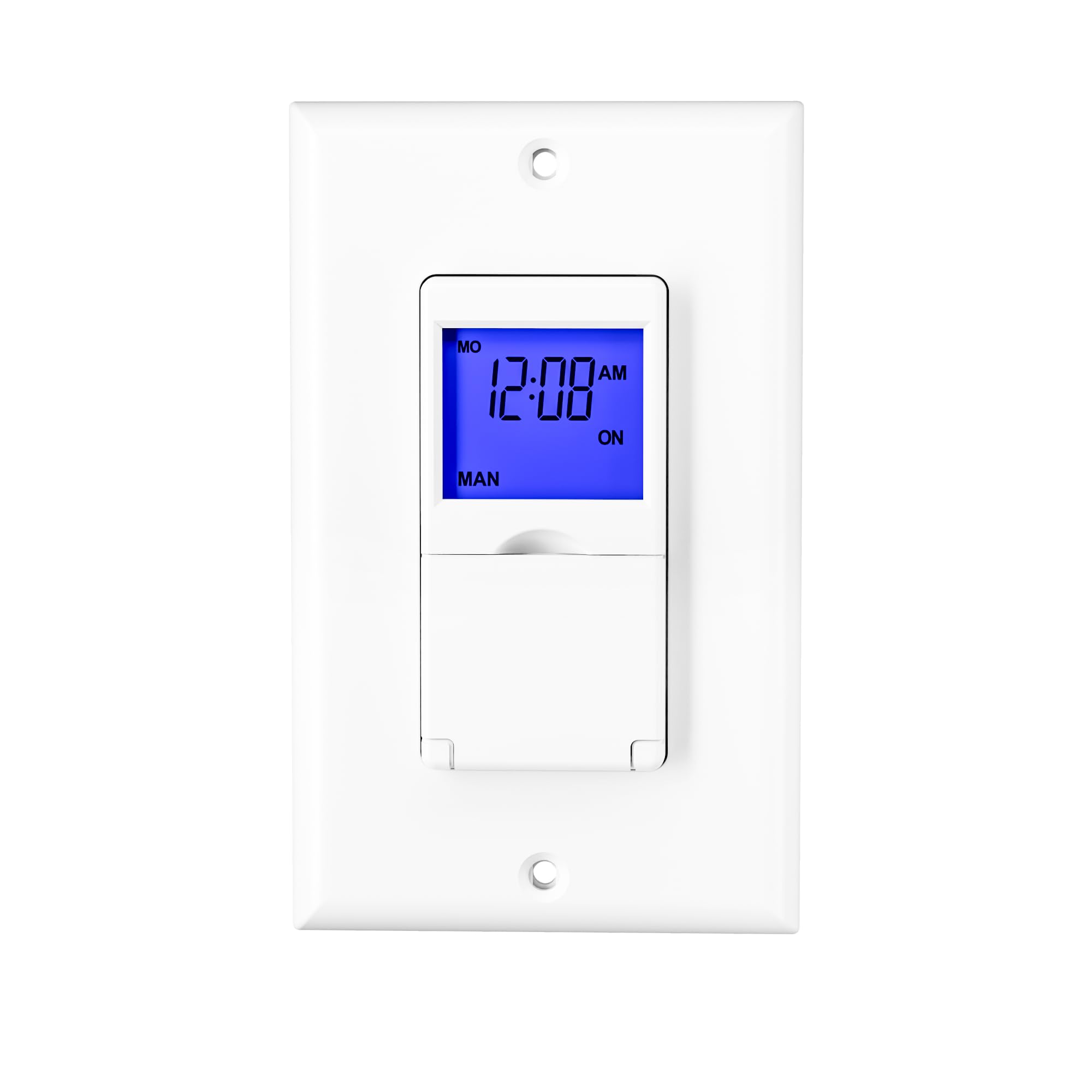
The features that matter on this equipment are unglamorous: an output rated for the load you intend to hang on it, control that suits the heat source (dimming or pulse for non-light heat, on/off for lamps you must not dim), a probe you can position properly, and a visible reading so you can tell whether the gradient is holding. Separate day and night outputs let you split a lamp from a night-time emitter; data logging and high/low alarms tell you when something has drifted before the animal shows it.
How Vivarium Channels, Dimming and UVB Timing Actually Work
A "channel" on this equipment is a switched or dimmed mains output, not a lighting scene. Vivarium units generally offer one or two, and each output is limited both by its wattage rating and by the type of load it is designed for. Getting the load type right matters more than the channel count: a dimmed or pulsed output is designed for heat, and putting the wrong lamp on it either destroys the lamp or leaves the animal without regulation.
A channel here is a switched or dimmed mains output, not a programmable lighting scene — most vivarium units offer one or two
Every heat source must run through a thermostat with its probe inside the enclosure; a heat lamp, mat or cable on a timer alone is a burn and fire risk
Dimmed outputs are intended for ceramic heat emitters, heat mats, heat cables and dimmable filament basking lamps
Never put a fluorescent or LED UVB lamp on a dimming channel — its ballast or driver is not dimmable, and the lamp will flicker, misfire or fail early
Pulse-proportional outputs are for non-light-emitting heat only; pulsing a filament bulb wrecks the filament
UVB comes from the lamp, never from the controller — no timer or thermostat changes the UV index reaching the animal
UVB output decays long before a lamp stops looking lit; replace to the maker's interval, commonly 12 months for T5 and 6 months for T8
A thermostat's day/night setting lowers the target temperature after a set hour — it is not a photoperiod and does not switch the lights
Check the total load on each output against its rating; the Microclimate and Habistat units on this page are rated to 600 W
UK stock is supplied for 230 V mains on a BS 1363 plug — use an RCD-protected socket and keep probes and cables where the animal cannot reach them
Frequently Asked Questions
What warranty comes with Habistat High Range Pulse Proportional Thermostat?
The Habistat High Range Pulse Proportional Thermostat carries a 5-year guarantee. It is rated 4.3 and uses pulse-proportional output to minimise temperature swings for non-light radiant heat sources such as ceramic heat emitters and heat mats.
Can I run a reptile heat lamp or heat mat on a timer instead of a thermostat?
No. A timer only switches at set times and measures nothing, so a heat mat, cable, ceramic emitter or basking lamp on a timer alone can keep heating past a safe temperature. Every heat source needs a thermostat with its probe inside the enclosure. A timer is for lighting and UVB, and can sit alongside a thermostat but never in place of one.
Can a dimming channel be used on a UVB tube?
No. Fluorescent and LED UVB lamps run through a ballast or driver that is not designed to be dimmed, so a dimming or pulse-proportional output will make them flicker, fail to strike, or fail early. UVB lamps should be switched on and off by an ordinary timer. Dimmed and pulsed outputs are for ceramic emitters, heat mats, heat cables and dimmable filament basking lamps.
Is the Microclimate EVO Lite a multi-channel controller?
It is a single-channel thermostat. One output, switchable between dimming and pulse-proportional control, rated to 600 W. What makes it useful for daily profiles is that it holds up to four temperature settings across 24 hours, plus a simple day/night mode, and shows the temperature history as a graph. RRP is £69.99 and it carries Microclimate's 5-year guarantee.
Conclusion
Choose by the load you need to control, not by channel count. The Microclimate EVO Lite is a single-channel touchscreen thermostat rated to 600 W that can hold up to four temperature settings across 24 hours, which is the closest thing here to a programmable daily profile from one box. The Habistat High Range Pulse Proportional Thermostat is the specialist for ceramic emitters and mats, and must never be used on a light-emitting bulb. The Lucky Reptile Thermo Control PRO II offers two outlets, so day and night devices can be separated. Whichever you pick, lighting and UVB still need their own timer, and no controller on this page substitutes for correct lamp choice or lamp replacement. Verify current UK prices and stock with a British reptile retailer before ordering, since specifications and pack contents change between production runs.