

Best Downhill Mountain Bikes UK 2026: Performance-Focused DH Rigs for Bike Park Mastery & Gravity Racing
A downhill bike is defined by two numbers: 190-220mm of rear travel and a dual-crown fork of roughly 200mm. The five bikes below span that whole range, from the 190mm Trek Session 9.9 to the 220mm Commencal Supreme DH V5, with UK prices starting at £3,999 for the YT TUES Core 2. Serious downhill mountain biking demands serious machinery. These aren't casual trail bikes—they're purpose-engineered gravity weapons featuring extended suspension travel, reinforced chassis construction, and hydraulic stopping power designed to devour steep descents and demanding terrain at speed. Across the UK's vibrant bike park scene, from Fort William's legendary runs to the purpose-built trails at Bike Park Wales and Cwmcarn, riders gravitate toward downhill-specific platforms that deliver predictable handling in variable conditions. British riders typically seek bikes with robust build quality capable of withstanding year-round wet weather, progressive geometry that inspires confidence at racing speeds, damping characteristics suited to technical British terrain, and accessible after-sales support from established dealers. Whether you're tackling alpine resorts, domestic gravity parks, or training for enduro-style stage races, the machine beneath you becomes your most critical competitive advantage. This guide examines five proven contenders engineered for podium pursuit and gravity-fuelled progression, helping you identify which platform aligns with your riding ambitions, local terrain characteristics, and technical preferences across the 2026 model year.
Inception's AI took the time to understand this market in the UK · · How we pickWe may earn a commission on purchases. It never affects our rankings.
Top Picks Summary
Santa Cruz V10
The Santa Cruz V10 remains the benchmark for lift-access, race-ready downhill in the UK for 2025 thanks to a race-proven carbon chassis, purpose-built kinematics and geometry tuned for high-speed stability and precision. Compared with the YT TUES's direct-to-consumer value, Trek Session 9.9's integrated tech and Commencal's value-focused platform, the V10 commands a premium price but repays it with consistent World Cup–level performance, long-term resale and a refinement that suits technical, high-speed race tracks.

We may earn a commission on purchases. It never affects our rankings.
Estimated£7,500 – £11,500
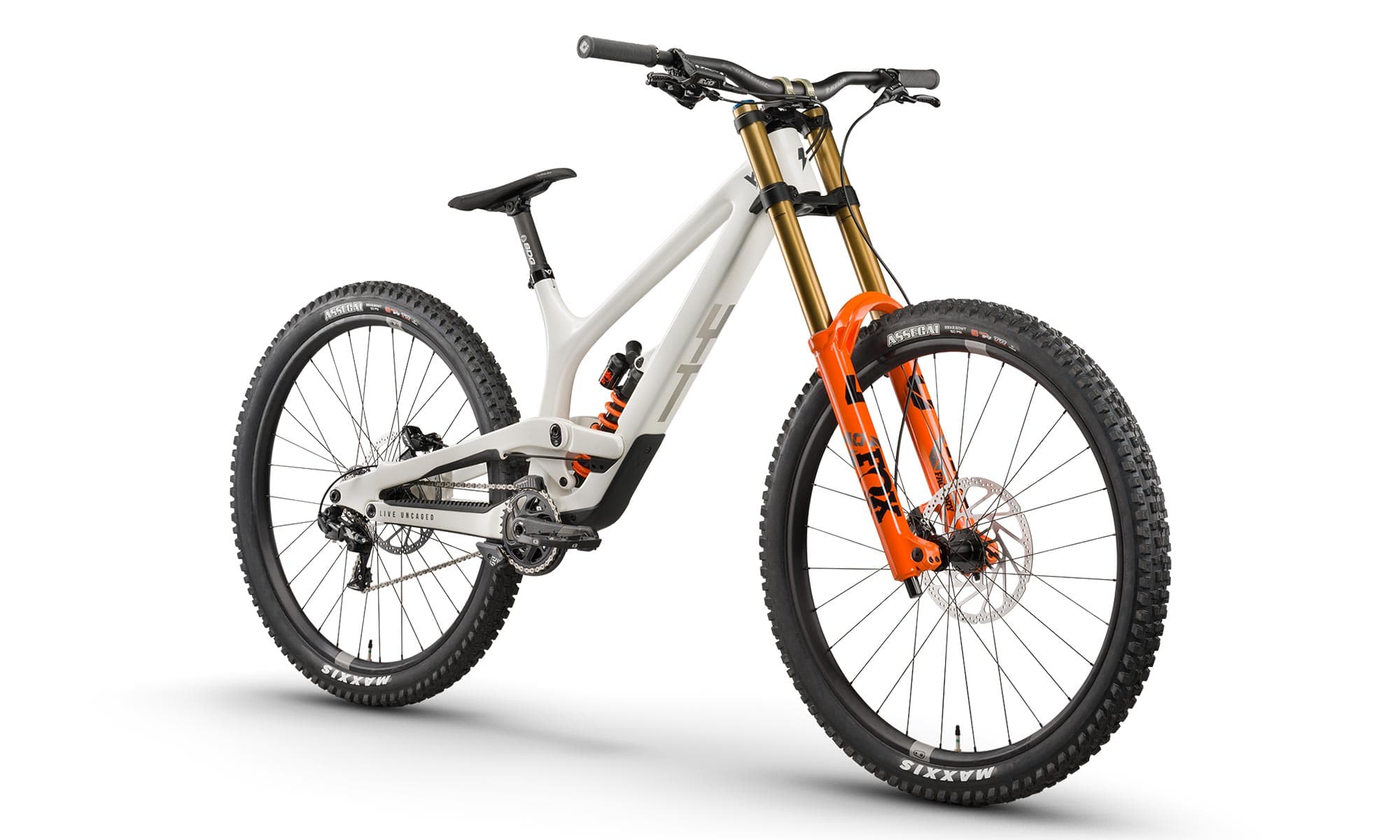
YT TUES
The YT TUES is the market disruptor that delivers near–World Cup performance at a sharper price through YT's direct-to-consumer model and well-chosen component spec, making it an excellent option for UK riders who want race-ready speed without the top-tier sticker. While it may lack some of the V10's ultimate refinement or Trek's dealer support, the TUES undercuts both on cost and offers aggressive geometry and tunability that make it a top value pick for lift-access race days.
Specialized Demo Race
The Specialized Demo Race carries a long heritage in downhill competition, blending aggressive geometry with durable race-proven components to deliver a confidence-inspiring ride on steep descents. It often represents strong value for racers seeking a blend of durability and performance—trading some of the ultra-light characteristics of carbon-only frames for robustness that holds up to big impacts better than many lighter race rigs. Compared with the pricier Santa Cruz and Trek offerings, the Demo Race is a proven, slightly more forgiving choice that still competes at the highest levels of Downhill Mountain Bikes.

We may earn a commission on purchases. It never affects our rankings.
£5,599.00GBP
Trek Session 9.9
The Trek Session 9.9 sits as the premium all-rounder, blending race-proven geometry with advanced frame integration and suspension refinement to deliver a stable yet agile platform ideal for a variety of UK tracks and lift laps. Against the V10's pure race focus and YT's value proposition, the Session balances cutting-edge tech, service network coverage and everyday versatility—making it pricier than some rivals but compelling for riders who want performance plus widespread support.

We may earn a commission on purchases. It never affects our rankings.
Estimated£8,000 – £12,000
Commencal Supreme DH
The Commencal Supreme DH V5 is the value-oriented race machine with an aggressive chassis and proven race pedigree, offering strong downhill performance for UK lift-access racing at a more accessible price point. The frame is triple-butted 6066 aluminium — Commencal does not build it in carbon — and at 220mm it carries the most rear travel of any bike on this page. It may not match the V10's refinement or the Session's integrated features, but versus the YT it often competes on spec-to-price and provides robust durability and tuning flexibility that appeal to riders prioritising bang-for-buck and low-cost maintenance.
We may earn a commission on purchases. It never affects our rankings.
Estimated£3,800 – £8,000
These downhill platforms differ mainly in chassis material and travel: carbon race frames on the Santa Cruz V10, YT TUES and Trek Session 9.9, aluminium on the Specialized Demo Race and Commencal Supreme DH V5. All five run a dual-crown fork of around 200mm, hydraulic disc brakes built for sustained descents, and geometry set up for stability at speed on wet, rough British tracks.
Understanding Modern Downhill Bike Technology
Contemporary downhill machines represent decades of racing evolution and technological refinement. Understanding the key engineering principles helps riders make better purchasing decisions and extract maximum performance from their platforms.
Rear travel on a downhill-specific frame sits between 190mm and 220mm (190mm on the Trek Session 9.9, 200mm on the YT TUES and Specialized Demo Race, 208mm on the Santa Cruz V10, 220mm on the Commencal Supreme DH V5) — shorter-travel 160mm bikes are enduro machines, not DH rigs
Every bike here runs a dual-crown fork of 200-203mm; a single-crown fork is the clearest sign a bike is not a downhill bike, whatever the marketing says
Geometry progression emphasises head tube angles between 62-65 degrees and seat tube angles around 76 degrees, optimising high-speed stability whilst maintaining technical manoeuvrability
Frame materials balance carbon fibre's weight advantages against aluminium's durability and cost considerations across different budget tiers
Suspension damping technology—coil versus air springs—influences maintenance requirements, tuning flexibility, and performance characteristics in varied weather conditions
Brake system integration (hydraulic disc systems) provides essential modulation, consistency, and power required for sustained descents and technical trail sections
Tyre selection and pressures significantly impact grip, rolling resistance, and overall control characteristics on wet British terrain
Wheel sizes (27.5 versus 29 inch) influence acceleration, cornering confidence, and obstacle clearance depending on rider preference and terrain demands; most current DH bikes ship as a 29in or a mullet setup with a 29in front and 27.5in rear
Frequently Asked Questions
How much suspension travel does a downhill bike have?
Between 190mm and 220mm at the rear, paired with a dual-crown fork of 200-203mm. On this page: Trek Session 9.9 190mm, YT TUES and Specialized Demo Race 200mm, Santa Cruz V10 208mm, Commencal Supreme DH V5 220mm. Anything with 160mm and a single-crown fork is an enduro bike, not a downhill bike.
Which downhill bike is the best value in the UK?
The YT TUES. YT sells direct, so the carbon MK4 starts at £3,999 for the Core 2 (RockShox Boxxer Base fork, Super Deluxe Select coil shock) and tops out at £5,999 for the Core 4 with a Fox Factory 40 and DHX2. That is a full carbon race chassis with 200mm rear travel for roughly half the price of the Santa Cruz V10 or Trek Session 9.9.
Are these downhill bikes carbon or aluminium?
Three are carbon: the Santa Cruz V10 (Carbon CC), the YT TUES MK4 and the Trek Session 9.9 (OCLV carbon). Two are aluminium: the Specialized Demo Race uses an M5 alloy frame and the Commencal Supreme DH V5 uses triple-butted 6066 alloy. The alloy bikes are heavier but cheaper to replace after a hard crash, which is why they are common choices for uplift days and bike park seasons.
What wheel size do modern downhill bikes use?
Either full 29in or a mullet setup with a 29in front and 27.5in rear. The Santa Cruz V10 ships mullet in S-L and full 29 in XL; the YT TUES MK4 can be run either way on any size; the Specialized Demo Race is a 29er with a flip chip that accepts a 27.5in rear; the Commencal Supreme DH V5 also takes both. The Trek Session 9.9 is a 29er.
Conclusion
The five bikes here split along two lines: chassis material and travel. Carbon race frames (Santa Cruz V10, YT TUES, Trek Session 9.9) buy stiffness and lower weight; aluminium (Specialized Demo Race, Commencal Supreme DH V5) buys durability and a lower price. Rear travel runs from 190mm on the Session 9.9 to 220mm on the Supreme DH V5, and UK entry prices from £3,999 for the TUES Core 2. If your season is mostly uplift days at Bike Park Wales, Fort William or an alpine resort, the longer-travel alloy bikes are the easier ones to live with and cheaper to repair after a bad landing. If you are racing national rounds, the carbon platforms are the ones on the World Cup start line. Whichever way you lean, test ride before committing, check that your local shop can service a dual-crown fork and a coil shock, and budget for consumables — downhill bikes get through brake pads, tyres and bearings faster than any other discipline.