

Ultra-Fast Aero Road Bikes 2025 — Britain's Premier Selection for Speed Enthusiasts
For British cyclists chasing genuine speed across motorway-adjacent A-roads and competitive group rides, aerodynamic road bikes have evolved into serious performance tools rather than niche equipment. The 2025 generation represents a watershed moment: manufacturers have cracked the code on marrying wind-tunnel efficiency with the real-world demands of UK riding conditions—unpredictable crosswinds on exposed roads, variable tarmac surfaces, and the need for reliable stopping power in wet weather. British riders gravitating toward aero machines increasingly demand more than just slippery tube profiles. They're looking for disc brake reliability when conditions turn foul, electronic shifting that performs consistently across steep British ascents mixed with flat valley runs, and geometry that doesn't punish you over a 100-mile audax. The top aero contenders of 2025 deliver measurable aerodynamic gains proven in proper wind tunnels, yet they've been engineered with the practical realities of UK cycling in mind. Whether you're targeting podium finishes at regional time trials, maintaining tempo on Saturday morning club runs, or simply want the reassurance that your bike cuts through the air rather than fighting it, this guide examines the five machines making the strongest case for genuine aero performance without sacrificing the versatility British roads demand.
Inception's AI took the time to understand this market in the UK · We may earn a commission on purchases. It never affects our rankings.
Top Picks Summary
Cervélo S5
The Cervélo S5 is a pure aero thoroughbred engineered for sustained speed and race-day efficiency, making it a top choice for riders seeking raw aerodynamic advantage on flats and fast courses. Compared with more all‑round rivals like the Tarmac and value-oriented Canyon Aeroad, the S5 emphasizes aero refinement and pro-proven stability while remaining competitively priced against boutique flagship models.

Where to buy Cervélo S5 in UK: we track one retailer, Bike-room, and show the price we last observed there; the price you see at checkout may differ.
We may earn a commission on purchases. It never affects our rankings.
£4,770 – £7,950
Specialized S-Works Tarmac SL8
The S-Works Tarmac SL8 blends lightweight climbing performance with aerodynamic updates, positioning it as the most versatile race bike in this list for riders who need both speed and responsiveness. It trades a degree of pure aero specialization found on the S5 and Aeroad for broader all‑around capability, and as an S‑Works model it commands a premium price that reflects top-tier materials and race-proven engineering.

Where to buy Specialized S-Works Tarmac SL8 in UK: we track one retailer, Specializedconceptstore, and show the price we last observed there; the price you see at checkout may differ.
We may earn a commission on purchases. It never affects our rankings.
£5,300 – £7,950
Trek Madone SLR 9
The Trek Madone SLR 9 pairs aggressive aerodynamic shaping with an adjustable compliance system, delivering high-speed efficiency without sacrificing long-ride comfort—a technical balance that distinguishes it from stiffer pure-aero frames. Its integrated features and premium componentization place it near the top of the market on price, but they also offer unique ride-tuning advantages over simpler, lower-cost aero platforms.

Where to buy Trek Madone SLR 9 in UK: we track one retailer, Sigmasports, and show the price we last observed there; the price you see at checkout may differ.
We may earn a commission on purchases. It never affects our rankings.
£6,360 – £8,480
Giant Propel Advanced SL
The Giant Propel Advanced SL offers a competitive aero race package with an emphasis on value and proven stiffness-to-weight performance, making it an appealing option for riders who want aero gains without the highest boutique price tags. Compared with pricier flagship models here, the Propel often delivers similar frame-level performance through Giant’s in-house manufacturing scale and broad dealer support, giving it a strong price-to-performance advantage.

Where to buy Giant Propel Advanced SL in UK: we track one retailer, Jejamescycles, and show the price we last observed there; the price you see at checkout may differ.
We may earn a commission on purchases. It never affects our rankings.
£3,710 – £6,360
Canyon Aeroad CFR
The Canyon Aeroad CFR represents a direct-to-consumer, top-tier aero race bike that combines race-grade carbon construction with sharply tuned aerodynamics, frequently delivering the best raw value per dollar among these flagship machines. Its direct sales model and CFR-level materials rival the performance of the S5 and Madone while often undercutting retail prices, making it a market leader for riders who prioritize cutting-edge aero performance and cost efficiency.

Where to buy Canyon Aeroad CFR in UK: we track one retailer, Trifitbikes, and show the price we last observed there; the price you see at checkout may differ.
We may earn a commission on purchases. It never affects our rankings.
£4,240 – £6,890
Pinarello Dogma F
The Pinarello Dogma F blends Italian craftsmanship with modern aero shaping to deliver a race-proven platform that prioritises high-speed stability and ride compliance. In the context of Britain’s Top 5 aero guide it stands out for offering a more forgiving ride than pure aero specialists like the Cervélo S5 or Canyon Aeroad CFR, and although it sits at a similar premium price point to the Trek Madone SLR 9, its strong brand cachet and resale appeal often make it a sound financial choice for buyers seeking long-term value.

Where to buy Pinarello Dogma F in UK: we track one retailer, Sigmasports, and show the price we last observed there; the price you see at checkout may differ.
We may earn a commission on purchases. It never affects our rankings.
£12,600.00GBP
BMC Teammachine R
The BMC Teammachine R is a versatile race bike that balances lightweight climbing geometry with measured aero refinement, making it a great all-rounder for Britain’s varied road terrain. Compared with the Specialized S-Works Tarmac SL8 and Giant Propel Advanced SL, the Teammachine R leans toward responsiveness and uphill efficiency rather than pure aero extremity, often delivering competitive performance at a strong price-to-technology ratio thanks to BMC’s race-derived engineering.

Where to buy BMC Teammachine R in UK: we track one retailer, Bmcebikes, and show the price we last observed there; the price you see at checkout may differ.
We may earn a commission on purchases. It never affects our rankings.
£3,000 – £7,000
Scott Foil RC
The Scott Foil RC is a purpose-built aero platform that delivers high straight-line speed and a stiff, race-oriented ride while remaining relatively accessible on price, which makes it a compelling pick in Britain’s Top 5 aero roundup. It approaches the aerodynamic performance of leaders like the Canyon Aeroad CFR and Cervélo S5 on many courses but typically undercuts them financially, offering club racers and time-trial specialists a pragmatic mix of speed and value.
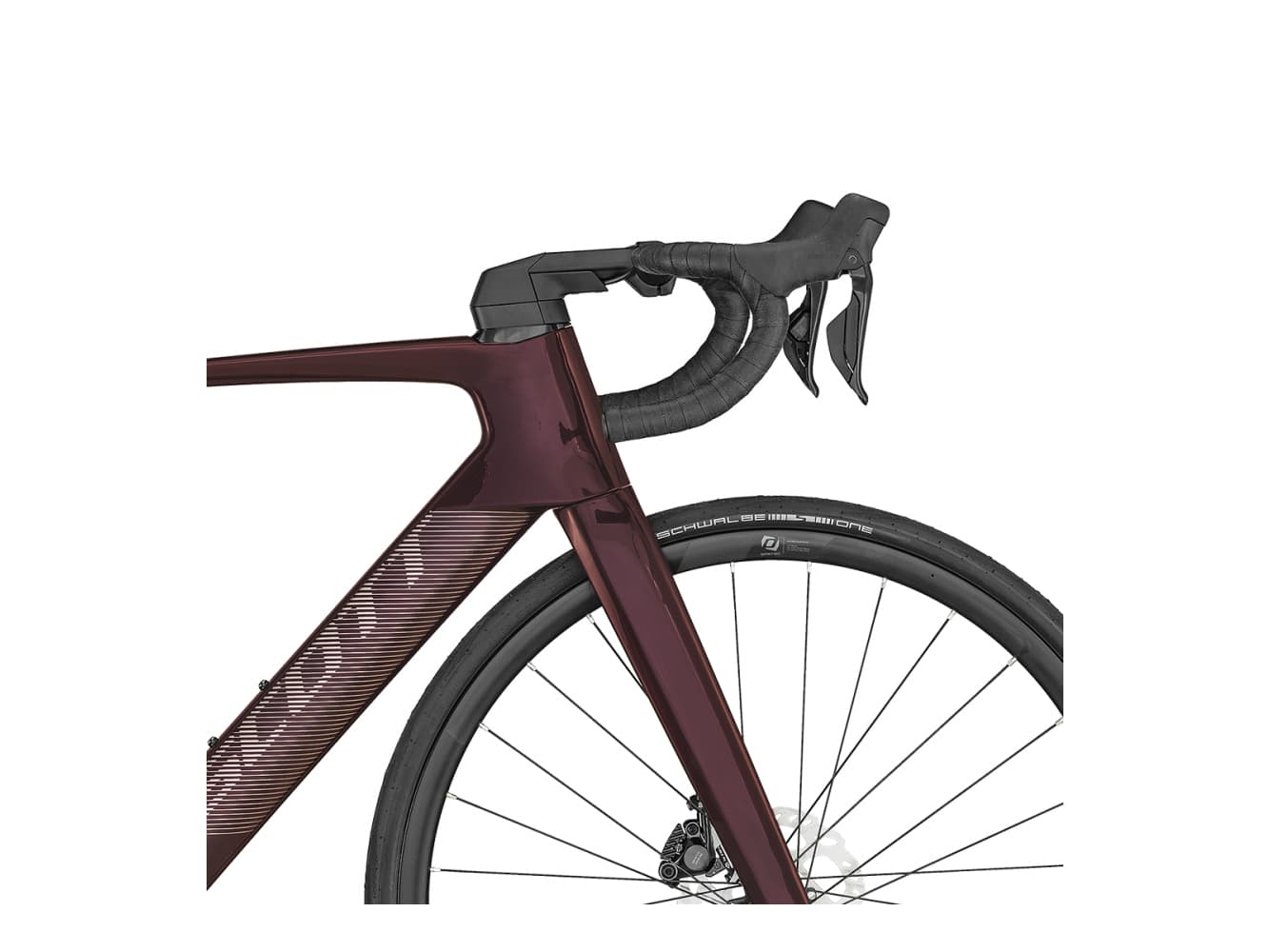
Where to buy Scott Foil RC in UK: we track one retailer, Wheelbase, and show the price we last observed there; the price you see at checkout may differ.
We may earn a commission on purchases. It never affects our rankings.
£3,500 – £9,000
Integrated cable routing eliminates aerodynamic penalties. Deep-section wheel compatibility accommodates modern high-performance tyres. Disc brake systems ensure consistent stopping across wet British conditions. Electronic drivetrain options provide precise shifting on variable terrain. UCI-legal aggressive geometry delivers measurable speed advantages without compromising stability.
What the Research and Testing Say About Aero Benefits
Aero gains are measured through wind tunnel testing, computational fluid dynamics (CFD) modeling, and controlled field tests. These methods quantify how frame shapes, integrated cockpits, wheel depth, and rider position affect drag and the power needed to maintain a given speed. For beginners, the key takeaway is that aerodynamic improvements reduce the energy required to hold high speeds, but the size of the gain depends on speed, rider position, wheel and tire choices, and environmental conditions like crosswinds. Scientific and industry testing consistently shows that well-designed aero frames and wheel systems can deliver meaningful watt savings at racing speeds, and that optimizing rider position often yields the biggest single improvement.
Rider vs. bike: Multiple studies and wind tunnel programs indicate the rider accounts for roughly 70 to 90 percent of total aerodynamic drag, so position tuning often delivers larger gains than equipment changes alone.
Frame and wheels: CFD and wind tunnel comparisons commonly report that modern aero frames combined with deep-section wheels can reduce aerodynamic drag enough to save in the order of 10 to 40 watts at 40 to 50 mi/h, depending on setup and conditions.
Cockpit integration: Integrated handlebars, stem, and cabling reduce turbulence around the front of the bike and typically shave several watts compared with non-integrated setups, particularly at higher speeds.
Wheel depth trade-offs: Deeper rims yield lower drag in calm conditions and higher speeds, often saving 5 to 20 watts, but can increase crosswind sensitivity; testing shows the choice should match rider weight, typical wind conditions, and handling priority.
Real-world variability: Field tests confirm that slope, traffic, and rolling resistance (tires and pavement) alter the net benefit — aero gains are largest on flat, sustained high-speed sections and smaller when climbing or in stop-and-go riding.
System approach: Research supports treating frame, wheels, tires, and rider fit as a single system; small compromises in any one area reduce overall gain, while optimized combinations compound benefits.
Frequently Asked Questions
Which aero bike is best for riders needing speed and responsiveness?
The Specialized S-Works Tarmac SL8 is the most versatile race bike for riders requiring both speed and responsiveness, blending lightweight climbing performance with aerodynamic updates.
Does the Trek Madone SLR 9 offer comfort for long rides?
The Trek Madone SLR 9 features an IsoSpeed compliance decoupler that improves comfort without compromising speed, distinguishing it from stiffer pure-aero frames.
Is the Cervélo S5 suitable for flat and fast courses?
The Cervélo S5 is a pure aero thoroughbred engineered for sustained speed and race-day efficiency, making it the ideal choice for riders seeking raw aerodynamic advantage on flats.
How does the Specialized S-Works Tarmac SL8 compare in user ratings?
The Specialized S-Works Tarmac SL8 holds an average rating of 4.8, making it the highest-rated option among these aero road bikes.
Conclusion
The 2025 aero road bike market offers British riders unprecedented choice, combining laboratory-validated aerodynamic benefits with features purpose-built for UK riding. The Cervélo S5 emerges as the top recommendation for cyclists demanding maximum aerodynamic refinement and race-proven geometry from a manufacturer that measures every design decision in the wind tunnel. The Specialized S-Works Tarmac SL8 delivers impressive aero credentials whilst maintaining impressive climbing credentials—ideal if your local roads feature sustained hillsides. The Trek Madone SLR 9 excels for riders prioritising integrated technology and handling precision across varied terrain. The Giant Propel Advanced SL offers compelling value whilst preserving genuine aero performance, perfect for budget-conscious enthusiasts entering the aero category. The Canyon Aeroad CFR brings aggressive aerodynamic tuning and premium component specification to direct-to-consumer pricing. Browse our detailed comparison sections to filter by brake type, drivetrain preference, or wheel compatibility. Use our dealer locator to arrange professional bike fits in your region, or explore our size guides to ensure your choice matches your geometry requirements and riding style.