

Horse Wormers in the UK: Equest Plus Tape, Eqvalan Duo, Panacur Equine Guard, Strongid-P and Eraquell Compared (All POM-VPS — Supplied by a Vet, Pharmacist or SQP)
Published on Monday, 25 August 2025
Short answer: in the UK there is no such thing as an over-the-counter horse wormer. Every product on this page — Equest Plus Tape, Eqvalan Duo, Panacur Equine Guard, Strongid-P and Eraquell — is classified POM-VPS, which means it can only be supplied by a veterinary surgeon, a pharmacist, or a Suitably Qualified Person (SQP/RAMA), after they have assessed the horse. What you choose from is therefore narrower than it looks: four active ingredients (moxidectin, ivermectin, fenbendazole and pyrantel embonate) and two add-ons (praziquantel for tapeworm, and the five-day fenbendazole course for encysted small redworm). This guide sets out what each active actually covers and, just as importantly, what it does not, so that the conversation you have with your vet or SQP is a well-informed one. Modern UK practice has moved away from blanket calendar dosing towards faecal egg count testing and targeted treatment — partly for welfare, partly because anthelmintic resistance is now a real and measurable problem on British yards. A faecal egg count guides strongyle treatment; it will not detect tapeworm or encysted small redworm, both of which are handled on a seasonal, risk-assessed basis rather than by egg count. Nothing here is a dosing instruction or a substitute for professional advice: dose rates, timing and product choice must come from the person legally supplying the medicine.
Top Picks Summary
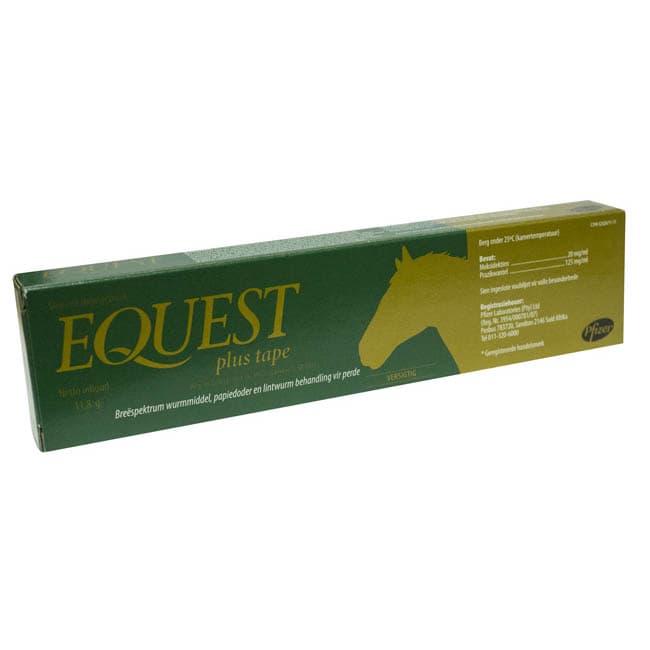
Equest Plus Tape
Equest Plus Tape is an oral gel combining moxidectin, a macrocyclic lactone, with praziquantel, giving single-dose cover of gastrointestinal roundworms, bots, encysted small redworm and tapeworm. That encysted-stage activity is what sets it apart: moxidectin in a single dose and a five-day fenbendazole course are the only two licensed routes to encysted small redworm in the UK, and this product pairs that with tapeworm cover in one syringe. It is a POM-VPS medicine, so a vet, pharmacist or SQP must supply it and set the dose by accurate bodyweight. Moxidectin has a narrower safety margin than ivermectin: it is not for foals under four months, and care is advised in debilitated or underweight animals, which is precisely why weighing rather than estimating matters.
Eqvalan Duo
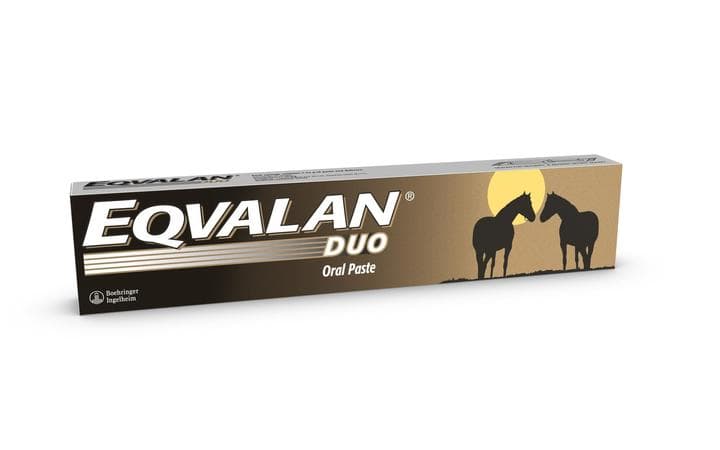
Eqvalan Duo is an oral paste combining ivermectin with praziquantel, giving single-dose control of gastrointestinal nematodes, bots and tapeworm. It is a long-established UK choice for a combined roundworm-and-tapeworm treatment, and the ivermectin component has a wide safety margin. The important limitation is what it does not do: ivermectin has no activity against encysted small redworm larvae, so this product does not substitute for a moxidectin dose or a five-day fenbendazole course when encysted burden is the concern. Like every equine wormer in the UK it is POM-VPS, supplied and dosed through a vet, pharmacist or SQP.
Panacur Equine Guard
Panacur Equine Guard is a fenbendazole 10% w/v oral suspension licensed as a five-day course for the treatment and control of encysted inhibited and encysted mucosal small redworm in horses and donkeys, and it also covers large redworm, ascarids, Oxyuris and Strongyloides. It is not a general-purpose rotation product: the five-day protocol exists specifically to reach the encysted larval stages, and it is usually timed for late autumn (October or November) or early spring (February), before mass emergence of encysted larvae can cause parasitic diarrhoea, recurring mild colic and weight loss. The suspension can be given by syringe or mixed into a single feed, with the full daily dose taken in one go. Fenbendazole has a wide safety margin and is generally suitable for pregnant mares and foals at therapeutic doses. It is POM-VPS, so a vet, pharmacist or SQP supplies it and sets the regime.

Strongid P
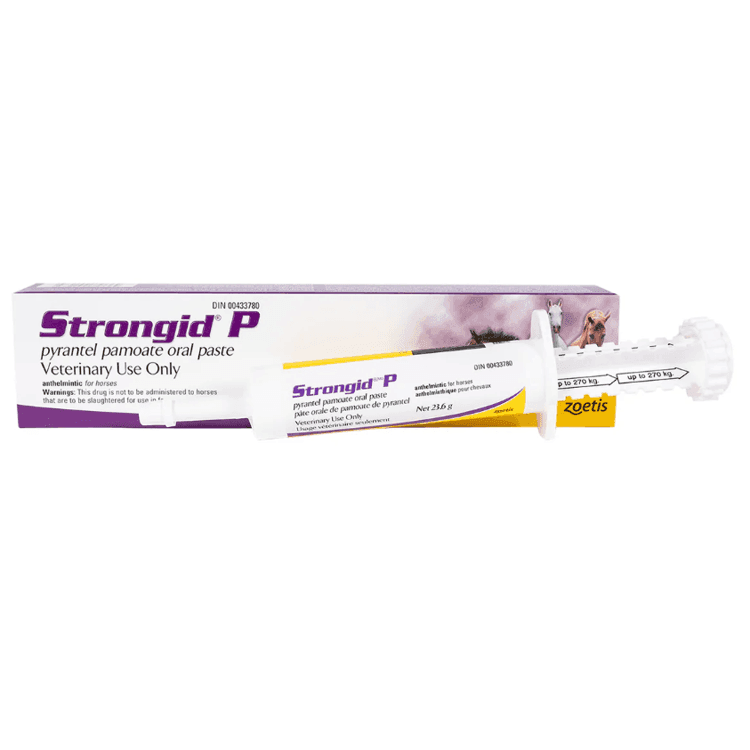
Strongid-P is a pyrantel embonate paste (43.90% w/w) with an unusually broad licence for age and reproductive status: it is suitable from four weeks of age and for pregnant and lactating mares, breeding stallions and donkeys, which makes it the default where moxidectin and some other actives are restricted. At the standard rate it controls gut-dwelling roundworms, pinworms and redworms; at double that rate — 38 mg pyrantel embonate per kg bodyweight — it is licensed for tapeworm control, typically used in spring and autumn. One syringe covers up to 600 kg of bodyweight. It has no activity against encysted small redworm, so it does not replace a moxidectin dose or a five-day fenbendazole course. Despite how it is often described online, Strongid-P is not an over-the-counter product: it is POM-VPS and must be supplied by a vet, pharmacist or SQP, who also sets whether the single or double dose applies.
Eraquell
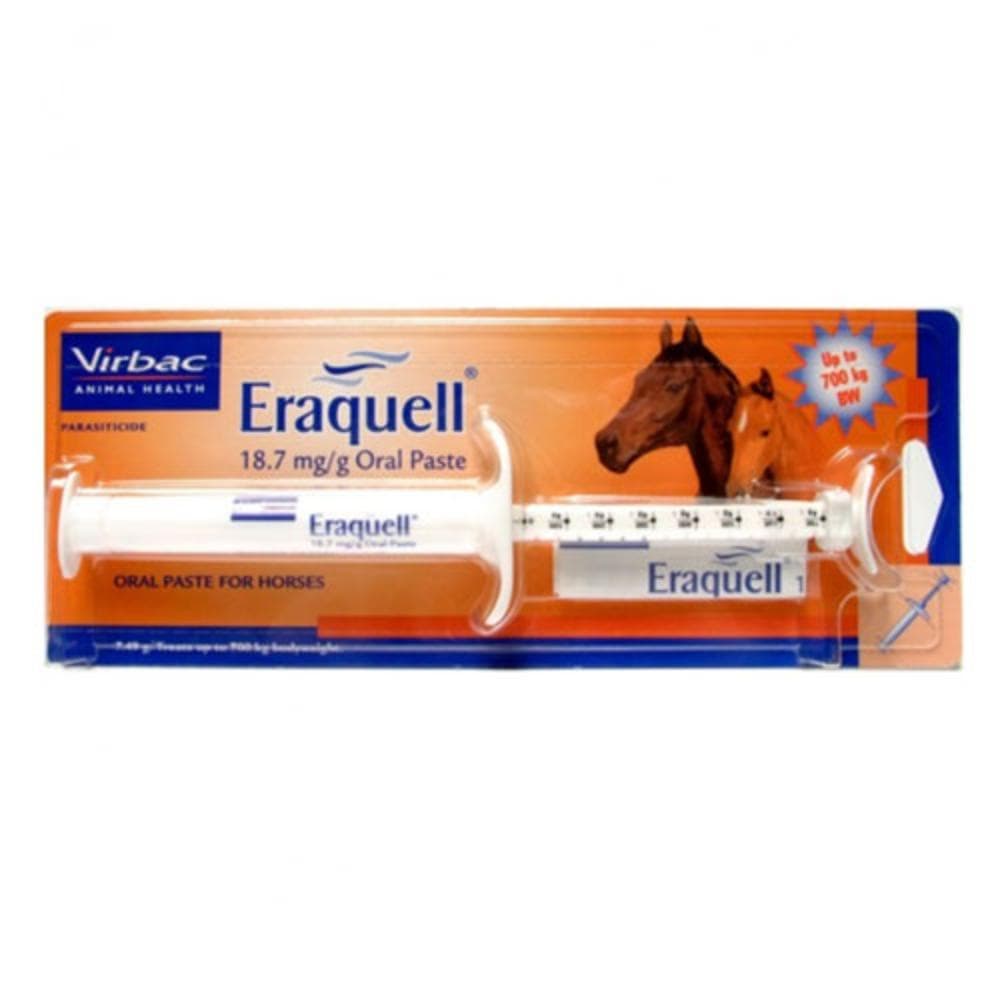
Eraquell is a plain ivermectin oral paste and is the straightforward workhorse of a UK worming programme: it controls large and small redworm in the gut, ascarids, pinworms, lungworm and bots in a single weight-based dose, with the wide safety margin ivermectin is known for. Its two gaps are important and often misunderstood. Ivermectin has no licensed activity against encysted small redworm larvae, and none against tapeworm, so Eraquell has to sit alongside a moxidectin dose or five-day fenbendazole course for encysted burden, and a praziquantel product or double-dose pyrantel for tapeworm. Used that way — inside a faecal-egg-count-led plan rather than on a calendar — it is a dependable and inexpensive backbone. It is POM-VPS and supplied through a vet, pharmacist or SQP.
These five products between them span the four anthelmintic actives licensed for horses in the UK — moxidectin, ivermectin, fenbendazole and pyrantel embonate — plus praziquantel for tapeworm. All are POM-VPS: a vet, pharmacist or SQP must assess the horse and supply the medicine, and none can lawfully be sold as an ordinary consumer product. They are compared here on active ingredient, formulation, licensed parasite coverage and the gaps in that coverage, so the choice can be made on evidence rather than on habit.
Understanding Modern Equine Parasite Management
The landscape of horse health management has transformed significantly over the past decade. Veterinary bodies across the UK now advocate moving beyond automatic, routine dosing towards a more nuanced, evidence-based approach. This shift reflects both the threat of anthelmintic resistance — where parasites survive treatments that used to work — and the recognition that not all horses need the same worming frequency or product. Faecal egg count testing has become the cornerstone of responsible parasite control, letting your vet or SQP make decisions based on each horse's actual strongyle burden rather than assumptions. It is worth understanding its limits too: a faecal egg count measures strongyle and ascarid eggs, so tapeworm and encysted small redworm sit outside it and are addressed on seasonal risk instead.
Every equine wormer sold in the UK is POM-VPS: it must be supplied by a vet, pharmacist or SQP (RAMA), who is responsible for the dose and the timing
Faecal egg count (FEC) testing allows targeted strongyle treatment based on actual burden rather than a calendar schedule
An FEC does not detect tapeworm or encysted small redworm — these are treated on seasonal risk assessment, often with a saliva or blood tapeworm test
Only moxidectin (single dose) and a five-day fenbendazole course are licensed against encysted small redworm; plain ivermectin and pyrantel are not
Only praziquantel, or pyrantel embonate given at the licensed double dose, covers tapeworm
Rotating actives on evidence rather than by habit helps preserve efficacy; unnecessary treatment is what drives resistance
Foals, pregnant and lactating mares and debilitated horses have specific product restrictions — check the label with your SQP before treating
Pasture management, stocking density, poo-picking and grazing rotation influence parasite burden at least as much as the wormer you choose
Frequently Asked Questions
Do I need a prescription to buy a horse wormer in the UK?
Not a POM-V prescription, but you cannot simply buy one off the shelf either. All equine wormers in the UK, including all five on this page, are classified POM-VPS. That means they must be supplied by a veterinary surgeon, a pharmacist, or a Suitably Qualified Person (SQP, also called a RAMA), who assesses the horse and the situation before supplying and sets the dose.
Which wormer should I pick for easy tapeworm coverage?
Equest Plus Tape combines moxidectin with praziquantel in a single oral gel dose, so it covers tapeworm alongside gastrointestinal roundworms, bots and encysted small strongyles; Eqvalan Duo does the same job with ivermectin plus praziquantel but without encysted redworm activity. Strongid-P also covers tapeworm, but only at the licensed double dose. Which of these suits your horse is a decision for the vet or SQP supplying it.
Does Eqvalan Duo treat both roundworms and tapeworms?
Yes. Eqvalan Duo is an oral paste combining ivermectin with praziquantel, giving single-dose control of gastrointestinal nematodes, bots and tapeworms. What it does not cover is encysted small redworm — ivermectin has no activity against the encysted larval stages, so that has to be handled separately with moxidectin or a five-day fenbendazole course.
What is Panacur Equine Guard actually for?
Panacur Equine Guard is a fenbendazole 10% w/v oral suspension licensed as a five-day course for the treatment and control of encysted inhibited and encysted mucosal small redworm, and it also covers large redworm, ascarids, Oxyuris and Strongyloides. It is typically given in late autumn or early spring. It is one of only two options licensed against encysted small redworm, the other being single-dose moxidectin.
Conclusion
Worming a horse well in the UK is less about picking a brand and more about answering three questions with evidence: does this horse need treating at all, for which parasite, and with which active. The five products here — Equest Plus Tape, Eqvalan Duo, Panacur Equine Guard, Strongid-P and Eraquell — cover between them the four actives licensed for horses in Britain, and they are genuinely not interchangeable: only moxidectin in a single dose and the five-day fenbendazole course reach encysted small redworm, and only praziquantel or a double dose of pyrantel embonate reaches tapeworm. Because all five are POM-VPS medicines, the decision is not yours to make alone — a veterinary surgeon, pharmacist or SQP must assess the horse and supply the product, and they will set the dose by accurate bodyweight. Use faecal egg counts to drive strongyle treatment, add a tapeworm test where your vet advises it, treat encysted redworm on seasonal risk in late autumn or early spring, and keep poo-picking. That combination protects the horse in front of you and preserves these medicines for the horses that come after it.