

Trailer Wheels, Tyres and Lug Hardware for UK Horse Trailers — 2026 Selection Guide
Choosing wheels, tyres and lug hardware for a UK horse trailer comes down to three numbers and one habit. The numbers are the bolt pattern, the tyre's load index and speed rating, and the wheel nut torque figure on your trailer's plate. The habit is re-checking that torque after the first miles on a newly fitted wheel. Most twin-axle horse trailers in Britain — the Ifor Williams HB range and its equivalents — run 13-inch rims on a 4-stud, 5.5-inch (139.7mm) PCD with 165R13 tyres, so a rim that looks similar but sits on a different PCD will not go on. Load rating matters more than tread pattern here: a trailer tyre carries near its maximum for the whole journey, unlike a car tyre. Add road salt, farm tracks and freeze-thaw winters, and corrosion resistance on studs, nuts and rims stops being cosmetic. This page covers the parts and the fitting figures that keep a laden trailer roadworthy.
Inception's AI took the time to understand this market in the UK · We may earn a commission on purchases. It never affects our rankings.
Top Picks Summary
Ifor Williams' 10-inch alloy is the market leader for durability and towing reliability, ideal for heavy-use trailers where robustness and long-term corrosion resistance are priorities in salty British climates. It trades a small fuel-economy penalty versus larger lightweight 13-inch wheels like the Erde 102, but its proven engineering and competitive lifetime value make it the sensible choice for commercial users seeking lower total cost of ownership.
Show More Heavy Load Trailer Tires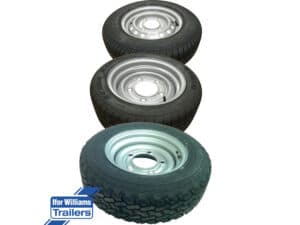
The Purpleline Nemesis Ultra is a premium, innovation-focused locking wheel cover that pairs a tamper-resistant locking cylinder with a lightweight composite outer shell to reduce strain on trailer wheels. It is pricier than classic clamps but offers advanced technical benefits — including alarm compatibility and corrosion-resistant composites — that make it an attractive option for owners wanting high security without the weight penalty of traditional steel-only devices.
Show More Steel Trailer Wheels
UK-specific selection criteria include corrosion-resistant finishes for salt-exposed routes, load ratings compliant with British towing regulations, tyres suitable for mixed road surfaces from A-roads to farm tracks, and hardware engineered to withstand freeze-thaw cycling common across northern regions.
The UK rules and fitting figures that matter for trailer wheels, tyres and nuts
These are the regulatory and fitment facts most trailer wheel listings leave out. They come from UK road traffic law, DVSA guidance and trailer manufacturers' own published specifications — not from any testing by us.
Towing speed limits are lower than you think: a car or van towing a trailer is limited to 60mph on motorways, 50mph on dual carriageways and 40mph on single carriageways. Your tyres' speed rating must cover that, but the law caps you well below a car tyre's normal range.
The 10-year tyre age ban does not cover most horse trailers: the offence of running tyres older than 10 years applies to heavy vehicles and trailers over 3.5 tonnes, with cars, caravans and trailers under 3.5 tonnes exempt. Exempt is not the same as safe — sidewall cracking on a five-year-old, lightly used trailer tyre is common.
Bolt pattern first, everything else second: Ifor Williams HB-range horse trailers use 13-inch rims, 4 studs on a 5.5-inch (139.7mm) PCD, typically with 165R13 tyres. Offset (ET) matters too — a rim with the wrong offset can foul the brake drum or mudguard even with the right PCD.
Load index, not just size: a trailer tyre spends its life near its rated load, so match the index to the trailer's plated MAM divided across the axles, and inflate to the figure on the trailer plate rather than a car pressure.
Torque, then re-torque: tighten wheel nuts to the manufacturer's figure with a calibrated torque wrench in a diagonal star pattern, then re-check after the first 25-50 miles. Nuts bed in and lose clamp load, which is how wheels come off.
Corrosion is the British failure mode: gritted winter roads and coastal air attack studs and nuts first. Alloy rims resist rust but can suffer galvanic corrosion where they meet steel studs, so inspect the seat faces whenever a wheel is off.
Frequently Asked Questions
What tyre rating should a horse trailer have?
Match the tyre's load index to the trailer's plated maximum authorised mass shared across its axles, and inflate to the pressure on the trailer plate — usually much higher than a car pressure. Most UK twin-axle horse trailers run 165R13. The speed rating only needs to cover the legal towing limits, which are 60mph on motorways, 50mph on dual carriageways and 40mph on single carriageways.
Should I choose steel or alloy wheels for a horse trailer?
Both work; the choice is about priorities. Steel rims shrug off kerb knocks, are easier to repair and cost less. Alloy rims cut unsprung weight and resist rust better, at a higher price, though they need the stud seats checked for galvanic corrosion. Either way the rim must match the trailer's bolt pattern — 4 studs on a 5.5-inch (139.7mm) PCD for the Ifor Williams HB range — plus the correct diameter, offset and load rating.
How tight should horse trailer wheel nuts be, and do I need to re-torque them?
Use the torque figure published by your trailer or hub manufacturer, applied with a calibrated torque wrench in a diagonal star pattern — never by feel or with an impact gun. Then re-check the torque after the first 25-50 miles and periodically after that. Nuts lose clamp load as the wheel beds onto the hub, and that is the usual chain of events behind a wheel separating on the road.
Are trailer tyres over 10 years old illegal in the UK?
Only on heavier vehicles. The ban on tyres more than 10 years old applies to heavy goods vehicles, buses, coaches and trailers over 3.5 tonnes, and cars, caravans and trailers under 3.5 tonnes are exempt — which covers most horse trailers. It is still a poor guide to condition: trailer tyres age by standing still, so check the four-digit DOT week-and-year code on the sidewall and look for cracking regardless of tread depth.
Conclusion
The parts below are the ones worth getting right rather than cheap. Before ordering any rim, check the bolt pattern, PCD, offset and tyre size stamped on what is already fitted — not the trailer model name, since specifications changed across production runs. And whatever you fit, torque it properly and re-check it after the first short journey.