

Best Corner Hay Racks in the UK 2026 — Top 6 Feeders for British Stables
Corner hay racks and corner mangers sit within Equestrian > Stable Equipment And Bedding > Feeders And Hay Racks. They mount across the angle of a stable so forage stays off the bedding and out of the middle of the box, which is where most of their appeal comes from in small UK stables. Before buying one, it is worth knowing that mounting height matters more than the rack itself: horses evolved to eat with the head down, and equine health guidance consistently warns that high-mounted racks let dust, seed heads and chaff fall into the eyes, nostrils and airway while holding the head in an unnatural raised position. Feeding at or near ground level allows normal drainage of the airway and a more natural jaw, neck and back posture. Where a rack is used, it is generally advised to fix it at or below wither height, and to check bar spacing carefully: open metal bars set wide enough to admit a hoof are a recognised entrapment hazard if a horse paws or rears at the rack. Corner designs are chosen for space, forage tidiness and easier daily filling, not because raised feeding is healthier than floor or low-level feeding.
Inception's AI took the time to understand this market in the UK · · How we pickWe may earn a commission on purchases. It never affects our rankings.
Top Picks Summary
Stubbs Corner Manger S2P
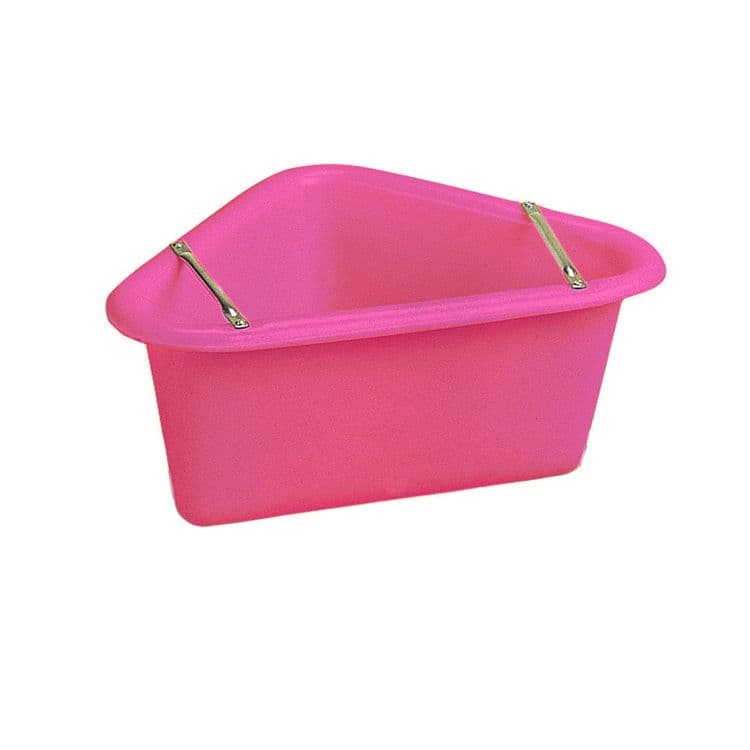
The Stubbs Corner Manger S2P is a full-size moulded corner manger rather than an open bar hay rack. UK stockists list it as tough Stubbythene with smooth lines, 31 litre capacity, 30cm high x 64cm wide x 44cm deep and 2.52kg, supplied complete with anti-waste bars. It is normally used with a Stubbs tubular support frame, which is ordered separately, so budget for that as well. Because the body is solid and the bars are fitted to the top, there is no wide open bar gap for a hoof to enter, and the frame lets you set it low rather than high.
Estimated£28 – £40
Shires Deluxe Corner Hay Rack
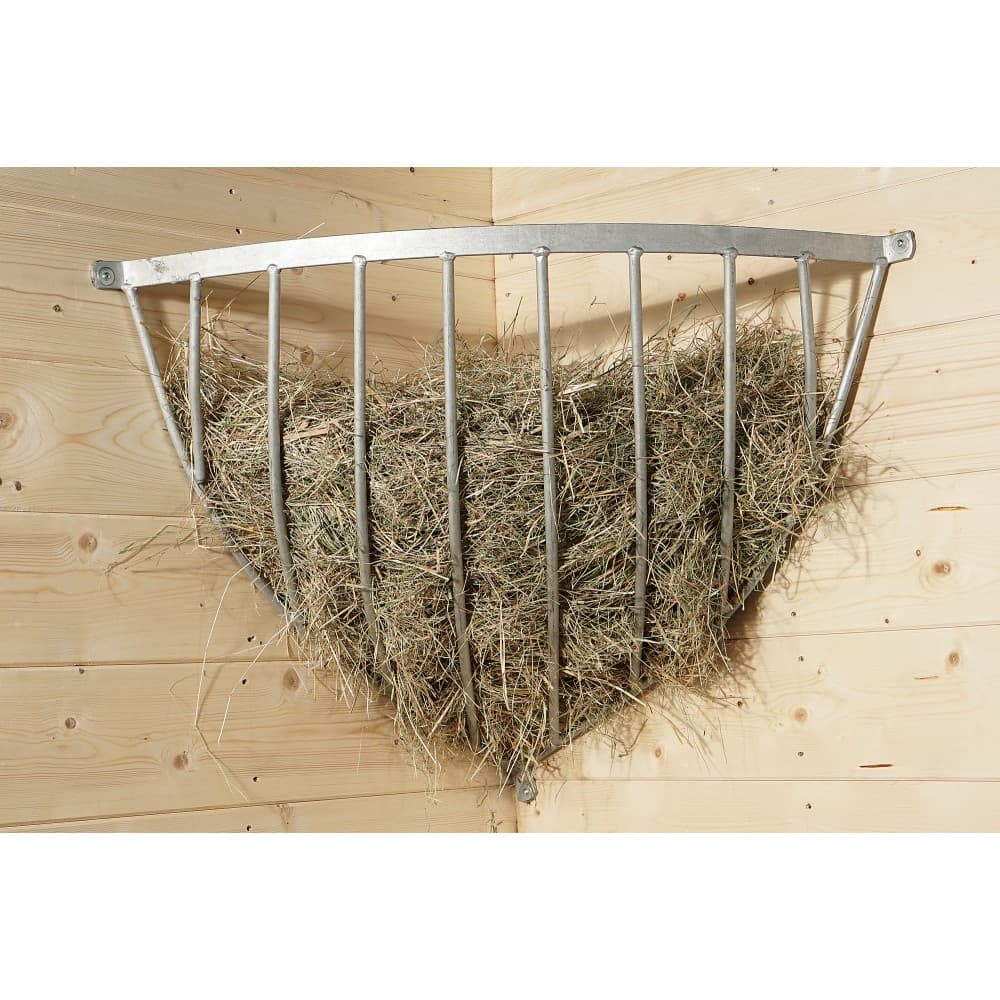
The Shires Deluxe Corner Hay Rack is listed as a galvanised steel corner rack with a powder-coated finish, aimed at buyers who want a metal fixture rather than a moulded manger. We could not confirm its capacity, dimensions or current price against Shires or a UK stockist, so treat the retailer listing as the authority. As an open bar rack, the bar spacing is the thing to check before fitting: wide gaps in a metal rack are a hoof and shoe entrapment hazard if a horse paws at it.
Estimated£75 – £120
ProStable Corner Hay Rack
The ProStable Corner Hay Rack is a corner-mounting rack sold through UK equestrian retailers. Its listings conflict on the basic construction, describing it in places as plastic and in places as a lighter-gauge metal, and we could not confirm the material, capacity or price against the manufacturer. It is a rack, not a hay net or slow feeder, and it is not a moderated-intake product. Check the retailer's own specification and the bar spacing before you buy.

Estimated£35 – £65
Roma Corner Hay Rack
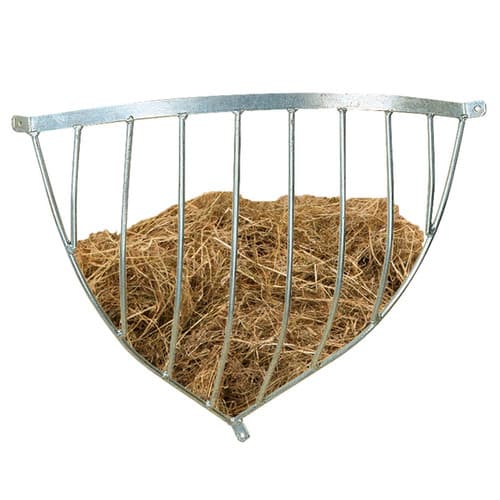
The Roma Corner Hay Rack is a compact steel corner rack with wall-mount brackets, suited to ponies and smaller boxes where a full-size manger would crowd the space. We could not confirm its gauge, capacity or price against the manufacturer, so the retailer listing is the authority. As an open steel rack it should be mounted at or below wither height and its bar gaps checked against the horse's hoof and shoe.
Estimated£45 – £85
Lincoln Corner Manger Hay Rack
The Lincoln Corner Manger Hay Rack is a traditional larger-capacity corner feeder for yards that want fewer refills. We could not confirm its capacity, dimensions or price against Lincoln or a UK stockist. It is a manger-style feeder rather than a slow-feed or intake-moderating product, and the usual mounting rule applies: fix it at or below wither height so the horse is not eating with its head raised into falling dust.

Estimated£80 – £140
Cottage Craft Heavy Duty Corner Hay Rack
The Cottage Craft Heavy Duty Corner Hay Rack is sold as a galvanised, heavier-gauge corner rack for livery and commercial yards. We could not confirm its gauge, capacity, finish or price against the manufacturer, and the previously listed cast-iron frame is not something we could substantiate. As a heavy open metal rack, bar spacing and mounting height are the two safety checks that matter: wide gaps admit a hoof, and a high mount puts the horse's head up into falling dust.
Estimated£120 – £220
What the guidance actually says about raised hay racks
Raised hay racks are widely sold but are not the position equine health guidance recommends. The evidence and extension guidance below is about feeding posture and airway health, not about any particular product, and none of these products has been tested by us.
Elevated feeding is widely discouraged: eating with the head raised drops dust, seed and plant debris into the horse's eyes, nostrils and airway, and holds the head in an unnatural position. Feeding at or near ground level allows normal drainage of the upper airway.
Hay dust is a real respiratory risk: hay carries fine dust and mould spores even when it looks clean, and dust exposure is associated with airway inflammation and equine asthma. A rack that raises the horse's nose into falling dust works against this.
Mounting height guidance: where a rack is used, it is typically fixed at or below wither height. Mounted too high it worsens dust exposure and posture; mounted too low, an open rack can trap a front leg.
Hoof and shoe entrapment: metal racks with wide bar spacing are an entrapment hazard if a horse paws or rears at the feeder. Check gap size against the horse's hoof and shoe, and prefer smooth, rounded, close-spaced bars or a solid manger body.
What a corner rack does help with: it keeps forage off soiled bedding, frees the centre of a small box, and reduces trampling and waste. Those are handling and hygiene benefits, not a reason to feed high.
Feeder posture research: work on hay feeder height reports measurable differences in jaw, neck and back posture between low and raised feeding positions, favouring the lower position.
Frequently Asked Questions
Should a corner hay rack be mounted high in the stable?
No. High-mounted racks are widely discouraged because they let dust, seed and debris fall into the horse's eyes, nostrils and airway and hold the head in an unnatural raised position. Feeding at or near ground level is more natural and lets the airway drain. If you use a rack, fix it at or below wither height.
Are metal corner hay racks a safety risk?
They can be. Open metal racks with wide bar spacing are a recognised shoe and hoof entrapment hazard if a horse paws or rears at the feeder. Check the gap between bars against your horse's hoof and shoe, choose smooth rounded close-spaced bars or a solid manger body, and avoid fitting a rack so low that a front leg can be lifted into it.
What are the confirmed specifications of the Stubbs Corner Manger S2P?
UK stockists list the Stubbs S2P as a full-size corner manger moulded from Stubbythene with smooth lines, 31 litre capacity, 30cm high, 64cm wide and 44cm deep, weighing 2.52kg, and supplied complete with anti-waste bars. It is normally used with a tubular support frame, which is ordered separately.
What is the practical benefit of a corner design?
A corner rack or manger uses the angle of the box rather than the middle of it, so it frees floor space for movement and bedding, keeps forage off soiled bedding, and cuts trampling and waste. Those are handling and hygiene advantages. They are not a reason to feed at height, which remains the main welfare trade-off with any wall-mounted rack.
Conclusion
The six options listed here are the Stubbs Corner Manger S2P, Shires Deluxe Corner Hay Rack, ProStable Corner Hay Rack, Roma Corner Hay Rack, Lincoln Corner Manger Hay Rack and Cottage Craft Heavy Duty Corner Hay Rack. Of these, only the Stubbs Corner Manger S2P has specifications we could confirm against UK stockists: a moulded Stubbythene corner manger, 31 litres, 30cm high x 64cm wide x 44cm deep, 2.52kg, supplied with anti-waste bars, and normally used with a tubular support frame bought separately. It is a manger rather than an open bar rack, and it can be fitted low, which is why it is the one we would point a UK buyer at first. We do not test products, and the prices and capacities quoted by retailers for the other listings should be checked on the product page before ordering. Whatever you fit, set it at or below wither height and check the bar gaps against your horse's hoof.