Stable Ventilation and Climate Control: Top 6 Fans in the UK for 2026
Published on Thursday, 26 February 2026
Effective stable ventilation is fundamental to maintaining healthy equine and livestock environments across the UK. Whether you manage a small hobby yard or a large commercial barn, investing in reliable fans and circulation systems directly improves animal welfare, reduces respiratory risk and keeps stable conditions comfortable for both stock and staff. Check two things before anything else. First, the motor: a stable fan should be a totally enclosed, air-over type in a sealed, washdown-tolerant housing, because hay dust and cobwebs drawn into an open domestic motor are a recognised barn fire risk. Ordinary pedestal, box and open-frame workshop fans are not built for that, however cheap they look. Second, the supply: several of the best-known barn fan brands are American and ship as 115/120 V 60 Hz by default, so confirm you are buying the 230 V/50 Hz version. UK owners also face variable weather, regional humidity differences and persistent problems with ammonia and dust, so buyers prioritise corrosion-resistant construction, quiet operation to minimise animal stress, and energy efficiency to control running costs. This category covers ventilation fans and climate control solutions for stall-by-stall ventilation, aisle recirculation or whole-barn airflow.
Top Picks Summary
Elta Fans SCP315 Compact Plate Axial Fan
Elta Fans is a UK manufacturer, and the SCP315 is a compact plate axial fan for fixed, panel-mounted ventilation where space and noise matter — a stall opening, a bulkhead, a duct run — rather than a portable fan you move around the yard. Its slim body and efficient impeller give targeted airflow at low power draw, which makes it economic when a yard needs several small fans rather than one large one. Compared with the drum and ceiling units on this list it trades raw airflow volume for installation flexibility and lower running costs; it needs a proper fixed installation on an RCD-protected supply, and the three-phase variant needs a three-phase yard supply.
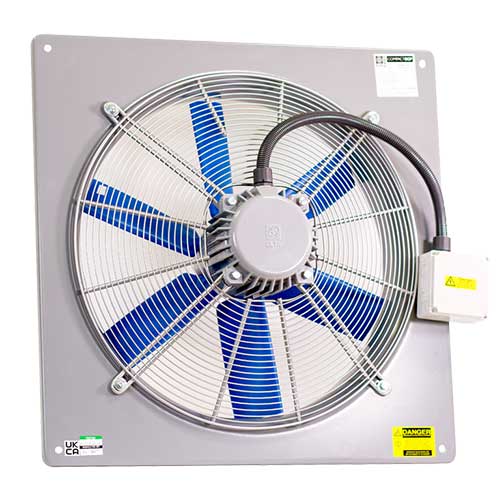
£140 – £300
Multifan V4E50 Recirculation Fan
The Multifan V4E50 is the most genuinely agricultural fan on this list. Vostermans builds it for livestock housing: a totally enclosed air-over motor, a water-resistant fibreglass housing and polypropylene blades, which is exactly the specification you want where hay dust, ammonia and washdown water are routine. For whole-barn airflow it beats small axial and spot fans on even air distribution and durability, and it is a better long-term buy than a cheap drum fan. One buying note for UK yards: the V4E50 is sold in both 120 V North American and 230 V/50 Hz European versions, and many online listings are the US 120 V variant — check the voltage before ordering.
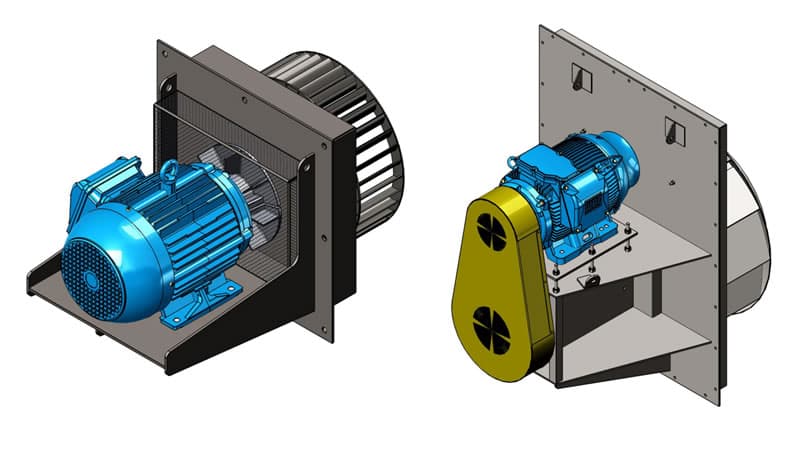
£250 – £550
Big Ass Fans Haiku H Series
The Haiku H Series is Big Ass Fans' residential-style ceiling fan: a DC motor, automatic sensing, very low noise and strong efficiency, which justify the price where a fan runs for long hours. Be clear about where it belongs on a yard. It is designed for clean, dry indoor rooms — a tack room, office, viewing gallery or house — and is not built for the hay dust, ammonia and washdown water of a stable block; Big Ass Fans' agricultural and large-space products (the Powerfoil and AirEye lines) are the ones intended for barns. Treated that way it is the comfort and efficiency pick here rather than the barn ventilation pick.
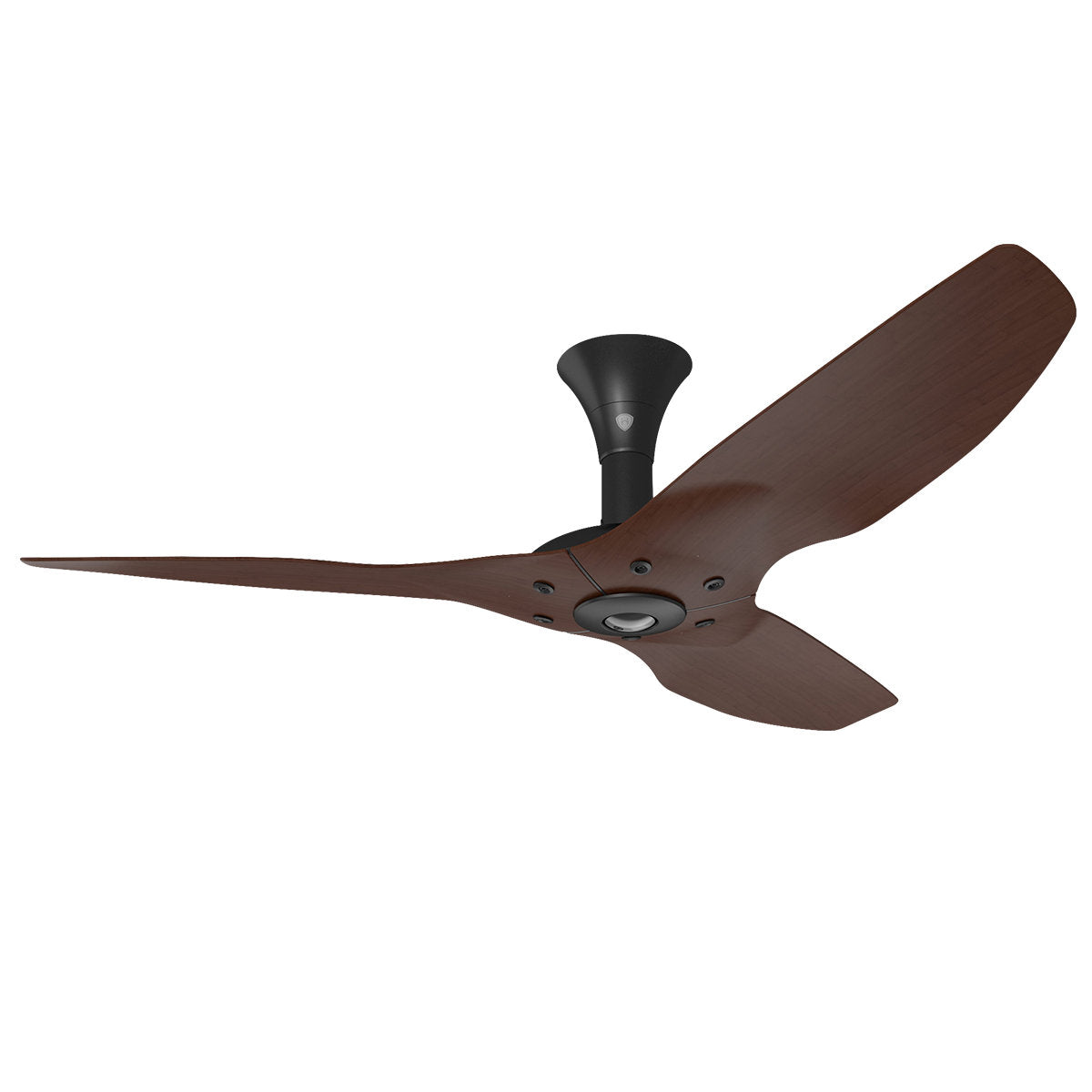
£800 – £1,500
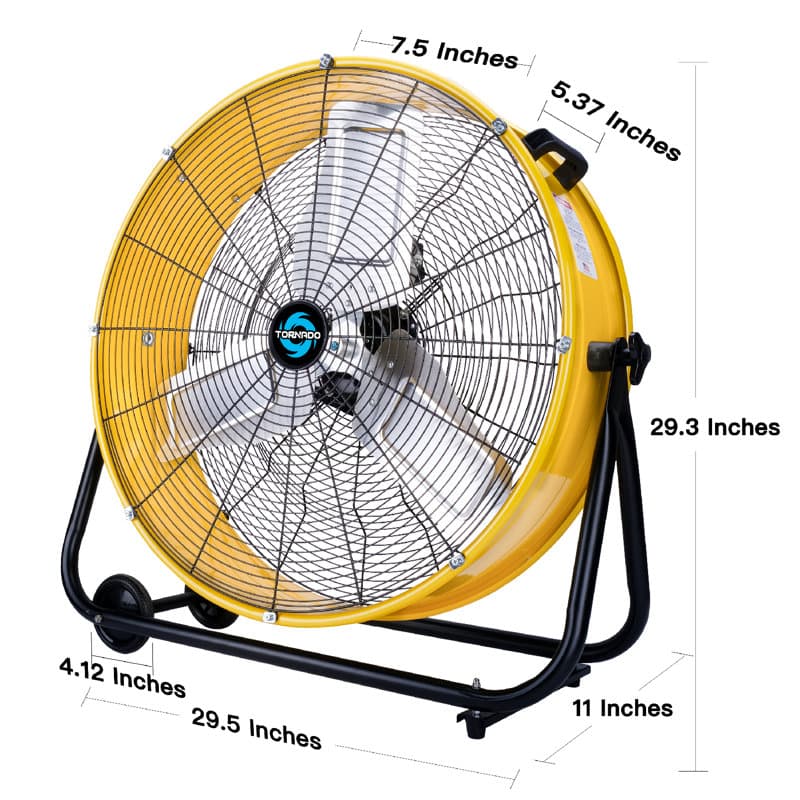
Tornado 24 Inch Drum Fan
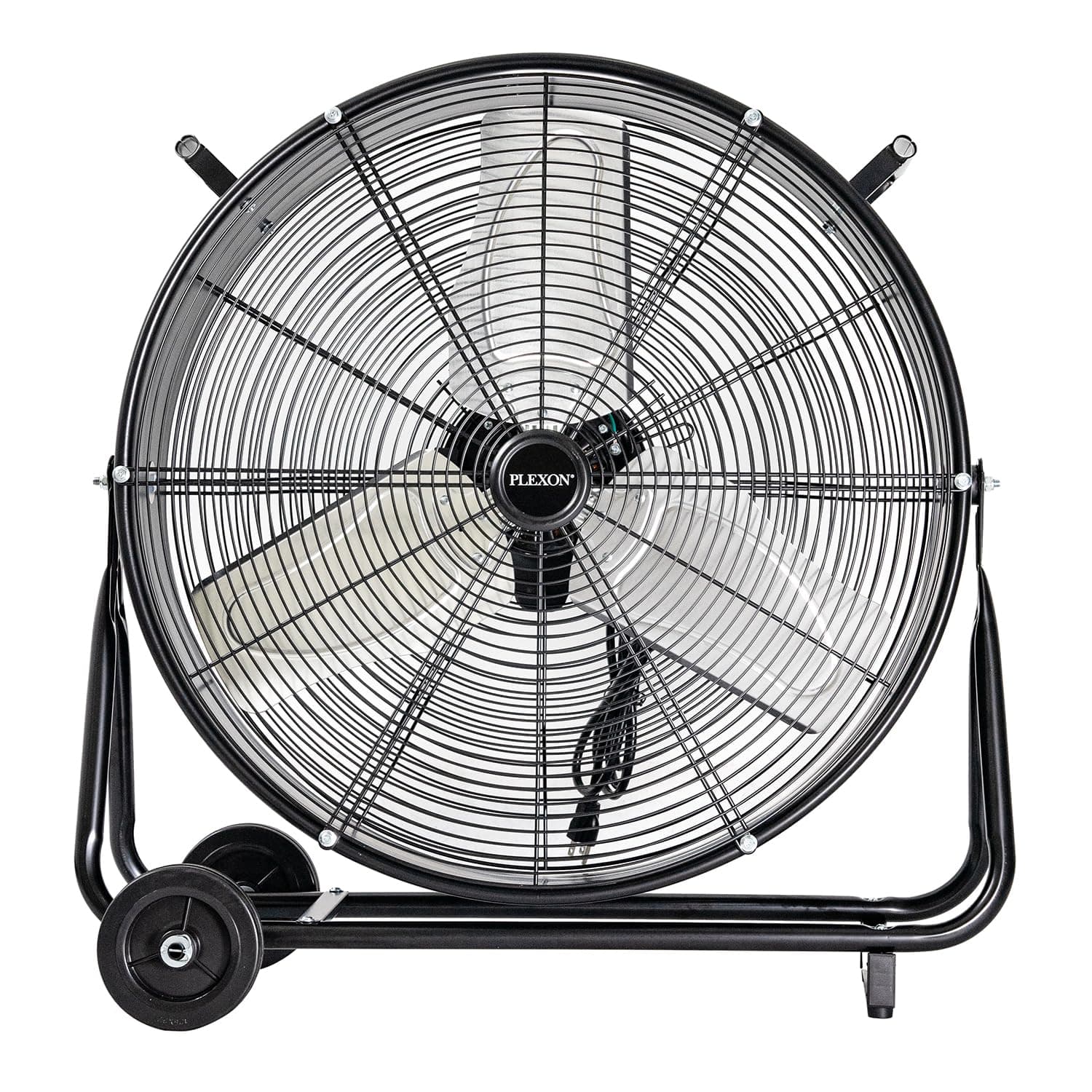
The Tornado 24 Inch Drum Fan is a budget portable workhorse: high-velocity spot cooling and fast drying at a low purchase price, useful in an aisle, wash bay or tack room. It is a workshop fan rather than a livestock fan, with an open frame and an unsealed motor, so use it for temporary, supervised airflow, keep it out of a horse's reach and off dusty bedding, and do not treat it as permanent stall ventilation. UK buyers should also check the voltage: Tornado's drum fans are sold mainly into the US market at 120 V.
Schaefer Versa-Kool VK20 Circulation Fan
Schaefer's Versa-Kool VK20 is a greenhouse and agricultural circulation fan that creates a steady horizontal-airflow (HAF) pattern, mixing air from ceiling to floor to even out temperature and humidity across a barn. Its powder-coated, corrosion-resistant steel guards and aluminium blades suit the dusty, humid conditions of a stable, and the deep-guard design keeps noise low while sustaining strong continuous airflow, giving it a clear edge over generic drum and axial units for whole-space stable circulation. Schaefer is a US manufacturer, but the VK20 is listed at 115/230 V, so a UK-compatible version exists — confirm the voltage and plug arrangement with the supplier.

Airmaster HVD-42A High Velocity Drum Fan
Airmaster Fan Company is a US manufacturer of industrial barrel and drum fans, and a 42-inch unit of this type delivers the highest raw air movement on this list, suiting large barns, workshops and event spaces. It is an open-frame industrial fan rather than a sealed agricultural one, so use it for high-volume, supervised air movement in open areas — drying a washed-down aisle, clearing an indoor school after mucking out — and keep it away from bedding and out of reach of horses. Check the model designation and voltage with the supplier before ordering: Airmaster's UK-available 42-inch barrel fans are sold under several different model codes and are normally 115 V US-market units.
Why Good Stable Ventilation Matters
Air quality is one of the clearest drivers of equine respiratory health. Dust, mould spores and ammonia from bedding and muck build up in still air, and equine asthma is managed first by improving the air the horse breathes. Practical benefits of good ventilation include fewer coughs and infections, better recovery from respiratory conditions, and better working conditions for staff. Guidance for horse housing consistently emphasises continuous air exchange, directional airflow that carries dust and ammonia away from the horse's breathing zone, and fan selection matched to barn size and layout. Fans move and mix air; they do not replace fresh-air exchange through ridge vents, louvres and openings.
Ventilation reduces airborne particulates and ammonia, both linked to respiratory irritation and disease in equines and livestock.
Controlled humidity and airflow help limit pathogen survival and reduce the conditions that encourage bacterial and fungal growth.
Agricultural and greenhouse fans specify totally enclosed, air-over motors and sealed guards for a reason: dust ingress into an open motor is a fire risk, and washdown resistance matters in a damp barn.
Energy-efficient fan designs and variable-speed controls maintain required air changes while lowering running costs compared with fixed high-power systems.
Directional airflow and recirculation fans can be used to target problem zones such as wash bays, tack rooms and individual loose-boxes.
Mount fans high and out of a horse's reach, run cables in conduit on an RCD-protected circuit, and aim airflow along the aisle rather than straight into a stall at close range.
Frequently Asked Questions
Can I use an ordinary household or workshop fan in a stable?
No. Domestic pedestal and box fans, and most open-frame workshop fans, have unsealed motors that pull in hay dust and cobwebs, which is a recognised barn fire risk, and they are not built for the damp and ammonia of a stable. Choose a fan with a totally enclosed, air-over motor in a sealed, washdown-tolerant housing with a fine guard, mount it high and out of a horse's reach, and run the supply in conduit on an RCD-protected circuit.
Will an American barn fan work in a UK stable?
Only if you buy the right variant. Schaefer, Airmaster and Tornado are US manufacturers whose standard models are 115/120 V 60 Hz. A 60 Hz motor run on UK 50 Hz mains turns slower and runs hotter, so buy the 230 V/50 Hz version rather than adapting a US unit. Schaefer lists the Versa-Kool VK20 in 115/230 V, and Vostermans sells a 230 V/50 Hz Multifan range in Europe.
Which fan should I choose for tight stable spaces?
The Elta Fans SCP315 Compact Plate Axial Fan. It is a 315 mm plate-mounted axial fan with a low-profile body designed to sit in a wall panel or bulkhead opening rather than stand on the floor, and it is made in the UK. It comes in single-phase AC, three-phase AC and single-phase EC (SCP315/1EC) versions, so match the variant to your yard's supply; rating 4.7.
What does the Multifan V4E50 do for room recirculation?
It is a 50 cm (20 in) axial panel fan from Vostermans, built for livestock housing: a totally enclosed air-over motor, a water-resistant housing and polypropylene blades that tolerate a humid, dusty barn, with variable-speed control for continuous operation. Order the 230 V/50 Hz European version — US listings for the V4E50 are the 120 V variant; rating 4.6.
Conclusion
In the UK context, choosing the right stable ventilation fan means matching performance to barn size, local climate and the animals you care for, and being honest about which units are actually built for a dusty barn. The Multifan V4E50 Recirculation Fan is the best overall choice for most UK yards: it is a purpose-built agricultural panel fan with a totally enclosed air-over motor and water-resistant housing, and Vostermans sells a 230 V/50 Hz European range. The Schaefer Versa-Kool VK20 Circulation Fan is the pick for even, continuous horizontal airflow across stalls and aisles, and is offered in 115/230 V. The Elta Fans SCP315 Compact Plate Axial Fan suits panel or bulkhead openings where space is tight, and is the one UK-manufactured option here. The remaining three need a caveat: the Big Ass Fans Haiku H Series is an indoor ceiling fan for clean, dry rooms such as a tack room or viewing gallery rather than a dust-sealed barn fan, and the Tornado 24 Inch Drum Fan and Airmaster HVD-42A High Velocity Drum Fan are open-frame US workshop drum fans best used for temporary, supervised spot airflow in an aisle or wash bay, not as permanent stall ventilation. We hope you found the information you needed; if you want to refine or expand your search, use the site search to filter by barn size, noise level or energy consumption.