

Poured Rubber Gym Flooring in the UK: What You Can Actually Buy — 5 Contract Systems for 2026
Read the category name literally and you will be disappointed: poured-in-place rubber is not a product you can order. It is a wet system — EPDM or SBR crumb blended with a polyurethane binder, then troweled out on site by a trained installer over a prepared, dry subfloor, where it cures as one seamless sheet. What you buy is a site survey, a quote and a crew, and most UK contractors will not pour a domestic garage gym at all. So this page does the useful thing instead: it explains where a genuine pour makes sense, and it lists the five factory-made systems UK gyms and sports halls actually specify — rolls, bonded sheet and tiles that an installer lays or, in one or two cases, that you can buy by the roll yourself. None of the five below is poured in place, whatever the product names suggest.
Inception's AI took the time to understand this market in the UK · · How we pickWe may earn a commission on purchases. It never affects our rankings.
Top Picks Summary
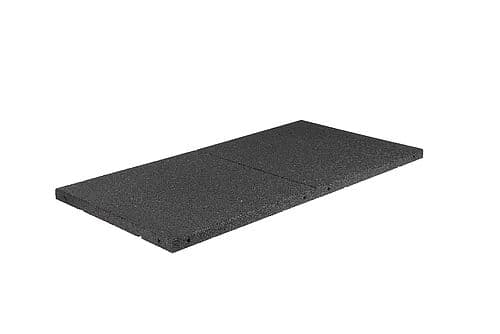
Regupol Everroll Gym Flooring
Regupol Everroll leads this list because it is the closest thing to a poured floor that you can order as an actual product. It is not poured: it is recycled rubber granulate, factory-pressed and supplied as wide rolls or as tiles, then bonded or loose-laid by an installer. What it does share with a poured system is dense rubber mass, which is what buys you impact absorption and noise reduction in a free-weight or mixed-training zone. The roll grades run 4 to 12 mm and are aimed at protecting the floor finish; the tile grades, at roughly 27 to 43 mm, are the ones to specify where weights actually land.
We may earn a commission on purchases. It never affects our rankings.
£250.00GBP
Altro Mondosport Poured Rubber Flooring
Mondosport is a prefabricated rubber sports sheet — vulcanised in a factory, supplied in rolls, fully bonded to the subfloor and welded at the seams by a contractor. It is not a poured-in-place system, despite the product title on this page. What it offers a multi-sport hall is consistent ball response and rebound across the whole floor with a rubber wear surface that tolerates studded and street footwear better than most vinyls. Because it is contractor-installed and seam-welded, it is also the option you cannot patch casually later: plan the layout and line markings once.

We may earn a commission on purchases. It never affects our rankings.
Estimated£70 – £140
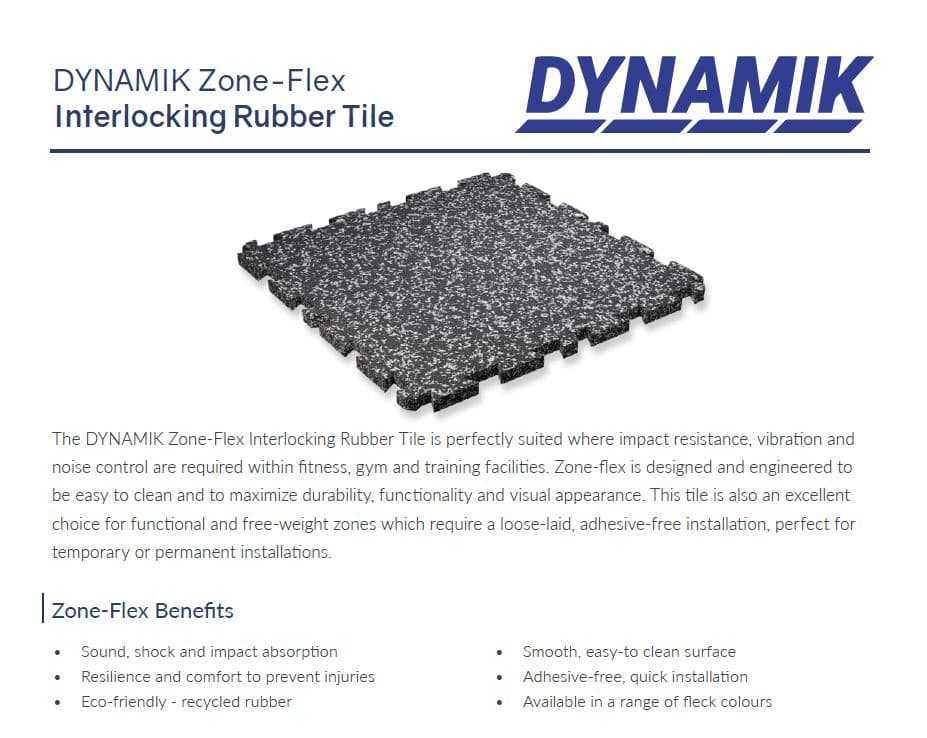
Dynamik Fitness Poured Rubber Flooring System
Dynamik is a UK contract route rather than a product you add to a basket: the floor is surveyed, specified and installed as a single job, which is why there is no shelf price attached to it. That suits operators fitting out a commercial gym who want one party responsible for subfloor preparation, the surface and the line markings. The trade-off is the one every quoted install carries — the number depends on the state of your slab as much as on the surface you pick, and you will not know either until someone has been out to measure and moisture-test it.
Estimated£65 – £130
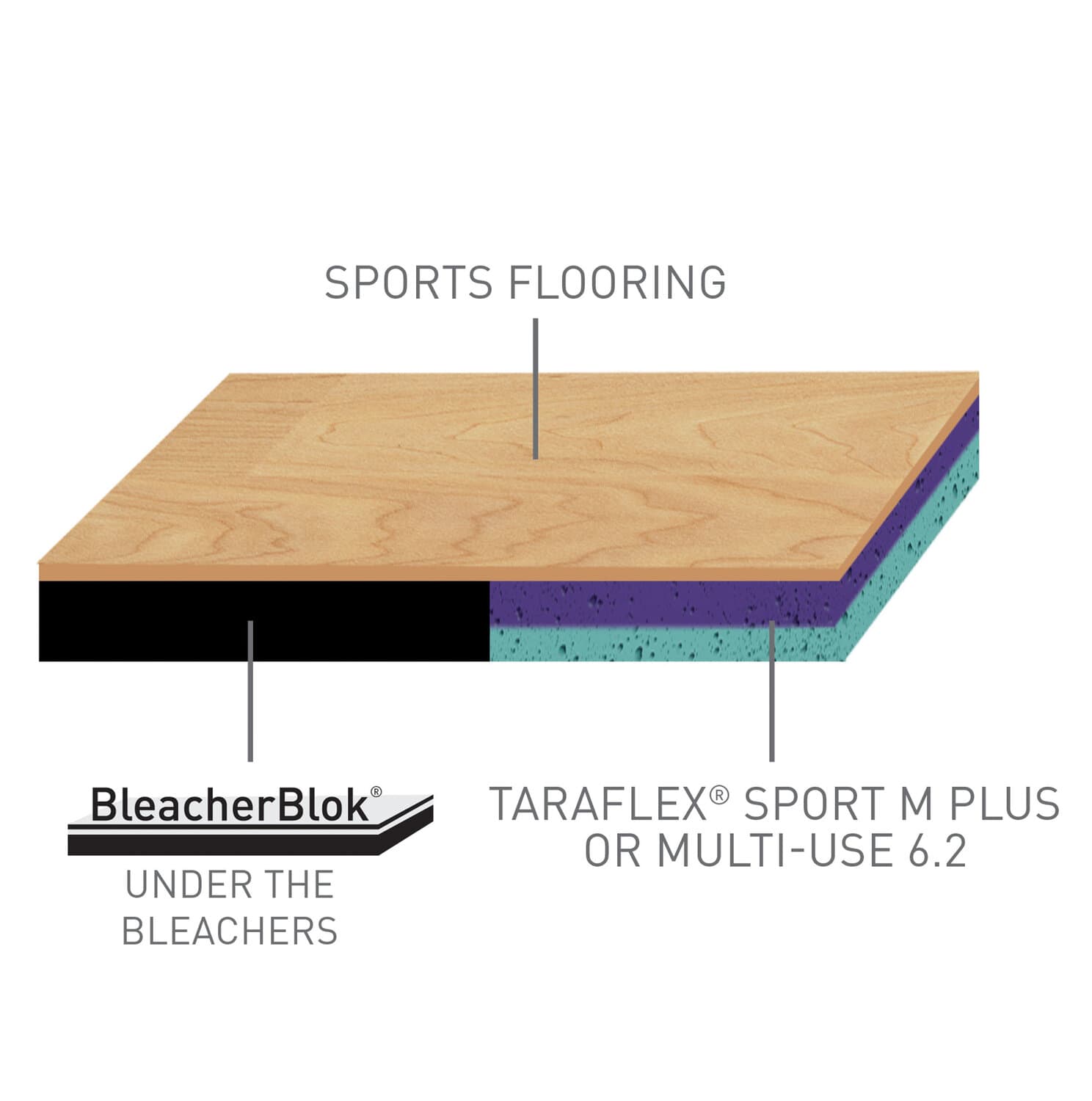
Gerflor Taraflex Multi-Purpose Sports Flooring
Taraflex is vinyl, not rubber and not poured — a bonded PVC sports sheet with a foam backing, welded at the seams. It is the reference surface for indoor courts in the UK and is tested to EN 14904, the European standard that sets shock absorption, ball behaviour, friction and vertical deformation classes for indoor sports surfaces. Specify it where playability, line markings and fast cleaning matter more than free-weight damping. It is the wrong surface under a squat rack: point loads and dropped bars will mark it in a way that dense rubber shrugs off.
We may earn a commission on purchases. It never affects our rankings.
Estimated£40 – £90
Polyflor Polysafe Apex
Polysafe Apex is safety vinyl, not a gym floor and certainly not a poured rubber one. It belongs in the spaces around the training area — changing rooms, showers, poolside routes, entrance matting runs — where the risk you are managing is someone slipping on a wet surface, not a barbell hitting a slab. Judged on that job it is a strong specification: sustained slip resistance and easy cleaning. Judged as a lifting surface it has no impact attenuation worth the name, and the page's own comparison to poured systems should be read as a contrast, not a substitution.

We may earn a commission on purchases. It never affects our rankings.
£42.00GBP
Seamless monolithic construction eliminates seams and trip risks. Customisable colour, thickness, and texture for facility branding. Recycled content and low-emission options meet UK building standards. Superior shock attenuation protects athletes and reduces injury risk. Minimal maintenance requirements save time and operational costs.
How to Judge a Gym Floor in the UK: Standards, Thickness and the Subfloor
Most buying mistakes here are made before anyone looks at a brochure. Four things decide whether a floor survives: what the room is actually for, how thick the resilient layer is relative to what gets dropped on it, which standard the surface is tested against, and whether the subfloor underneath is dry enough to bond to. UK specifications are written against European standards, not the American ones you will see quoted on imported spec sheets.
Thickness is about drop height, not comfort. Regupol Everroll rolls run 4, 6, 8, 10 and 12 mm; its tile grades run roughly 27 to 43 mm. The thin roll grades protect the floor finish and cut noise — they will not stop a dropped Olympic barbell reaching the slab. That is what the thick tile grades, or a dedicated lifting platform, are for.
EN 14904 is the standard for indoor sports surfaces in the UK and EU — it sets shock absorption, ball behaviour, friction and vertical deformation classes. Gerflor's Taraflex range is tested to it. A gym roll sold for free-weight areas usually is not tested to EN 14904 at all, because it is not a sports playing surface; do not read the absence as a failure, but do not assume compliance either.
Poured rubber's real home is playgrounds and outdoor trim trails, where EN 1177 critical fall height governs. There the pour depth is set by the height of the equipment someone can fall from, and a certified installer signs off the depth. Indoor free-weight rooms are a different problem with different answers.
The subfloor decides the adhesive, and moisture decides the subfloor. A residual-moisture test on the screed comes before any bonded system; too wet and you need a surface damp-proof membrane or you loose-lay instead. This preparation, not the rubber, is usually the line item that moves a quote.
Recycled crumb rubber has a smell. Fresh SBR crumb off-gasses noticeably for the first weeks in a warm, poorly ventilated room — a real complaint in home gyms and basement studios. EPDM-topped and factory-pressed products are generally milder than raw crumb; ventilate hard during the first month either way.
Bonded, welded or loose-laid changes what happens later. A loose-laid tile can be lifted and swapped in an afternoon. A fully bonded sheet cannot. A genuine poured floor cannot be patched invisibly at all — the area has to be ground back and re-poured, which is the hidden cost of seamlessness.
Frequently Asked Questions
Can I buy poured rubber gym flooring off the shelf?
No. Poured-in-place rubber is mixed on site — rubber crumb blended with a polyurethane binder, troweled out by a trained installer over a prepared, dry subfloor, and left to cure as one seamless sheet. There is no boxed product; there is a site survey and a quote. Everything listed on this page is a factory-made roll, sheet or tile that gets bonded or loose-laid instead.
Which product should I choose for heavy free-weights?
Regupol Everroll, but in its tile grades rather than its rolls. Everroll rolls come in 4, 6, 8, 10 and 12 mm; the tile lines run roughly 27 to 43 mm. Thin rolls protect the floor finish and cut noise, they do not protect a slab from a dropped Olympic barbell. Even at 43 mm, rubber is a wear layer — a dedicated lifting platform is what takes the real drops. Rated 4.6 out of 5.
Is Altro Mondosport actually a poured floor?
No, despite the product name carried on this page. Mondosport is a prefabricated rubber sheet, vulcanised in a factory and supplied in rolls, which a contractor bonds to the subfloor and welds at the seams. It looks seamless when finished, but nothing is mixed or poured on site. Rated 4.5 out of 5.
How does Dynamik Fitness compare on price for gyms?
It is quoted per project after a site survey, so there is no shelf price to compare against. Price it by the square metre installed, and treat subfloor preparation and moisture testing as separate line items — that preparation, not the rubber, is usually what moves the number. Rated 4.3 out of 5.
Conclusion
Choose by what the room does. Regupol Everroll is the pick for free-weight and mixed training floors, and the one you are most likely to be able to buy by the roll from a UK distributor rather than by quotation. Altro Mondosport suits multi-sport halls that want a bonded rubber sheet with consistent ball response. Dynamik Fitness is a project-quoted route for operators who want the floor designed and installed as one job. Gerflor Taraflex is the answer where playability and EN 14904 compliance matter more than free-weight damping, and Polyflor Polysafe Apex belongs in the changing rooms, entrances and wet routes around the gym rather than under a squat rack. If you genuinely want a poured-in-place surface, that is a separate conversation with a specialist installer — ask for the depth, the binder, and the reference sites before you ask for a price.