

Best Smith Strength Machines for UK Gyms — 2026 Buyer's Guide
Short answer: the Force USA G3 All-In-One Trainer is the best overall Smith machine for most UK buyers, the Bodymax CF484 is the value pick for a first home gym, and the ATX SCR-760 is what to specify for a commercial floor. Smith machines represent one of the most practical investments for British fitness enthusiasts building home gyms or outfitting boutique training studios. These machines feature a barbell locked onto vertical or angled rails with integrated safety stops, enabling safe pressing, squatting, and rowing movements without requiring a training partner. The guided track system provides stability that appeals to solo trainers across the UK, from London flats with limited space to countryside barn conversions. Beyond basic functionality, modern Smith machines now integrate cable stations, adjustable counterbalance systems, and multi-angle training options—making them far more versatile than traditional fixed-barbell setups. British buyers increasingly favour models that combine space-efficient designs with premium British warranty support, corrosion-resistant finishes suited to variable UK humidity, and compatibility with standard plate weights. Whether you're establishing a dedicated home-gym corner in a garage, outfitting a boutique fitness studio in a converted warehouse, or upgrading a residential property gym, choosing the right Smith machine depends on your training style, available floor space, budget range, and long-term maintenance expectations. This guide examines seven models sold through UK retailers and online platforms, evaluating them on build quality, footprint efficiency, cable and pulley versatility, counterbalance technology, warranty coverage, and suitability for British training environments.
Inception's AI took the time to understand this market in the UK · We may earn a commission on purchases. It never affects our rankings.
Top Picks Summary
Force USA G3 All-In-One Trainer
In this 2026 UK guide to Smith strength machines, the Force USA G3 earns its best-in-class spot for sheer versatility: it combines a Smith unit with a power rack, cable system and multiple stations, allowing UK buyers to replace several machines with a single footprint. Compared with heavier commercial units like the ATX or Reeplex, the G3 delivers strong value for money and space efficiency for home or boutique gyms while still offering near-commercial features and robust build quality. Force USA runs an official UK store, so warranty and spare parts are handled domestically rather than shipped in.

ATX Smith Cable Rack SCR-760
The ATX SCR-760 rates as a market leader in this 2026 UK guide for commercial-grade German engineering and heavy-duty construction that suits high-traffic facilities. Technically superior in steel gauge and cable integration compared with Budget models such as Marcy or Bodymax, the SCR-760 is pricier up front but offers better longevity and lower lifecycle costs for gyms seeking long-term ROI.
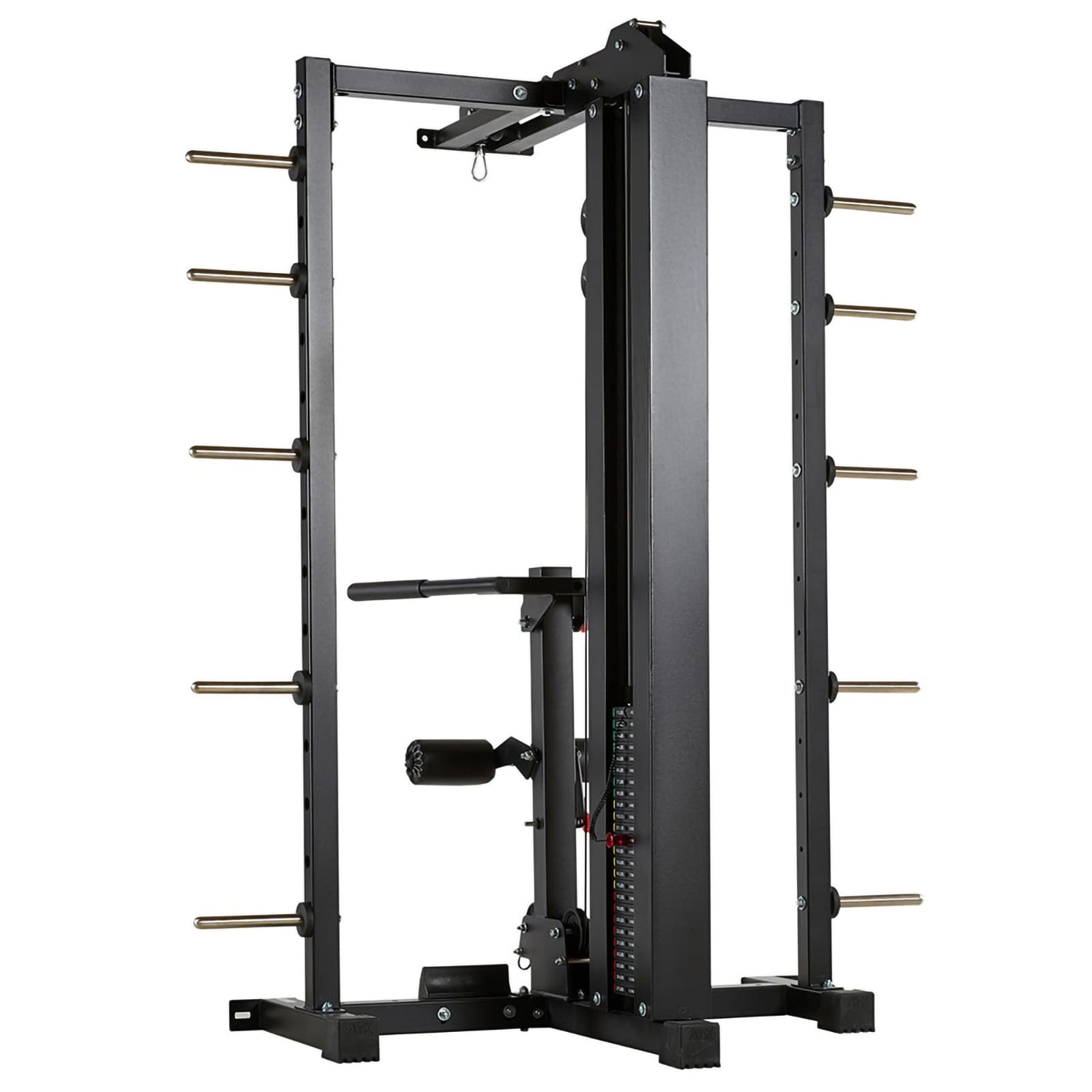
Where to buy ATX Smith Cable Rack SCR-760 in UK: we track one retailer, Atxfitness, and show the price we last observed there; the price you see at checkout may differ.
We may earn a commission on purchases. It never affects our rankings.
£2,500 – £4,000
Cortex SP100 Smith Machine
The Cortex SP100 stands out in the UK 2026 selection as a premium, space-conscious Smith machine with a smooth guided bar and refined finish that appeals to boutique studios and discerning home lifters. Compared with bulkier commercial machines like the Reeplex or the multi-station Force USA, the SP100 balances high-end feel with a more competitive price point and UK-centric support, making it technically precise without the same installation overhead.

Where to buy Cortex SP100 Smith Machine in UK: we track one retailer, Lifespanfitness, and show the price we last observed there; the price you see at checkout may differ.
We may earn a commission on purchases. It never affects our rankings.
£900 – £1,600
Marcy SM4000 Deluxe Smith Machine
Listed in this 2026 UK guide as the best budget entry option, the Marcy SM4000 Deluxe offers dependable functionality for novices and home users at a very competitive price. While it lacks the industrial-grade components of ATX or Reeplex, its simple, proven design and low purchase cost make it an attractive financial choice for first-time buyers or domestic setups where space and budget are primary concerns.
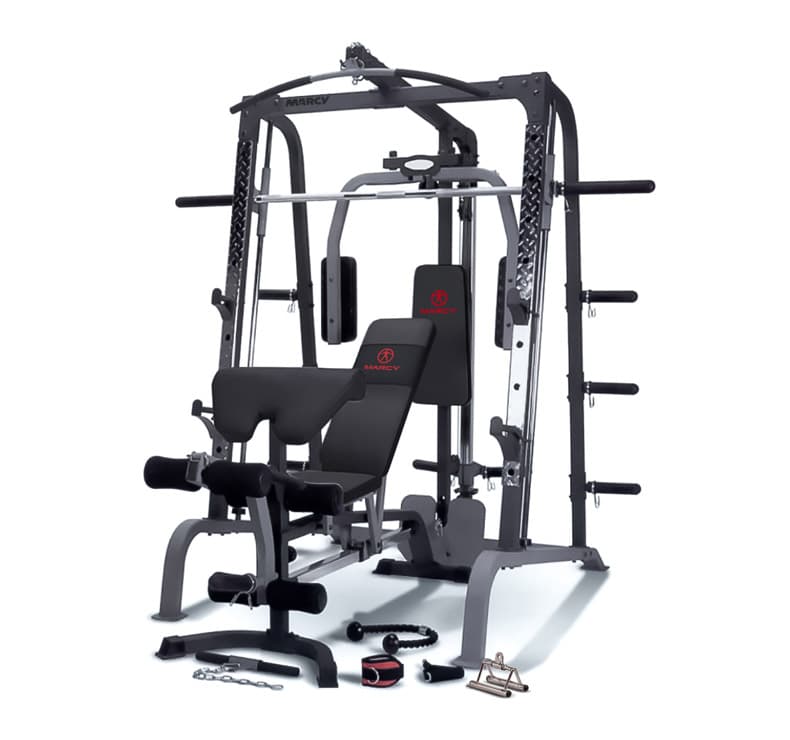
Bodymax CF484 Smith Machine
The Bodymax CF484 is highlighted for the UK market in 2026 because it blends home-gym affordability with heavier-duty features typically seen in semi-commercial equipment, and it benefits from local availability and warranty handling. Compared to Marcy it offers stronger framing and more attachments, yet it undercuts top-tier commercial names on price, giving UK buyers a pragmatic middle-ground between value and durability.
Where to buy Bodymax CF484 Smith Machine in UK: we track one retailer, Bodymax-fitness, and show the price we last observed there; the price you see at checkout may differ.
We may earn a commission on purchases. It never affects our rankings.
£350 – £700
Inspire Fitness FT2 Functional Trainer with Smith Bar
Inspire Fitness FT2 ranks among the premium picks in this UK 2026 guide by combining a high-end functional trainer with an integrated Smith bar, delivering exceptional biomechanics and accessory breadth for serious home users and studios. Technically it surpasses most single-purpose Smith units in terms of pulley systems and adjustability, and while it carries a higher upfront cost, it can replace multiple machines and thus offer long-term financial efficiencies for buyers prioritising performance.

Where to buy Inspire Fitness FT2 Functional Trainer with Smith Bar in UK: we track one retailer, Inspirefitnesssolutions, and show the price we last observed there; the price you see at checkout may differ.
We may earn a commission on purchases. It never affects our rankings.
£2,800 – £4,500
Reeplex Commercial Linear Bearing Smith Machine
The Reeplex commercial linear bearing Smith machine is included as the commercial-grade benchmark for UK facilities in 2026, prized for its industrial robustness and the smooth, low-friction action ideal for heavy daily use. Compared with hybrid or home-focused units such as Force USA or Bodymax, Reeplex is technically superior for high-utilisation gyms but typically demands higher shipping and installation costs for UK purchasers, a trade-off many commercial operators find worthwhile.

Where to buy Reeplex Commercial Linear Bearing Smith Machine in UK: we track one retailer, Reeplex, and show the price we last observed there; the price you see at checkout may differ.
We may earn a commission on purchases. It never affects our rankings.
£2,200 – £4,000
Look for Smith machines with adjustable counterbalance systems that accommodate lighter weights, stainless-steel or powder-coated finishes resistant to British damp conditions, integrated cable pulley systems for added exercise variety, safety catch mechanisms that function reliably, and suppliers offering comprehensive UK-based warranty and spare parts support.
How Smith Machines Compare to Free Weights
A Smith machine fixes the bar to a rail, so the load travels a set path and the lifter does not have to balance it. That changes what the lift trains more than how hard it is: the prime movers still work against the load, but the muscles that control bar path on a free-weight squat or press do less. The practical trade-off is safety and repeatability against transferable stability, which is why most coaches run guided and free-weight work alongside each other rather than picking one.
Solo training: fixed safety catches let you fail a heavy press or squat without a spotter, which is the main reason Smith machines end up in home gyms and unstaffed facilities.
Strength and size: with load and volume matched, guided and free-weight work both drive progress in the prime movers; the rail mainly removes the balance demand.
Stabiliser demand: because the rail controls the bar path, the muscles that steady a barbell work less — useful when you want to isolate a target, less useful for training balance.
Rehab and controlled loading: a fixed path makes it easier to reload a recovering joint in small increments without the movement drifting under fatigue.
Bar weight varies: counterbalanced machines can start well below a 20 kg Olympic bar while some uncounterbalanced ones start above it, so check the stated starting resistance before comparing your numbers to free-weight lifts.
Frequently Asked Questions
Which Smith machine is best for a small home gym?
The Bodymax CF484 is the best fit for a small UK home gym: it keeps a space-saving footprint with guided lifts, a high/low pulley and integrated plate storage, and it ships from UK stock with UK warranty handling. If you have the ceiling height and floor area for a full multi-station frame, the Force USA G3 replaces several machines in one footprint instead.
Does the ATX Smith Cable Rack SCR-760 feature dual cable towers?
Yes, the ATX SCR-760 includes integrated dual cable towers alongside its Smith bar, with 2 x 55 kg plug-in weight blocks in 2.5 kg gradations and 29 height positions in 5 cm increments.
How much does a Smith machine cost in the UK?
Roughly £350 to £4,500. Entry-level home units such as the Bodymax CF484 sit around £350-700 and the Marcy SM4000 Deluxe around £450-900. Commercial and multi-station frames are far more: the Reeplex Commercial runs about £2,200-4,000, the ATX SCR-760 about £2,500-4,000, and the Force USA G3 and Inspire Fitness FT2 about £2,800-4,500. Budget separately for delivery and assembly, which are rarely included at the heavier end.
Is the Force USA G3 suitable for commercial gym use?
The Force USA G3 features heavy-duty construction with a reinforced frame designed for frequent use in both home and boutique commercial settings. For a high-traffic club floor, the ATX SCR-760 is the stronger specification — it is certified to EN 20957 Class S, the studio/commercial class.
Conclusion
Each machine here suits a different setup. The Bodymax CF484 is the pragmatic first buy for a UK garage gym, with local stock and warranty handling behind it, while the Marcy SM4000 Deluxe adds a high/low pulley, pec dec, leg developer and a bench if you want several stations without going past four figures. Step up and the ATX SCR-760 is the one to specify for a commercial floor — EN 20957 Class S, dual 55 kg stacks and steel gauge built for daily traffic — with the Reeplex Commercial linear-bearing machine offering a similarly heavy build and a smoother carriage. If you want one frame to replace several machines, the Force USA G3 All-In-One Trainer pairs a Smith unit with a power rack and cable stations, and the Inspire Fitness FT2 does the same with independent dual stacks and a more refined pulley system. For most British home buyers the Force USA G3 is the sensible all-rounder; for a studio or club floor, choose the ATX. Before ordering, check ceiling height, door and stairwell access, and whether the supplier delivers to the room rather than the kerb — assembled Smith machines run to several hundred kilograms.