

Split Shot and Clip-On Sinkers: Top 7 UK Picks for 2026
For UK anglers the short answer is to buy non-toxic. Supplying lead weights between 0.06g and 28.35g for weighting a fishing line is banned, and that band covers every everyday size from No.6 up to SSG, so a lead-free assortment such as the Dinsmore Non-Toxic Split Shot Assortment is the safe default. Split shot and clip-on sinkers are compact, adjustable weights that clamp or snap directly onto your fishing line, allowing you to dial in exact depth and presentation without rebuilding your entire rig. In the UK these small but versatile terminal tackle items are essential for trout on upland streams, roach and dace on rivers, and targeted work on reservoirs for species such as pike. British anglers prize split shot for its ability to micro-adjust sink rate on the fly during a session on the Wye, Trent or local stillwaters, turning frustrating blank days into steady catches. Recent market trends through 2025 and into 2026 show rising demand for a broader assortment of materials and sizes, better performance in cold and wet conditions, and a shift toward non-toxic or reusable clip-on designs. Consumers choose products based on material (tin, steel, bismuth or tungsten), ease of application when wearing gloves or in rain, and the practical value of varied-sized assortments that suit different water temperatures and lure or bait weights. Environmentally aware anglers in the UK prefer lead-free options to reduce wildlife risk, and in the regulated sizes lead is not a legal option anyway.
Inception's AI took the time to understand this market in the UK · We may earn a commission on purchases. It never affects our rankings.
Top Picks Summary
Dinsmore Non-Toxic Split Shot Assortment
Dinsmore's Non-Toxic Split Shot Assortment earns a top spot for combining environmental safety with broad-size versatility, making it a practical, lower-risk choice for anglers concerned about waterways. Made from a soft, lead-free tin alloy, it crimps easily and complies with UK fishery guidance, delivering a clear value advantage for buyers seeking an all-purpose, eco-friendly kit rather than paying a premium for ultra-soft or specialised shots.

Where to buy Dinsmore Non-Toxic Split Shot Assortment in UK: the trusted retailers we track in this market, with the best price we have observed at each. Prices are checked regularly and can change, and the retailer confirms the final price at checkout.
We may earn a commission on purchases. It never affects our rankings.
£10.60GBP
Preston Innovations Stotz Split Shot
Preston Innovations Stotz Split Shot are market-leaders for precision and finish, delivering extremely consistent weights and a neat clip that minimises damage to light lines — the premium choice for competitive panfish and trout anglers. While they command a higher price than generic assortments like Anchor, their technical reliability and longevity often justify the investment for anglers focused on tournament-level finesse and repeatable results.
Where to buy Preston Innovations Stotz Split Shot in UK: the trusted retailers we track in this market, with the best price we have observed at each. Prices are checked regularly and can change, and the retailer confirms the final price at checkout.
We may earn a commission on purchases. It never affects our rankings.
£2.49GBP
Anchor Split Shot Selection Box
Anchor's Split Shot Selection Box is a long-established UK offering thanks to its robust packaging, tidy compartmented storage and wide size range that suits heavy-duty or traditional coarse and match rigs. Technically reliable and competitively priced against premium soft-shot options, it trades the ultra-soft handling of some rivals for durability and predictable, consistent weights.

Middy Super-Soft Split Shot
Middy's Super-Soft Split Shot stands out for delicate presentations: its softer alloy allows easy crimping and minimal damage to line or bait, a technical advantage for finesse anglers willing to pay a modest premium. Compared to the broader assortments here, Middy targets handling and presentation over bulk, offering superior crimping at a slightly higher unit cost than general-purpose assortments.

Water Gremlin Removable Split Shot
The Water Gremlin Removable Split Shot is a go-to clip-on for finesse anglers thanks to its winged removable design that lets you change shot position without retying — ideal for panfish and trout presentations. It outshines fixed assortments on convenience, but UK anglers should note it is a soft-lead product: supplying lead weights between 0.06g and 28.35g for fishing is banned in England, and the sizes listed here sit inside that band, so use it only in the exempt sizes (No.8 and smaller) or pick a non-toxic alternative.

Dinsmores Egg Shot Selection
Dinsmores Egg Shot Selection is positioned as the specialist choice for anglers using float and bait-egg presentations, with small, shaped weights optimised for neat placement and subtle balance. Financially attractive for those who only need egg-specific sizes, it complements broader assortments by reducing waste and cost-per-use in that niche.
Korum Inline Olivettes
Korum Inline Olivettes bring a technical edge with an inline design that reduces line twist and improves castability — a real advantage for trout and finesse presentations compared with traditional lateral split shot. Though typically more specialist and slightly more expensive than basic split shot assortments, their performance pay-off for delicate presentations and accurate weighting makes them a top pick for serious finesse anglers.
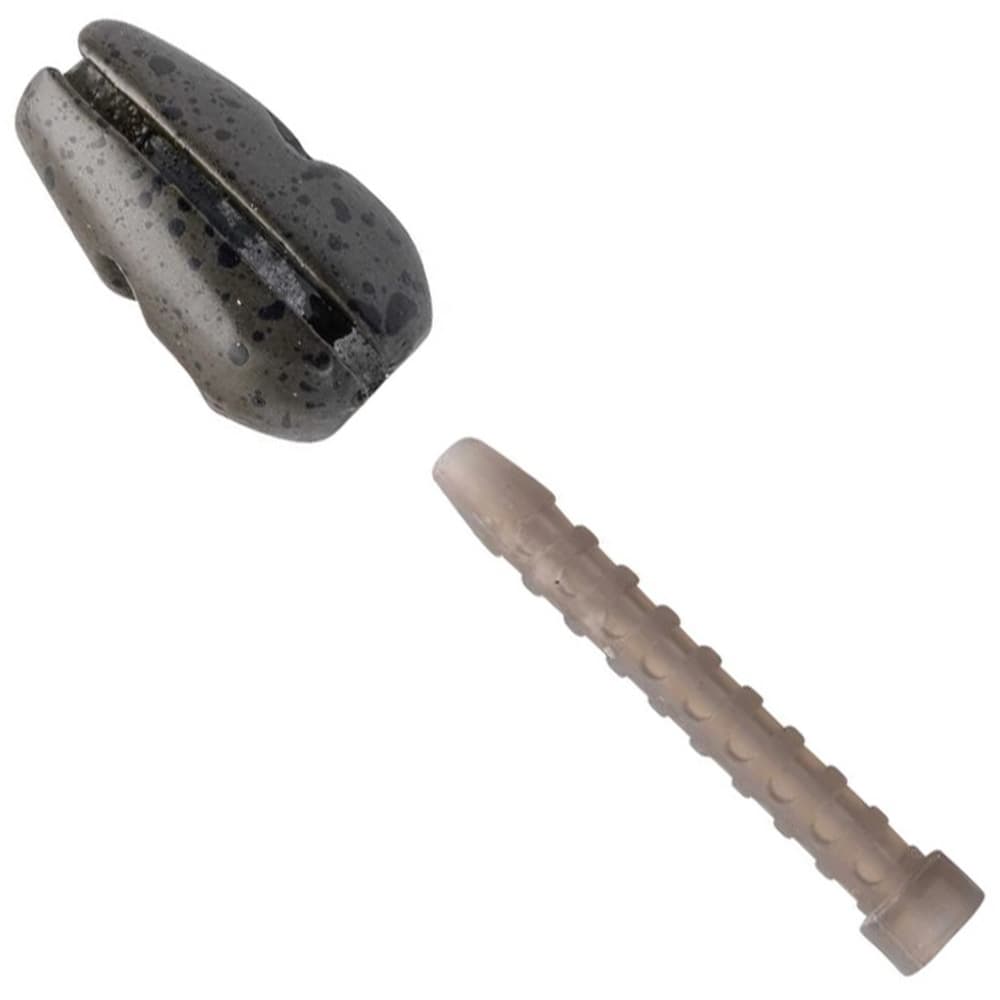
How split shot and clip-on sinkers work: evidence and practical takeaways
The effectiveness of split shot and clip-on sinkers is grounded in simple physics, and the material you can legally buy is set by law. Weights change sink rate and line angle, affecting presentation, drag and how quickly baits or flies reach strike depth. Material choice matters: denser metals like lead provide more mass in smaller sizes, while tin, bismuth and steel need more volume for the same sink rate but remove the toxicity risk. Lead poisoning of waterfowl, mute swans in particular, from discarded anglers' weights is what prompted the original restriction, in force since 1 January 1987; in England the rule is now the Environmental Protection (Anglers' Lead Weights) Regulations 2015, which bans supplying lead weights between 0.06g and 28.35g for weighting fishing lines and revoked the 1986 and 1993 regulations. The practical reason anglers carry a mixed assortment rather than one size is that adding or shifting a single shot changes the drop without retying the rig.
Sink rate control: Small increments of mass change how quickly a bait or fly drops and how it moves through the feeding zone.
Material trade-offs: Lead is the most compact option by weight, but tin, bismuth and steel are effective lead-free alternatives with different handling characteristics.
Presentation matters: Moving a single BB closer or farther from the hook can change surface disturbance and trigger more bites.
It is law, not etiquette: supplying lead weights between 0.06g and 28.35g for fishing is banned (in England, the Environmental Protection (Anglers' Lead Weights) Regulations 2015). Lead is exempt only at 0.06g or less, meaning No.8 and smaller down to dust shot, and above 28.35g.
Match the shot to conditions: size the shot to flow, depth and target species rather than defaulting to the heaviest weight in the box.
Frequently Asked Questions
What is the best split shot for UK anglers in 2026?
The Dinsmore Non-Toxic Split Shot Assortment is the best overall pick for most UK anglers, combining a broad range of sizes with a lead-free, fish-safe formula that suits the most common river and stillwater coarse-fishing situations.
Is lead split shot legal in the UK?
Only at the extremes. Supplying lead weights between 0.06g and 28.35g for weighting a fishing line is banned, set in England by the Environmental Protection (Anglers' Lead Weights) Regulations 2015, which replaced the 1986 rules that took effect on 1 January 1987. Lead is exempt only at 0.06g or less (No.8 and smaller, down to dust shot) and above 28.35g, so everyday sizes such as No.6, No.4, No.1, BB, AAA and SSG must be non-toxic: tin, tungsten, steel or bismuth.
What is the difference between split shot and clip-on sinkers?
Standard split shot is pinched onto the line and stays put, while clip-on (removable) split shot has small wings or 'ears' that let you squeeze it back open and reposition or remove it without retying. Removable designs are handy for finesse work and frequent depth adjustments.
What are Stotz and how do they differ from round split shot?
Stotz are a flat-ended hybrid shot from Preston Innovations with a wide split and increased surface area, so they grip the line firmly without pinging off and form a neat bulk when grouped. They are popular for pole and match fishing, and like all shot sold in the regulated sizes they are non-toxic rather than lead.
Conclusion
This guide highlights the best split shot and clip-on sinkers for UK anglers in 2026, from compact non-toxic assortments to flexible clip-on systems. Our top seven include Dinsmore Non-Toxic Split Shot Assortment, Preston Innovations Stotz Split Shot, Anchor Split Shot Selection Box, Middy Super-Soft Split Shot, Water Gremlin Removable Split Shot, Dinsmores Egg Shot Selection, and Korum Inline Olivettes. For most UK anglers balancing performance and environmental responsibility, the Dinsmore Non-Toxic Split Shot Assortment stands out as the best overall choice thanks to its mix of sizes and lead-free composition. We hope you found what you were looking for — if not, refine or expand your search using the site search to match material, size or fishing style more closely.