

Best Aeration Machines for UK Turf 2025 — Top 3 Commercial & Domestic Picks
Published on Monday, 25 August 2025
Aeration is a cornerstone of good turf management across the UK — from council sports fields and busy golf courses to compact suburban lawns. In 2025 British grounds teams and garden owners are choosing a mix of core, solid-tine and spiking machines that suit local soils and seasonal pressures: heavy clay in the Midlands, chalky downland in the South, peaty turf in parts of Scotland and the freeze‑thaw cycles of northern areas. Leading models range from tow‑behind and tractor‑mounted machines for large estates, to stand‑on and walk‑behind units built for tight access and rapid work. Key factors for UK buyers include durability in damp, cold conditions, rapid access to parts and dealer support, adjustable tine spacing for native grasses and bent/rye blends, and machines that minimise surface disruption during peak summer use. Newer battery and hybrid options are beginning to appeal for quieter operation on residential sites and noise‑sensitive venues. This guide highlights six machines that consistently deliver across British conditions — examples include heavy‑duty coring units like the John Deere Aercore 800 and Toro ProCore 648, the Wiedenmann Terra Spike GXi8 HD for precision spiking, the Redexim Verti‑Drain 2519 for commercial-grade penetration, ClassenCA‑18HD split drive for contractor versatility, and other models suited to tight urban parks. For each product we emphasise what matters in the UK: tine versatility, service network, seasonal timing (autumn and spring windows), and options for hire versus purchase so you can match performance with budget and maintenance capacity.
Top Picks Summary
SISIS Javelin Aer-Aid 1500
The SISIS Javelin Aer-Aid 1500 is a UK-engineered stand-on spike aerator aimed at councils and smaller clubs that prioritise cost-effective ownership and turf-friendly operation in typical British soil conditions. Its competitive purchase price and transportability make it a practical alternative to the larger, more capital-intensive machines on this list, while still providing better turf-preservation than some higher-impact deep-tine systems when used for regular maintenance cycles.
Show More Walk Behind Core Aerators for Golf Course Maintenance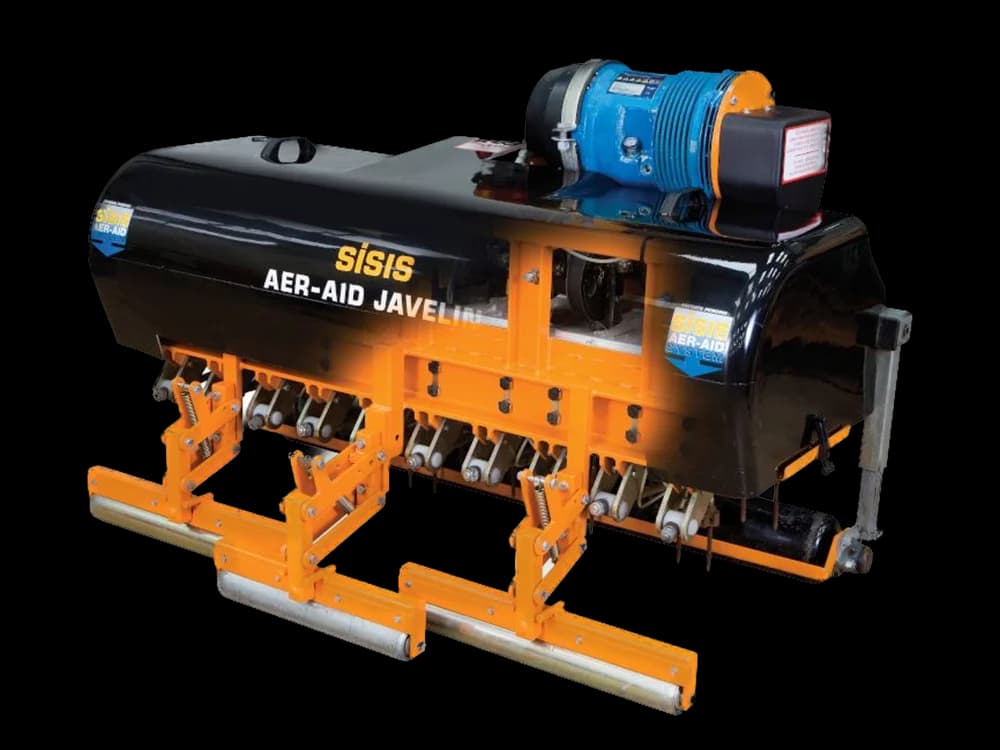
Ransomes Verti-Drain 7626
The Ransomes Verti‑Drain 7626 is the UK‑centric heavy‑duty vertical tine specialist known for deep, accurate penetration and a service footprint tailored to British golf operations, which reduces lead times and downtime in-season. Technically it competes with the John Deere and Toro for depth and robustness but offers a configuration and local support package that many UK superintendents prefer, plus strong resale value across European markets. Its focused design on vertical aeration and adjustable spacing helps courses achieve rapid recovery and sustained playability after works compared with machines that disturb a larger surface area.
Show More Tow Behind Core Aerators for Golf Course Maintenance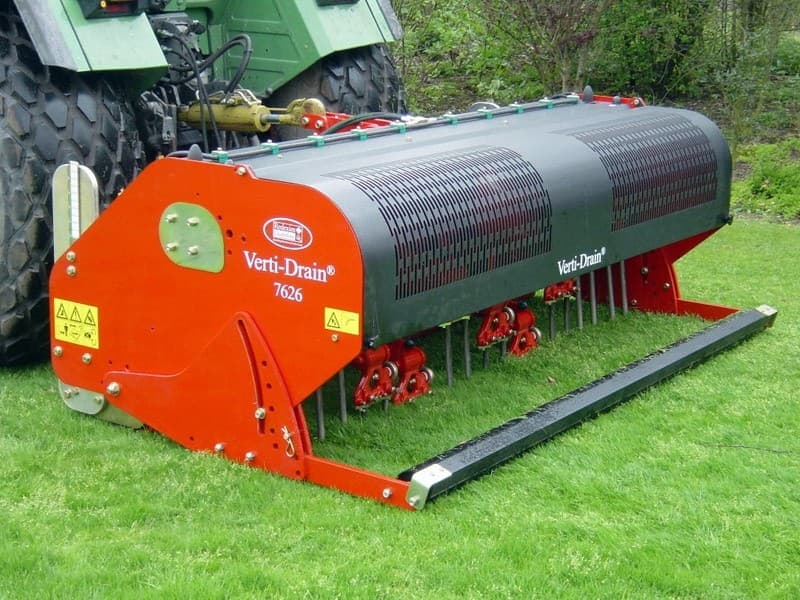
Charterhouse Verti-Drain 7521
The Charterhouse Verti-Drain 7521 earns its best-in-class spot for Britain 2025 by combining heavy-duty build quality with a versatile combination head that switches cleanly between core and solid tines, delivering high-throughput aeration across fairways and heavy turf. Its strong UK dealer network and rugged components lower lifetime service costs compared with continental machines, while offering greater productivity than the smaller SISIS unit and a more British-focused support model than the Redexim 7316.
Show More Stand On Spike Aerators for Golf Course Maintenance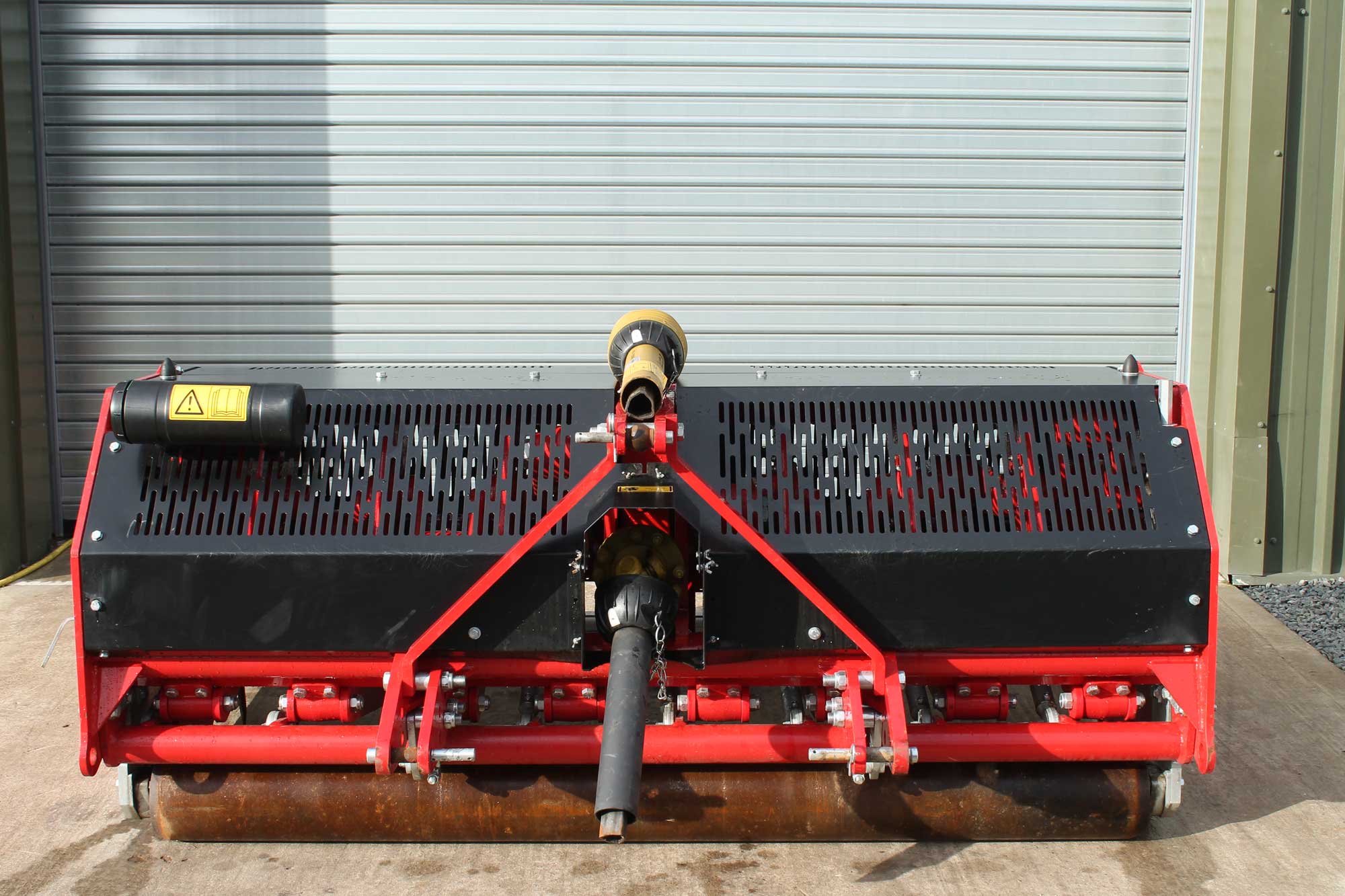
UK buyers look for machines that combine durable build and corrosion resistance, adjustable tine patterns for different turf types, dealer and parts availability, low ground disturbance options, and seasonal performance across freeze‑thaw cycles. Battery and quieter diesel models are increasingly popular for sensitive sites.
Why Aeration Works: Evidence and Practical Guidance
Soil aeration works by increasing pore space in compacted soil, allowing more oxygen, water, and nutrients to reach roots and improving microbial activity that supports plant health. Research from university turf programs and industry trials shows measurable benefits to turf density, root depth, and water infiltration after proper aeration. The best results combine the right machine type and tine configuration with correct timing and frequency tailored to soil type and turf species. For British conditions, timing aeration to when soils are moist but not saturated and avoiding extremes of freezing or drought improves outcomes.
Improved infiltration and drainage: Studies report substantial increases in water infiltration rates after aeration, with results varying by soil type and method. Improved infiltration reduces surface runoff and puddling on playing surfaces.
Root growth and density: Research shows increases in root length and mass after core aeration compared with non-aerated controls, supporting healthier, more resilient turf.
Reduced bulk density and compaction: Aeration reduces soil bulk density and relieves compaction, typically with measurable improvements within weeks to months depending on follow-up maintenance.
Core versus solid tine trade-offs: Core aeration removes soil plugs, providing strong compaction relief and long term benefits. Solid tine and spiking methods create fractures with less surface disruption and are useful for maintenance windows when quicker recovery is needed.
Timing and frequency: Best practice guidance from turf science programs recommends aerating during active growth windows for the turf species, often in spring and fall in many British regions, and tailoring frequency to traffic levels and soil conditions.
Smart automation benefits: Early trials of automated tine control and GPS-guided patterns show more consistent tine spacing and coverage, reducing operator error and labor time while maintaining or improving turf outcomes.
Frequently Asked Questions
Which aeration machine is best for full-size golf course fairways?
The Charterhouse Verti-Drain 7521 is the ideal choice for full-size golf courses because it features a wide working width and interchangeable core and solid tine cartridges for high-throughput aeration.
What is the average rating of the Charterhouse Verti-Drain 7521?
The Charterhouse Verti-Drain 7521 holds an average rating of 4.5 out of 5, reflecting its robust construction and efficiency on heavy turf.
Does the SISIS Javelin Aer-Aid 1500 work for smaller clubs?
The SISIS Javelin Aer-Aid 1500 is specifically designed for smaller clubs and tight-access areas, offering a cost-effective solution with a 4.2 rating for its lightweight agility and consistent spiking.
Which machine should I choose for deep vertical tine penetration?
The Ransomes Verti-Drain 7626 is the specialist for deep vertical tine penetration, featuring hydraulic depth control and heavy-duty construction tailored for intensive use on British golf courses.
Conclusion
Selecting the right aeration machine in Britain is about matching machine type to turf goals, property size and local soil. Core aerators remain the go‑to where compaction and thatch need removal; solid tines and spike machines work well for lighter compaction and for quick, low‑impact maintenance between playing seasons. Consider dealer proximity for parts and servicing, and whether hiring a specialist machine for Autumn or Spring aeration makes more sense than buying for occasional use. Use filter tools to narrow by tine type, working width, weight and noise levels, or contact local dealers for demos and seasonal advice. If you need help narrowing the field for a golf course, sports pitch or a small council green, search by application or contact a specialist to arrange a site visit. We hope this localised overview points you to the right top‑six candidate — try the filters to refine by price, capacity or hire availability and find the best fit for your UK turf needs.