

Best Environmental Monitoring Drones for UK Conservation Work in 2025
Published on Saturday, 12 April 2025
Environmental surveillance has undergone a remarkable transformation, and unmanned aerial vehicles now stand at the forefront of modern conservation efforts across Britain. These sophisticated machines capture critical data that informs environmental policy, supports wildlife protection initiatives, and enables rapid response to ecological emergencies. The UK's commitment to net-zero emissions and biodiversity recovery has created unprecedented demand for precision monitoring tools. Today's leading environmental drones deliver exceptional accuracy, extended flight endurance, and advanced sensor integration—qualities essential for serious conservation professionals, environmental consultancies, and governmental bodies managing our natural heritage. Whether you're tracking habitat changes, assessing coastal erosion, monitoring air quality in urban centres, or conducting agricultural environmental surveys, selecting the appropriate drone technology can fundamentally improve your operational efficiency and data reliability. This comprehensive guide examines five exceptional environmental monitoring systems that have earned recognition within the UK's environmental sector, each offering distinct advantages tailored to different surveying requirements and professional standards.
Top Picks Summary
DJI Matrice 30T
The Matrice 30T ranks among the top picks for environmental monitoring in Britain, 2025 thanks to its compact, weather-resistant design and integrated thermal and visual sensors that make rapid site inspections and thermal surveys cost-effective for local authorities and conservation teams. It balances capability and portability better than the heavier Matrice 350 RTK, while offering more integrated thermal utility than the smaller Mavic 3 Multispectral; financially it represents a mid-tier enterprise option with lower acquisition and operational costs than the full-size M350 RTK. Compared with the Autel EVO Max 4T it trades extreme sensor flexibility for streamlined workflows and tighter ecosystem integration with widely used mapping and compliance tools in the UK market.

Where to buy DJI Matrice 30T in UK: the trusted retailers we track in this market, with the best price we have observed at each. Prices are checked regularly and can change, and the retailer confirms the final price at checkout.
We may earn a commission on purchases. It never affects our rankings.
£10,000 – £14,000
DJI Mavic 3 Pro
The Mavic 3 Multispectral is the go-to choice for Britain’s precision vegetation and habitat monitoring in 2025, offering an affordable, lightweight multispectral payload that delivers high-quality NDVI and crop-health data for ecologists and small agricultural teams. Its financial advantage is clear for budget-constrained projects—lower purchase and operating costs than the Matrice series—while being easier to deploy than both the Matrice 350 RTK and Autel EVO Max 4T for routine field sampling. Technically it cannot match the payload modularity or RTK-grade positioning of the larger drones, but it outperforms them in rapid, low-cost multispectral surveys and portability across the varied British landscape.

Parrot Anafi USA
The Parrot ANAFI USA is designed specifically for professional use, with unique features that include a 32x zoom camera and 4K HDR recording capabilities. Its lightweight and portable design ensures easy transport, making it an ideal field companion. The drone is also equipped with thermal imaging technology, allowing users to conduct detailed inspections and assessments. With its strong emphasis on data security and privacy, the ANAFI USA is particularly suited for government and enterprise applications.

Where to buy Parrot Anafi USA in UK: the trusted retailers we track in this market, with the best price we have observed at each. Prices are checked regularly and can change, and the retailer confirms the final price at checkout.
We may earn a commission on purchases. It never affects our rankings.
£8,000 – £10,000
Autel EVO Max 4T
The Autel EVO Max 4T stands out in 2025 as a strong competitor offering a versatile sensor suite—thermal, high-resolution optical and extended zoom—at a price point that undercuts some DJI enterprise models, making it attractive for UK councils and contractors focused on inspections and incident response. Technically it bridges the gap between compact multispectral platforms and full-size enterprise rigs by combining advanced obstacle sensing and long-range imaging, though it lacks some of DJI’s software ecosystem depth found with the Matrice line. For buyers prioritising sensor flexibility and value, the EVO Max 4T often delivers comparable field performance to the Matrice 30T and approaches the capabilities of the Matrice 350 RTK without the same total cost of ownership.
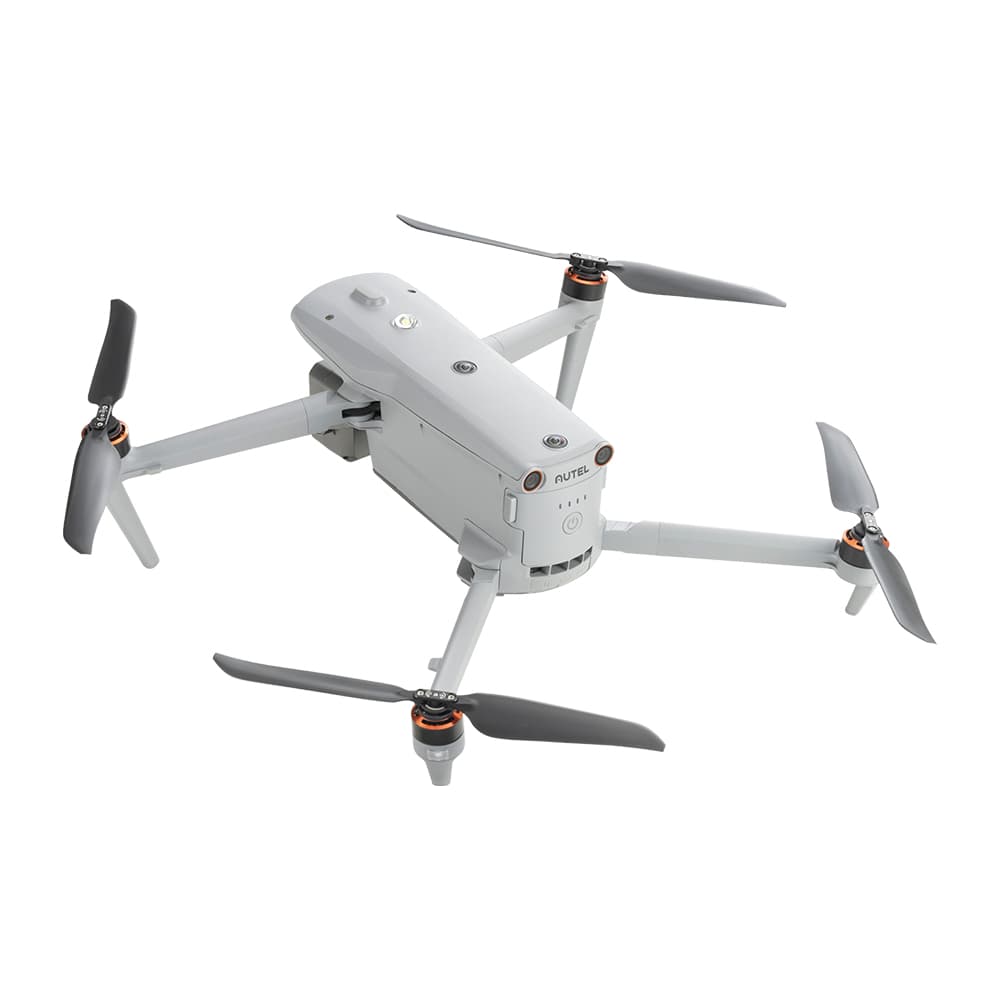
Where to buy Autel EVO Max 4T in UK: the trusted retailers we track in this market, with the best price we have observed at each. Prices are checked regularly and can change, and the retailer confirms the final price at checkout.
We may earn a commission on purchases. It never affects our rankings.
£8,000 – £12,000
DJI Matrice 350 RTK
The Matrice 350 RTK is the market leader for large-scale environmental monitoring in Britain, 2025, thanks to its enterprise-class endurance, modular payload capacity and centimetre-level RTK positioning that make it ideal for coastal surveys, forestry mapping and long-duration missions. While it demands a higher upfront investment than the Matrice 30T, Mavic 3 Multispectral and the Autel EVO Max 4T, its technical advantages—multi-payload support, extended flight time and integrated precision navigation—deliver the best data quality and operational scale for national programmes and commercial contractors. In short, it is the premium option for organisations that need survey-grade accuracy and maximal flexibility across the diverse British environments.

Where to buy DJI Matrice 350 RTK in UK: the trusted retailers we track in this market, with the best price we have observed at each. Prices are checked regularly and can change, and the retailer confirms the final price at checkout.
We may earn a commission on purchases. It never affects our rankings.
£10,450.00GBP
These leading environmental drones combine enterprise-grade reliability with scientific-standard data collection capabilities. Key distinguishing factors include extended operational endurance exceeding 45 minutes, advanced multispectral and thermal sensor arrays, RTK positioning systems delivering centimetre-level accuracy, weather-resistant construction suitable for Britain's variable climate, and seamless integration with environmental data analysis software platforms.
Understanding Environmental Drone Technology for UK Applications
Environmental drones represent a convergence of multiple advanced technologies, each contributing essential capabilities for modern ecological monitoring. Understanding these systems helps professionals select appropriate tools for their specific conservation challenges.
Multispectral sensors capture data across multiple wavelengths, revealing vegetation health, water quality indicators, and thermal signatures invisible to human observation
Real-time kinematic (RTK) positioning systems provide accuracy within 2-3 centimetres, essential for precise boundary mapping and change detection studies
Extended flight durations enable comprehensive surveys of extensive areas without multiple battery changes, reducing operational costs and survey time
Thermal imaging capabilities support wildlife monitoring, detecting animals during nocturnal periods and identifying thermal stress patterns in ecosystems
Rugged construction standards ensure reliable operation across diverse British weather conditions, from Scottish highlands to coastal wetlands
Advanced data processing software transforms raw aerial imagery into actionable environmental intelligence for conservation planning and reporting
Regulatory compliance features including geofencing and automated flight logging align with UK Civil Aviation Authority requirements for professional drone operations
Frequently Asked Questions
Which drone should UK conservation teams buy for thermal work?
For thermal hotspot detection and rapid site inspections, choose the DJI Matrice 30T, which pairs an integrated thermal FLIR sensor with a high‑resolution zoom camera, has an average rating of 4.4, and is IP55 weather rated.
What exact sensor features does the DJI Matrice 30T include?
The DJI Matrice 30T includes an integrated thermal FLIR sensor combined with a high‑resolution zoom camera, with up to ~41 minutes max flight time depending on payload, and an average rating of 4.4.
How does DJI Mavic 3 Multispectral price compare for vegetation monitoring?
No price is provided for the DJI Mavic 3 Multispectral in the given details; it’s described as a lightweight multispectral option with a dedicated red, green, red edge, and NIR sensor array and an average rating of 4.1.
Is Parrot ANAFI USA suitable for long-range UK survey missions?
Yes—the Parrot ANAFI USA is listed with long-range communication capabilities plus thermal and visual sensors, has an average rating of 4.5, and is designed as a professional field companion for various environments.
Conclusion
The environmental monitoring drone market continues to evolve, presenting conservation professionals with increasingly capable tools for protecting Britain's natural environment. The platforms featured here represent the pinnacle of current technology, balancing sophisticated capabilities with practical operational considerations. Your choice should ultimately reflect your specific monitoring objectives, budget parameters, and technical expertise level. Whether you require long-duration flights for extensive habitat surveys, sophisticated thermal imaging for nocturnal wildlife studies, or robust systems capable of operating in challenging weather conditions, options exist within this category to meet your requirements. We encourage you to carefully evaluate each system's specifications against your particular needs before making an investment decision. For additional guidance on selecting environmental monitoring equipment or detailed technical comparisons of specific features, please utilise our comprehensive search function to discover more specialist content tailored to your requirements.