Enterprise-Grade Hyperscale Cloud Processors for UK Data Centres in 2025
Published on Saturday, 29 March 2025
The contemporary landscape of cloud infrastructure demands processing power that can handle exponential data growth whilst maintaining exceptional efficiency. Hyperscale cloud processors represent the pinnacle of modern computing architecture, designed specifically to meet the rigorous demands of large-scale data centre operations across the United Kingdom. These sophisticated chips power everything from artificial intelligence workloads to real-time analytics, enabling British organisations to process vast datasets with unprecedented speed and reliability. As we move deeper into 2025, UK businesses are increasingly turning to these cutting-edge processors to maintain competitive advantage in an increasingly data-driven market. Whether you're managing mission-critical enterprise applications or operating high-performance computing clusters, understanding the capabilities and distinctions between leading hyperscale processor options has become essential for informed infrastructure planning. This comprehensive guide examines five of the most transformative processor solutions currently available to UK data centre operators and cloud service providers, providing detailed insights into their performance characteristics, efficiency metrics, and practical applications within modern British computing environments.
Top Picks Summary
AMD EPYC 9754 Bergamo
The EPYC 9754 Bergamo secures the top spot for UK hyperscale cloud deployments in 2025 thanks to its exceptional core density and cloud-optimized price-per-thread, which allows operators to consolidate more VMs per rack than competing x86 parts. Compared with Ampere's M128-30 it trades some raw energy efficiency for broader x86 application compatibility, and versus Intel's offerings it typically delivers lower total cost of ownership at scale for throughput-oriented cloud services.

Intel Xeon Platinum 8592+
The Xeon Platinum 8592+ stands out as the market-leading Intel choice for mixed workload hyperscale clouds in the UK, offering high single-thread performance and on-chip acceleration useful for latency-sensitive services and certain AI inference tasks. While it generally costs more and uses more power than Bergamo or Ampere in large clusters, its mature x86 ecosystem and platform-level optimizations make it a preferred option where software certification and per-core performance are decisive.
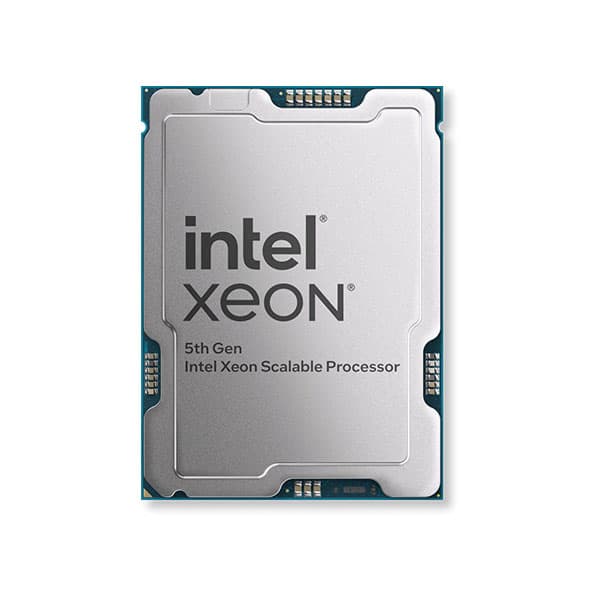
£5,500 – £8,500
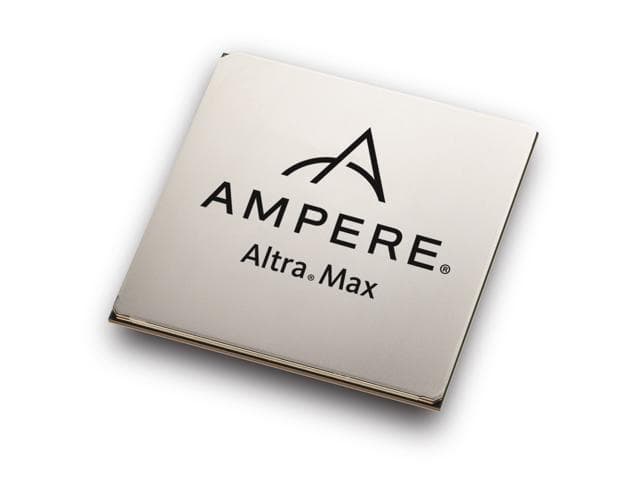
Ampere Altra Max M128-30
Ampere's Altra Max M128-30 is the energy-optimized contender for UK hyperscalers, delivering predictable performance and excellent power efficiency at high thread counts that can materially lower OPEX in energy-constrained regions. Compared to AMD and Intel x86 parts it can offer a lower cost-per-watt and attractive price points for scale-out cloud services, though customers must weigh ARM compatibility considerations against those financial and operational advantages.
AMD EPYC 9684X Genoa-X
The EPYC 9684X Genoa-X is the specialized choice for cache- and latency-sensitive cloud workloads in the UK, with large on-die cache and throughput optimizations that boost database and inference performance beyond what core-count alone can deliver. Though its per-socket price can be higher than Bergamo or Ampere parts, Genoa-X often reduces TCO for cache-bound services by cutting I/O and memory latency, making it a strategic complement in hyperscale fleets.

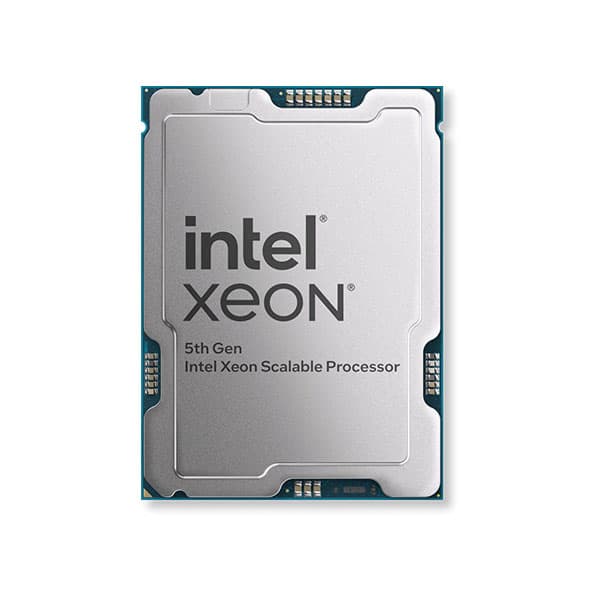
Intel Xeon Platinum 8580
The Xeon Platinum 8580 remains a reliable option for hyperscale operators with existing Intel-centric infrastructure in the UK, offering broad platform maturity, robust virtualization features, and extensive vendor certification. It no longer leads on density or efficiency against the newer AMD and Ampere designs, but its lower migration risk and compatibility with legacy software stacks can translate into real financial savings for some cloud operators.
Modern hyperscale processors deliver transformative benefits including unprecedented compute density, remarkably low power consumption per operation, sophisticated multi-threaded architectures supporting thousands of concurrent processes, advanced security features protecting sensitive workloads, and specialised acceleration engines optimised for machine learning, cryptography, and data compression tasks—collectively enabling UK organisations to maximise infrastructure efficiency whilst reducing operational expenditure.
Understanding Hyperscale Processing Architecture
Hyperscale cloud processors represent a fundamental shift in computing architecture, engineered specifically for the massive parallel workloads characteristic of modern data centre operations. Unlike traditional server processors designed for generalised computing tasks, hyperscale solutions incorporate specialised cores, enhanced memory hierarchies, and sophisticated instruction sets optimised for processing enormous information volumes with minimal latency. The architecture of these processors reflects decades of accumulated knowledge about distributed computing patterns, incorporating features like advanced vectorisation capabilities, enhanced cache structures, and streamlined interconnects that dramatically improve throughput for typical cloud workloads.
Multi-core architectures with 100+ processing cores enabling massive computational parallelism
Advanced memory subsystems with expanded bandwidth supporting memory-intensive operations
Integrated accelerators for AI inference, compression, and cryptographic functions
Power efficiency optimisations reducing total cost of ownership through lower energy consumption
Enhanced security features including encrypted memory and secure boot capabilities
Sophisticated thermal management systems enabling reliable operation in dense data centre environments
Compatibility with industry-standard software stacks and virtualisation platforms
Long-term roadmaps ensuring compatibility with evolving cloud infrastructure requirements
Frequently Asked Questions
Which cloud processor is best for UK hyperscale deployments?
The AMD EPYC 9754 Bergamo is the top choice for UK deployments, holding an average rating of 4.4 due to its exceptional core density and cloud-optimized price-per-thread.
How many Zen 4c cores does the AMD EPYC Bergamo feature?
The AMD EPYC 9754 Bergamo features up to 128 Zen 4c cores optimized specifically for cloud-native, multi-tenant throughput.
What core count does the Ampere Altra Max M128-30 provide?
The Ampere Altra Max M128-30 provides 128 ARM cores delivering very high thread density and linear scaling for container workloads.
Who should choose the Intel Xeon Platinum 8592+ for UK data centres?
The Intel Xeon Platinum 8592+, rated 4.3, is suited for operators running mixed workload hyperscale clouds needing strong single-thread performance for latency-sensitive services.
Conclusion
The evolution of hyperscale cloud processors continues to reshape how UK organisations approach data management and computational challenges. Each of the five processors examined here brings distinct strengths to different workload scenarios, whether prioritising maximum throughput, exceptional energy efficiency, or specialised AI acceleration capabilities. For UK data centre managers and cloud architects making procurement decisions in 2025, evaluating these solutions against your specific operational requirements—considering factors such as workload characteristics, power consumption constraints, and total cost of ownership—remains crucial to optimising infrastructure investments. The processors highlighted in this analysis represent the current state-of-the-art in enterprise computing, each offering pathways to enhanced performance and operational excellence. We encourage you to assess these options thoroughly within your particular business context, consulting with vendors directly about licensing arrangements, support provisions, and integration considerations specific to your organisation. Should you wish to explore additional processor comparisons or require more detailed technical specifications for your infrastructure planning, our search functionality remains available to help you discover precisely the information you need.