

Leading Handheld RFID Readers for UK Businesses in 2025
Published on Tuesday, 1 April 2025
Handheld RFID readers have become essential tools for modern UK enterprises seeking to maintain competitive advantage through superior asset visibility and operational efficiency. These portable scanning devices empower organisations across retail, warehousing, healthcare, and manufacturing sectors to capture real-time data whilst maintaining mobility across their facilities. Unlike stationary systems, mobile RFID technology enables your workforce to conduct rapid stock takes, verify shipments, and track high-value items directly from the shop floor or warehouse environment. The UK market has witnessed significant adoption of these solutions, with businesses recognising the tangible benefits of reduced manual errors, accelerated inventory cycles, and improved supply chain transparency. Whether you're managing a sprawling distribution centre in the Midlands or coordinating assets across multiple London locations, selecting the right handheld RFID controller directly impacts your bottom line. This comprehensive guide examines five market-leading solutions that deliver robust performance, intuitive interfaces, and proven reliability across demanding UK operational environments.
Top Picks Summary
Zebra MC3300R Mobile RFID Reader
The Zebra MC3300R is positioned as the best-in-class integrated mobile RFID controller for the UK in 2025, delivering a rugged, enterprise-grade handheld with strong read range, long battery life and familiar Android software that reduces training time. Its all-in-one approach yields lower lifecycle costs compared with sled-plus-phone solutions like the RFD40, while offering more dedicated RFID performance than smartphone-first options such as the Honeywell CT40. For large UK deployments that prioritise durability, serviceability and predictable total cost of ownership, the MC3300R remains the benchmark.
Zebra RFD40 UHF RFID Sled
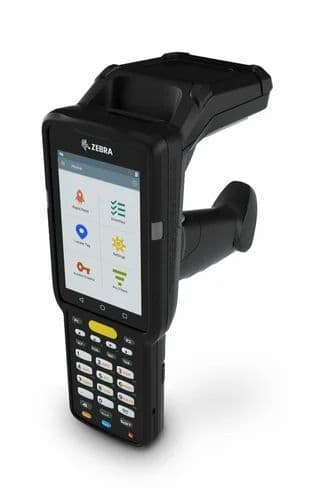
The Zebra RFD40 sled is a market-leading modular solution that lets organisations convert existing mobile devices into UHF RFID controllers, offering a lower upfront CapEx than purchasing new integrated handhelds. Its flexibility reduces replacement costs versus dedicated units like the MC3300R, making it attractive for teams that already standardised on smartphones, although it depends on a host device and therefore can be less robust for the harshest environments. In the UK market the RFD40 is often chosen for phased rollouts where controlling initial spend and leveraging current device fleets are priorities.

Honeywell CT40 with RFID
The Honeywell CT40 with RFID blends a consumer-style touchscreen experience with enterprise durability, delivering a mid‑range mobile RFID controller that is cost-effective for mixed use retail and field workflows in the UK. It strikes a balance between the integrated, RFID-focused power of the MC3300R and the modular flexibility of the RFD40, while Honeywell’s support and software ecosystem often simplify integration and ongoing maintenance. For customers valuing modern UI and mobile-first workflows with reliable service backing, the CT40 offers compelling total value.

Where to buy Honeywell CT40 with RFID in UK: the trusted retailers we track in this market, with the best price we have observed at each. Prices are checked regularly and can change, and the retailer confirms the final price at checkout.
We may earn a commission on purchases. It never affects our rankings.
£900 – £1,500
Chainway C72 UHF RFID Handheld Reader
The Chainway C72 is a competitively priced, fully integrated UHF handheld that delivers strong read performance and battery life, making it an attractive option for UK projects that need to maximise units per budget and achieve rapid ROI. While it offers many of the same technical capabilities as premium brands, Chainway’s lower unit cost can reduce capital expenditure for large rollouts, though buyers should consider regional service and enterprise-support differences compared with Zebra and Honeywell. For cost-sensitive deployments that still require integrated scanning and ruggedness, the C72 is a high-value choice.

Where to buy Chainway C72 UHF RFID Handheld Reader in UK: the trusted retailers we track in this market, with the best price we have observed at each. Prices are checked regularly and can change, and the retailer confirms the final price at checkout.
We may earn a commission on purchases. It never affects our rankings.
£600 – £1,100
Nordic ID Medea Smart UHF RFID Reader
The Nordic ID Medea is a compact, Finnish-designed UHF reader optimised for high-density tag environments and specialist workflows, offering excellent RF tuning and a developer-friendly SDK that accelerates bespoke UK integrations. Its premium pricing is offset by operational gains in throughput and accuracy, lowering labour and error costs in fast-paced use cases where read quality matters more than per-unit hardware savings. Compared with broader-ecosystem vendors like Zebra and Honeywell, Medea appeals to customers who prioritise RF performance and specialised integrations over wide device-service networks.
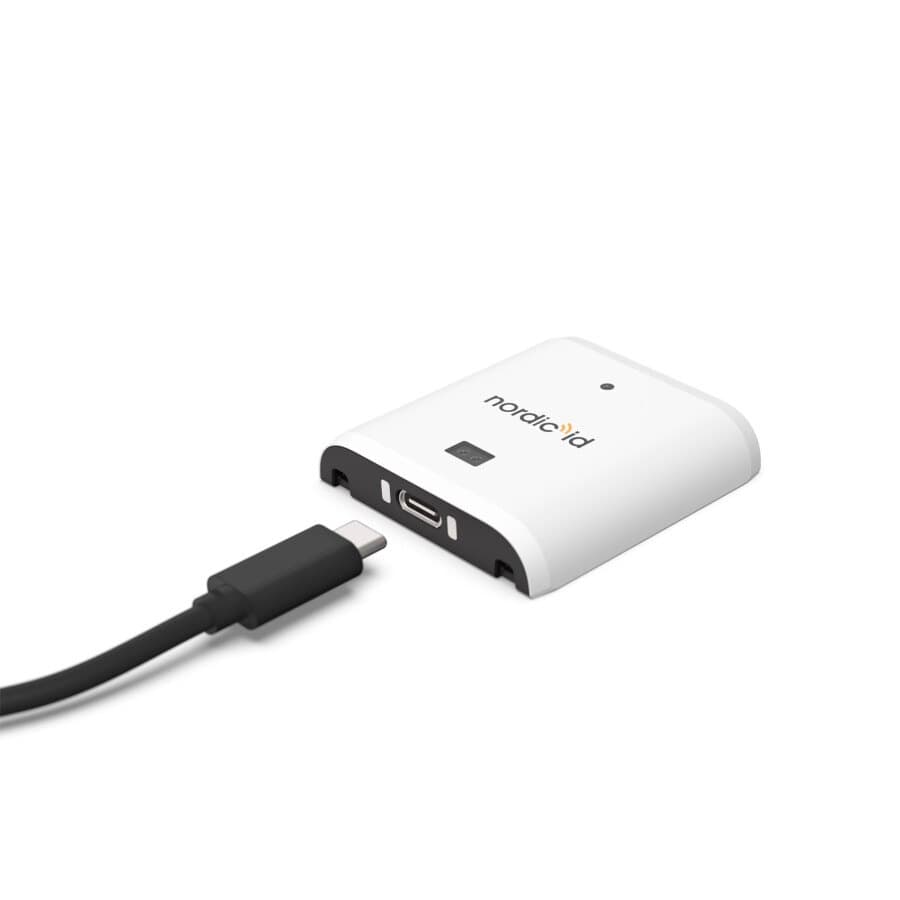
Where to buy Nordic ID Medea Smart UHF RFID Reader in UK: the trusted retailers we track in this market, with the best price we have observed at each. Prices are checked regularly and can change, and the retailer confirms the final price at checkout.
We may earn a commission on purchases. It never affects our rankings.
£800 – £1,400
These leading handheld RFID readers distinguish themselves through exceptional read range capabilities, ergonomic industrial design, extended battery performance, seamless enterprise integration, and comprehensive software ecosystems. Each solution offers distinctive strengths whether you require rapid deployment, specialised compliance features, or maximum scalability for multi-site operations.
Understanding Handheld RFID Technology for UK Operations
Handheld RFID readers utilise radio frequency identification to capture data from passive and active tags across various distances and environmental conditions. Modern solutions incorporate sophisticated filtering algorithms, real-time processing capabilities, and robust connectivity options essential for contemporary warehouse and logistics environments.
Radio frequency technology enables contactless data capture from tagged items without requiring line-of-sight positioning
Battery efficiency and durability remain critical considerations for warehouse staff conducting extended shifts
Integration capabilities with existing ERP systems and warehouse management software determine overall deployment success
Environmental resilience including water resistance and drop tolerance ensures reliable performance in demanding industrial settings
Read range variability depends on antenna configuration, tag type, and environmental interference factors
Real-time synchronisation between handheld units and backend systems ensures accurate inventory records across multiple locations
Frequently Asked Questions
Which handheld RFID reader suits UK warehouses best?
Choose the Zebra MC3300R Mobile RFID Reader for UK warehouse work because it’s an integrated UHF RFID handheld with Android OS and rugged enterprise durability, with an average rating of 4.4.
Does the Zebra MC3300R support EPC Gen2 UHF RFID?
Yes—Zebra MC3300R Mobile RFID Reader includes an integrated UHF RFID reader supporting EPC Gen2 for high-throughput inventory tasks, and it’s rated 4.4 on average.
How does the Zebra RFD40 sled price compare?
The provided data lists no price for the Zebra RFD40 UHF RFID Sled, but it’s described as a modular sled that adds UHF RFID to compatible mobile devices and averages 4.2.
Is the Honeywell CT40 with RFID integrated and Android?
Yes—the Honeywell CT40 with RFID is a slim enterprise-class mobile computer with optional integrated UHF RFID, runs Android, and averages 4.1.
Conclusion
The landscape of handheld RFID technology continues to evolve, offering UK organisations unprecedented opportunities to enhance operational visibility and reduce inefficiencies. Each of the five solutions reviewed presents distinct advantages tailored to different operational scales and industry requirements. Whether prioritising enterprise-grade features, cost-effectiveness, or specialised functionality, you'll find a suitable option amongst these leading contenders. As we progress through 2025, investing in quality RFID infrastructure positions your organisation to capitalise on emerging opportunities in supply chain automation and asset management. For specific technical requirements or deployment considerations unique to your sector, we recommend consulting directly with solution providers or visiting specialist retailers in your region. Our comparison framework should serve as a valuable reference point as you evaluate options and move forward with implementation planning.