Leading UHF RFID Controllers for UK Enterprises in 2025 | Complete Buyer's Guide
Published on Saturday, 29 March 2025
Ultra High Frequency RFID controllers have become indispensable for modern UK businesses seeking to optimise supply chain visibility and asset management. These sophisticated readers transmit data across extended distances, making them particularly valuable for retail networks, distribution centres, and manufacturing facilities across Britain. The technology's capacity to capture multiple items simultaneously without line-of-sight contact has revolutionised how organisations handle inventory reconciliation and stock audits. UK enterprises are increasingly recognising that UHF RFID solutions deliver measurable returns through reduced stocktaking time, enhanced accuracy, and improved operational transparency. Whether managing vast warehouse operations in London's logistics hubs or retail inventory across regional stores, UHF RFID controllers address the distinctive challenges faced by British supply chain professionals. The 2025 market presents refined controller options with superior range, reliability, and integration capabilities tailored to UK compliance standards and industry practices. By implementing the right UHF RFID controller, organisations can significantly diminish manual data entry errors, accelerate stock movements, and gain real-time asset intelligence. This guide explores five prominent solutions currently shaping RFID deployment across the United Kingdom's commercial landscape.
Top Picks Summary
Zebra FX9600 Fixed RFID Reader
The Zebra FX9600 is positioned as a premium, enterprise-grade UHF RFID controller for the UK market in 2025, offering very high throughput and advanced antenna/port density for dense-asset environments. Compared with the FX7500 and compact readers on this list, the FX9600 delivers superior scale and management features that reduce per-tag read costs in large deployments, making it the preferred choice where performance and centralized management justify higher upfront investment.
£2500-3500 GBP
Impinj Speedway R420 RFID Reader
The Impinj Speedway R420 remains a market stalwart in the UK thanks to its balance of reliability, ecosystem integration and proven tag sensitivity, making it a low-risk choice for large retail and logistics rollouts in 2025. Compared with newer or more expensive units like the FX9600, the R420 often offers a lower total cost of ownership through widespread support and mature software integrations, while still outperforming many budget readers on read range and accuracy.

£1000-1800 GBP
Alien ALR-F800 RFID Reader
Alien's ALR-F800 offers strong read sensitivity and flexible RF tuning aimed at applications needing exceptional tag capture without the enterprise price of the highest-end racks; in the UK it is frequently selected for mid-to-large deployments where performance must be balanced against budget. Relative to the Impinj R420 and Zebra models, the ALR-F800 can deliver competitive read density per pound spent, making it an attractive option for projects that prioritize cost-effective coverage and straightforward deployment.
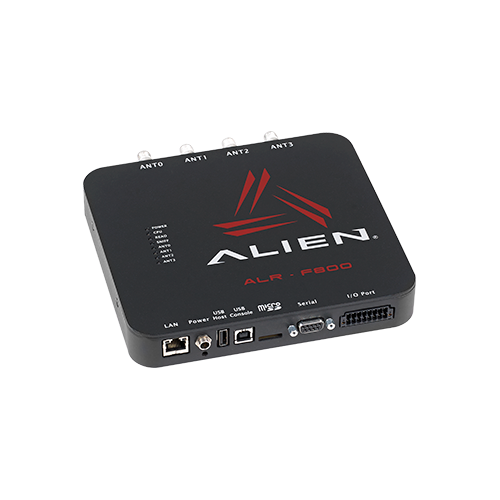
£900-1600 GBP
Zebra FX7500 Fixed RFID Reader
The Zebra FX7500 is a compact, lower-cost sibling to the FX9600 that targets UK customers who need solid enterprise features with a smaller footprint and reduced capital expenditure. While it does not match the raw port density of the FX9600 or the cutting-edge silicon of some Impinj models, the FX7500 provides a strong blend of manageability and affordability, delivering faster ROI in smaller sites or phased rollouts.
Impinj R700 RAIN RFID Reader
The Impinj R700 is the manufacturer’s 2025 generation RAIN RFID controller focused on high-performance edge processing and cloud-friendly integration, making it ideal for UK deployments that prioritize modern analytics and IoT linkage. Compared with the older Speedway R420 and some legacy readers on this list, the R700 offers lower lifecycle costs through improved power efficiency and software-driven capabilities that simplify large-scale orchestration and firmware management.
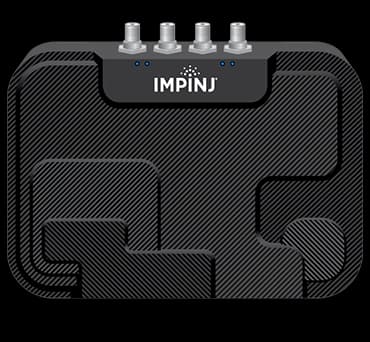
£1500-2500 GBP
Caen RFID ION R4300P UHF Reader
Caen RFID's ION R4300P stands out in the UK for its European design, regulatory friendliness and cost-competitive pricing, appealing to buyers seeking strong local support and quick compliance with UK/EU radio rules. Technically, it competes well on modularity and integration flexibility versus US-made readers, and its pricing position often delivers a lower upfront investment for medium-sized projects while retaining solid read performance.
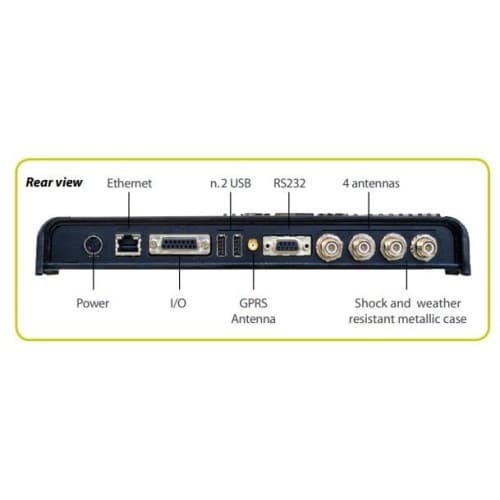
£1200-2000 GBP
Nordic ID Merlin UHF RFID Reader
The Nordic ID Merlin is a compact, rugged UHF RFID reader favored in UK retail and industrial settings where space, durability and ease of integration are priorities in 2025. Compared with rack-mounted leaders like the Zebra FX9600 or Impinj R700, the Merlin offers a smaller footprint and attractive total cost for distributed or edge deployments, and its Nordic support ecosystem is a technical and logistical advantage for European customers.

£1000-1600 GBP
UHF RFID controllers excel through extended read distances (up to 15 metres), simultaneous multi-item identification, minimal infrastructure requirements, real-time inventory visibility, and seamless ERP system integration—essential capabilities for UK warehouse and retail environments.
Understanding UHF RFID Controllers
UHF RFID Controllers revolutionize the way businesses manage inventory and assets, providing a streamlined approach that enhances overall operational effectiveness.
UHF RFID technology reduces manual tracking errors and improves data accuracy, enabling businesses to operate more efficiently.
Studies show that RFID systems can reduce inventory management time by up to 50%, allowing staff to focus on other critical tasks.
Enhanced visibility with real-time tracking minimizes stock discrepancies, improving customer satisfaction through timely product availability.
UHF RFID Controllers facilitate better supply chain coordination, which can lead to cost reductions in logistics and warehousing.
Research indicates that businesses adopting RFID technology see a return on investment within 12-18 months due to operational streamlining.
The speed of data transmission in UHF RFID systems ensures that multiple items can be read simultaneously, which is crucial in high-volume environments.
Frequently Asked Questions
Which RFID controller is best for large retail logistics rollouts?
The Impinj Speedway R420 is the ideal choice for large retail and logistics rollouts due to its proven reliability and broad ecosystem integration. It holds a 4.5 average rating, making it a low-risk option for businesses requiring consistent tag capture and high throughput in dense environments.
Does the Zebra FX9600 offer high antenna port density?
Yes, the Zebra FX9600 features modular antenna ports with powerful output designed specifically for dense-asset environments. This controller provides enterprise-class read density and advanced signal processing, ensuring robust performance in challenging industrial settings where high throughput is required.
Is the Alien ALR-F800 a budget-friendly RFID reader option?
The Alien ALR-F800 is a budget-friendly choice that provides strong read sensitivity without the higher cost of enterprise-grade rack units. It is frequently selected for mid-to-large UK deployments where performance must be balanced against project costs, maintaining a 4.1 average rating.
Which RFID reader is most suitable for challenging industrial environments?
The Zebra FX9600 is the most suitable controller for challenging industrial environments because of its tank-like ruggedness and advanced signal processing. It is designed for enterprise-class read density, ensuring reliable operation in demanding locations where other compact readers might struggle.
Conclusion
Selecting the appropriate UHF RFID controller fundamentally depends on your specific operational requirements, facility dimensions, and integration objectives. Each controller presented offers distinct advantages—from exceptional read range and robust environmental resilience to seamless enterprise system compatibility. UK businesses should prioritise controllers that align with British industry standards whilst delivering genuine performance benefits justifying the investment. We recommend evaluating your current infrastructure, anticipated transaction volumes, and future scalability needs before making a final decision. Should you require more detailed technical specifications or wish to explore additional RFID solutions suitable for your sector, utilise our search functionality to access comprehensive product comparisons. The right UHF RFID controller investment today positions your organisation to operate more efficiently, reduce operational costs, and maintain competitive advantage throughout 2025 and beyond.