

Top 7 Inspection Drones in the UK for 2026 — Camera Drones for Agriculture and Industry
Inspection drones within the Drones Robotics > Camera Drones > Inspection Drones category are now central tools for British farms, utilities, and infrastructure operators. In the UK, these systems are valued for rapid, repeatable visual and multispectral surveys that cut inspection time, improve safety by reducing work at height and vehicle access, and support precise interventions that save inputs and boost yields. Farmers from smallholdings in the Cotswolds to large arable estates in East Anglia and specialist horticulture in the Midlands prefer platforms that combine reliable flight performance, long battery life, rugged build quality, high-resolution imaging and easy integration with mapping and farm management software. Growing demand is also driven by accessible training, stronger after-sales support from local distributors, and an evolving regulatory environment that makes routine beyond-visual-line-of-sight and precision mapping operations easier to plan and execute. In practice, buyers prioritize sensor capability (RGB, thermal, multispectral), payload flexibility, automated mission planning, data processing workflows, and proven durability in wet and windy UK conditions.
Inception's AI took the time to understand this market in the UK · We may earn a commission on purchases. It never affects our rankings.
Top Picks Summary
DJI Agras T40
The DJI Agras T40 is the go-to choice for UK arable and horticultural operations that prioritise chemical application and labour savings; its large 40L payload and purpose-built spraying systems deliver fast, uniform treatments across many hectares, offering a clear financial ROI compared with mapping-only platforms. Unlike the multispectral and surveying drones on this list, the T40 specialises in precision spraying and payload capacity, so it complements rather than replaces sensors-based inspection rigs like the Mavic 3 Multispectral or senseFly eBee X.

Where to buy DJI Agras T40 in UK: we track one retailer, Shop, and show the price we last observed there; the price you see at checkout may differ.
We may earn a commission on purchases. It never affects our rankings.
£30,000 – £40,000
DJI Mavic 3 Multispectral
The DJI Mavic 3 Multispectral balances high-resolution multispectral imaging with exceptional portability, making it ideal for UK growers and agronomists who need frequent, cost-effective monitoring of medium-sized fields; its newer sensor suite and compact form give better image quality and faster deployment than older multirotor multispectral models. Technically it outperforms legacy options like the Phantom 4 Multispectral in spectral fidelity and ease of use, while remaining more affordable and manoeuvrable than the fixed-wing senseFly eBee X for routine inspections.

Where to buy DJI Mavic 3 Multispectral in UK: we track one retailer, Dronesales, and show the price we last observed there; the price you see at checkout may differ.
We may earn a commission on purchases. It never affects our rankings.
£4,000 – £6,000
DJI Matrice 350 RTK
The Matrice 350 RTK is DJI's market-leading industrial platform, prized for its flight reliability, modular payload ecosystem, and enterprise-grade RTK positioning that make it the default choice for complex inspection, mapping and public-safety workflows. Compared with the Autel EVO II Pro Enterprise V3 and the Parrot Anafi Ai it offers broader payload flexibility, greater redundancy and a more mature global support network—trading a higher upfront cost for lower integration and operational risk in the 'undefined' use case.

Where to buy DJI Matrice 350 RTK in UK: we track one retailer, Store, and show the price we last observed there; the price you see at checkout may differ.
We may earn a commission on purchases. It never affects our rankings.
£10,450.00GBP
senseFly eBee X
The senseFly eBee X is the market leader for large-scale, high-accuracy field mapping in the UK thanks to its fixed-wing endurance and centimetre-level mapping options, delivering the lowest cost-per-hectare for survey-grade orthomosaics and multispectral indices across big farms. Although it carries a higher upfront and operational setup cost than multirotor units, its technical advantage—long flight time and wide-area efficiency—makes it the best financial and productivity choice for agribusinesses surveying hundreds of hectares regularly.

Where to buy senseFly eBee X in UK: we track one retailer, Sensefly, and show the price we last observed there; the price you see at checkout may differ.
We may earn a commission on purchases. It never affects our rankings.
£20,000 – £40,000
Autel EVO II Pro Enterprise V3
The EVO II Pro Enterprise V3 earns a best-in-class spot for organizations seeking high-resolution imaging and a cost-effective enterprise feature set, offering strong sensor performance, modular payload options and competitive endurance at a lower sticker price than the Matrice 350 RTK. While it lacks some of DJI's ecosystem depth and heavy-duty redundancy, it delivers excellent technical value for the 'undefined' use case by balancing image quality, sensor flexibility and total cost of ownership.

Parrot Anafi Ai
The Anafi Ai stands out for its lightweight, 4G-enabled AI and secure data approach, optimized for autonomous BVLOS operations and customers prioritizing on-board intelligence and privacy over raw payload capacity. It compares favorably to the heavier Matrice and EVO platforms when connectivity, rapid deployment and lower platform cost matter in 'undefined' workflows, though it sacrifices heavy payload support and enterprise redundancy.

Where to buy Parrot Anafi Ai in UK: we track one retailer, Enterpriseuav, and show the price we last observed there; the price you see at checkout may differ.
We may earn a commission on purchases. It never affects our rankings.
£356.49GBP
DJI Agras T25
The Agras T25 is DJI’s agricultural-market leader, engineered for precision spraying with a large payload, intelligent spray controls and field-optimized flight modes that dramatically reduce labor and chemical costs per hectare. Unlike the inspection/mapping-focused Matrice or imaging-centric EVO and Anafi Ai, the T25 is purpose-built for agronomy—delivering clear financial ROI for farms and contractors in the 'undefined' use case.
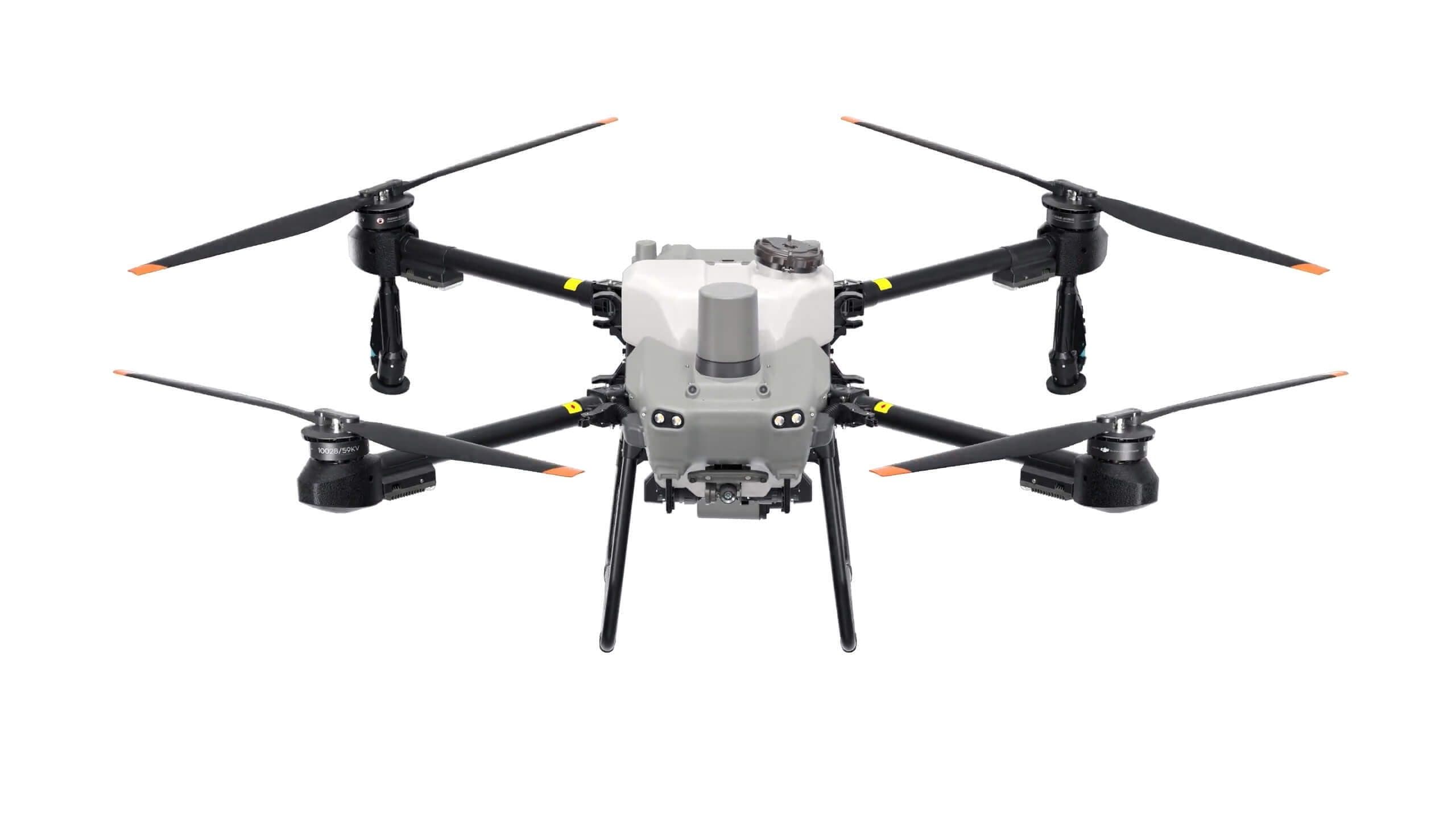
Where to buy DJI Agras T25 in UK: we track one retailer, Dji, and show the price we last observed there; the price you see at checkout may differ.
We may earn a commission on purchases. It never affects our rankings.
£6,000 – £9,000
What the Research Says About Drone Inspections and Multispectral Imaging
A range of field trials and academic studies up to the mid 2020s show that aerial inspections and multispectral imaging deliver earlier detection of crop stress, more targeted inputs, and measurable time savings for infrastructure surveys. Research across agricultural research stations and applied trials in the UK and Europe highlights advantages in identifying pest and disease pressure, irrigation deficits, and nutrient variability before symptoms are visible at ground level. For industrial inspections, studies confirm that drones reduce exposure to hazardous work, speed up condition assessments, and improve the frequency and consistency of monitoring programs.
Early detection: Multispectral and thermal sensors can reveal stress, disease or water stress days to weeks before visual symptoms appear, enabling earlier intervention.
Input efficiency: Field trials indicate that targeted applications guided by drone data can reduce fertilizer and pesticide use while maintaining or improving yields.
Safety and access: Drones lower the need for scaffolding, rope access or manned inspections in hazardous locations, reducing worker risk and downtime.
Operational ROI: Case studies from commercial farms and utility operators commonly report payback periods within a few years for medium to large operations, depending on scale and services adopted.
Scalability: Fixed-wing and multirotor platforms serve different needs — fixed-wing for rapid large-area mapping, multirotor for detailed inspections and payload flexibility.
Frequently Asked Questions
Which drone should a UK arable grower buy for spraying?
Choose the DJI Agras T40 for UK arable and horticultural spraying, because it has a 40L tank and a high-efficiency spray system for rapid pesticide and fertiliser application, with an average rating of 4.4.
Does DJI Mavic 3 Multispectral support RTK and what flight time?
Yes—the DJI Mavic 3 Multispectral is RTK-capable and lists long flight times of about 40 minutes, combining an integrated multispectral sensor suite with high-resolution RGB imaging for NDVI and crop-health analysis (rating 4.8).
How does the DJI Matrice 350 RTK compare on price?
The provided data doesn’t include any prices for the DJI Matrice 350 RTK, or the other drones, so I can’t compare value by cost; the Matrice 350 RTK’s confirmed specs include an IP45 airframe and up to ~55 minutes flight time (rating 4.7).
Is the Matrice 350 RTK compatible with Zenmuse sensors?
Yes—the DJI Matrice 350 RTK is compatible with Zenmuse sensors and industry SDKs for custom enterprise workflows, and it uses integrated RTK plus dual-battery hot-swap, with an average rating of 4.7.
Conclusion
In the UK context, inspection and agricultural camera drones are mature, practical tools that deliver real savings in time, inputs and safety while opening new insights into crop and asset health. The seven models covered on this page — DJI Agras T40, DJI Mavic 3 Multispectral, DJI Matrice 350 RTK, senseFly eBee X, Autel EVO II Pro Enterprise V3, Parrot Anafi Ai, and DJI Agras T25 — span the full range of farm and inspection needs. If you need heavy spray capacity for large fields, the DJI Agras T40 and T25 lead the category; for precise multispectral crop surveys the DJI Mavic 3 Multispectral is excellent; for large-area, high-efficiency mapping the senseFly eBee X is a strong choice; the Autel EVO II Pro Enterprise V3 and Parrot Anafi Ai offer flexible inspection payloads and value; and for mixed professional inspections and advanced sensor options the DJI Matrice 350 RTK stands out as the best overall choice for most commercial users. We hope you found what you were looking for — refine or expand your search using the site search to filter by payload, flight time, or application to match a drone to your operation.