

Top 6 E-Ink Displays in the UK for 2026
E-Ink displays, also known as electronic paper or e-paper, have become a mainstream choice across the UK for applications that prioritize battery life, readability and low environmental impact. By 2026 the category spans small smart labels and large-format signage, color and monochrome panels, and purpose-built e-readers and e-notes. UK consumers and businesses prefer E-Ink for its excellent readability in sunlight, minimal power draw when showing static content, and reduced eye strain compared with backlit screens. Retailers use them for digital shelf labels and price tagging to cut printing waste; publishers and readers favour dedicated e-readers and e-notes for long-form reading; and workplaces adopt larger E-Ink whiteboards and room signage to reduce energy use. Key buying factors in the UK market are display size and resolution, refresh speed, connectivity (Bluetooth, Wi-Fi, or low-power wireless standards), durability, supplier support and long-term software updates. Sustainability and repairability are also increasingly important to British buyers, shaping demand toward modular, repairable E-Ink devices and certifications that reflect lower lifecycle carbon footprints.
Inception's AI took the time to understand this market in the UK · · How we pickWe may earn a commission on purchases. It never affects our rankings.
Top Picks Summary
Boox Tab Ultra C Pro represents the technical flagship for color E‑Ink displays, targeting professionals who need a large, high‑quality color panel plus full Android app support, advanced pen input, and multitasking—features that justify its premium positioning. Compared with the simpler readers here, it is the most capable device for productivity and third‑party apps, though that versatility comes at a noticeably higher price and with tradeoffs in weight and battery relative to smaller readers.
Show More Color E-Ink Displays
Estimated£749 – £899
The Kindle Paperwhite Signature Edition is the market-leading mainstream E‑Ink reader thanks to its balance of premium features—like wireless charging, a brighter auto‑adjusting front light and larger storage—while remaining tightly integrated with Amazon's massive content ecosystem. Compared with the other readers here it trades Kobo's broader ePub and library flexibility for Amazon's unrivaled store selection and services (Audible, Kindle Unlimited), making it a strong choice for buyers who prioritize convenience and a polished, easy-to-use reading experience despite a typically higher platform lock‑in.
Show More E-Ink Readers
Estimated£170 – £220
reMarkable 2 is best-in-class for handwriting fidelity and a paper-like writing feel, offering ultra-low latency, minimalist software and a thin, distraction-free design that outperforms the other devices when pure note-taking feels matter most. It purposely sacrifices ecosystem breadth and app flexibility for superior pen experience and a focused workflow, making it the premium choice for dedicated analog-first note-takers who are willing to pay more for that tactile advantage.
Show More E-Ink Notebooks
Waveshare 7.5 inch E-Paper Display Module
Waveshare’s 7.5-inch e-paper module is a market leader for hobbyists and embedded developers because it pairs very low unit cost with broad availability and easy-to-use interfaces, making it the most budget-friendly option for outdoor e-ink prototyping and small projects. Compared with Good Display panels it is generally cheaper and more plug-and-play, though it requires more integration work and lacks the industrial-grade enclosure and service features of commercial suppliers like Visionect and Papercast.
Show More Outdoor E-Ink Displays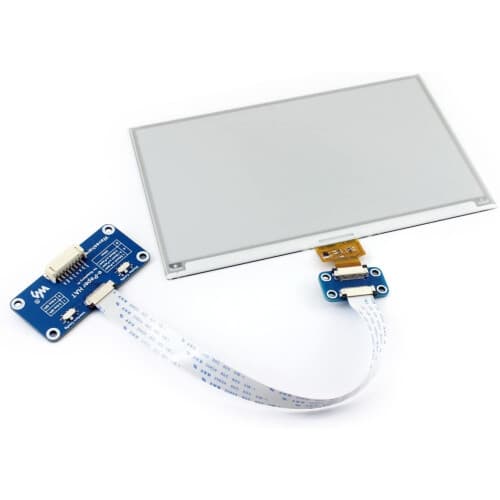
Estimated£30 – £60
E Ink Spectra 6 32-inch Digital Signage Display
The E Ink Spectra 6 32-inch is a full-colour, large-format signage panel that leads this list for UK retail and transport deployments thanks to its class-leading colour gamut and ultra-low power draw. Compared with the smaller or monochrome options here, Spectra 6 offers the best combination of visibility, low total cost of ownership (lower running costs and reduced maintenance) and readiness for 24/7 public-facing installations, making it a strong choice for nationwide rollouts now available to UK buyers in 2026.
Show More E-Ink Digital Signage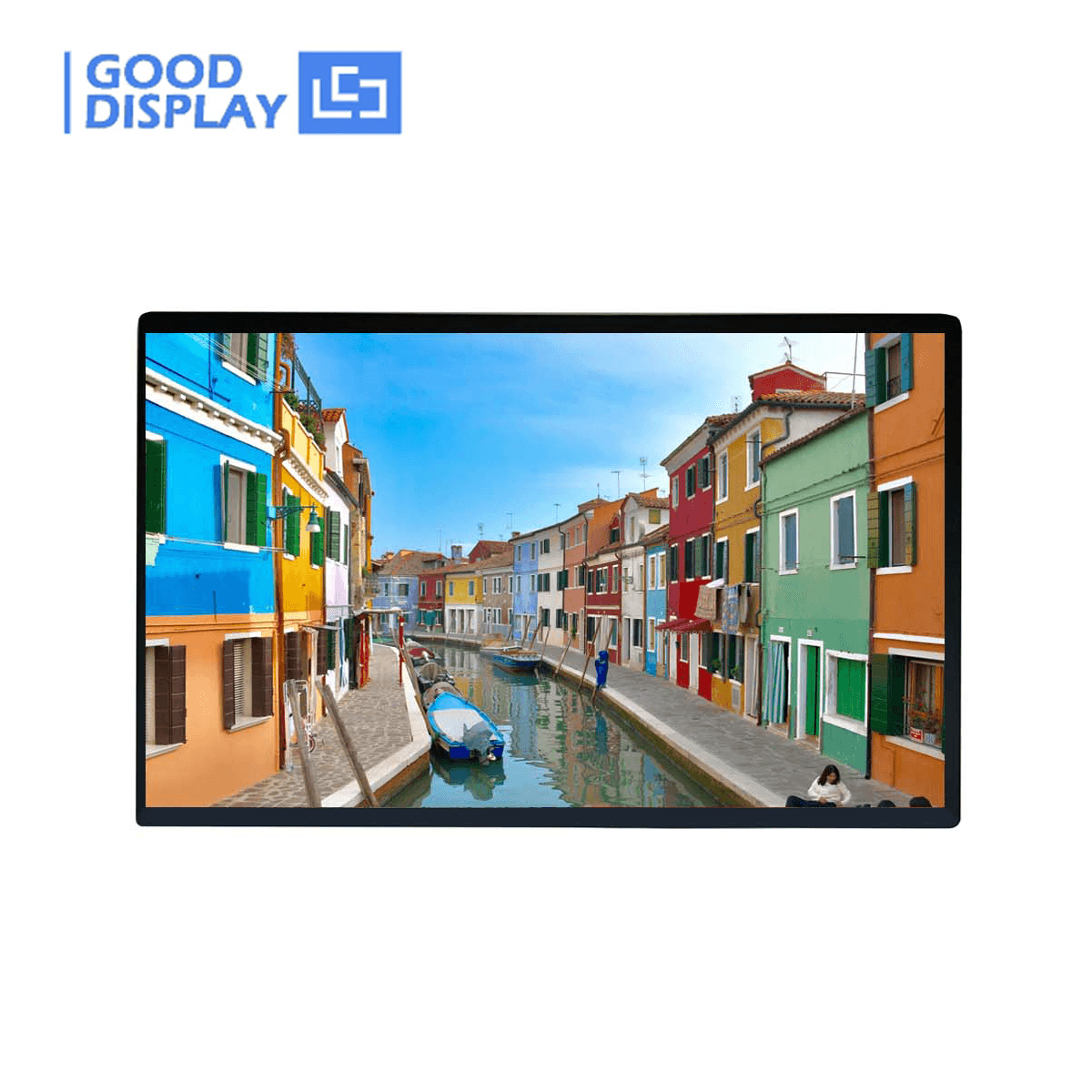
Estimated£1,200 – £2,000
Waveshare 13.3 inch e-Paper Display
The Waveshare 13.3 inch e-Paper Display is the market leader for developers and integrators seeking an affordable, modular large-format E-Ink panel; its low cost, open driver support and HAT-compatible interfaces make it ideal for prototyping and custom embedded signage. It lacks the turnkey polish, battery optimizations and managed services of Visionect or the application-level refinement of BOOX products, but it offers unmatched financial and technical flexibility for bespoke projects and experimental deployments.
Show More Large Format E-Ink Displays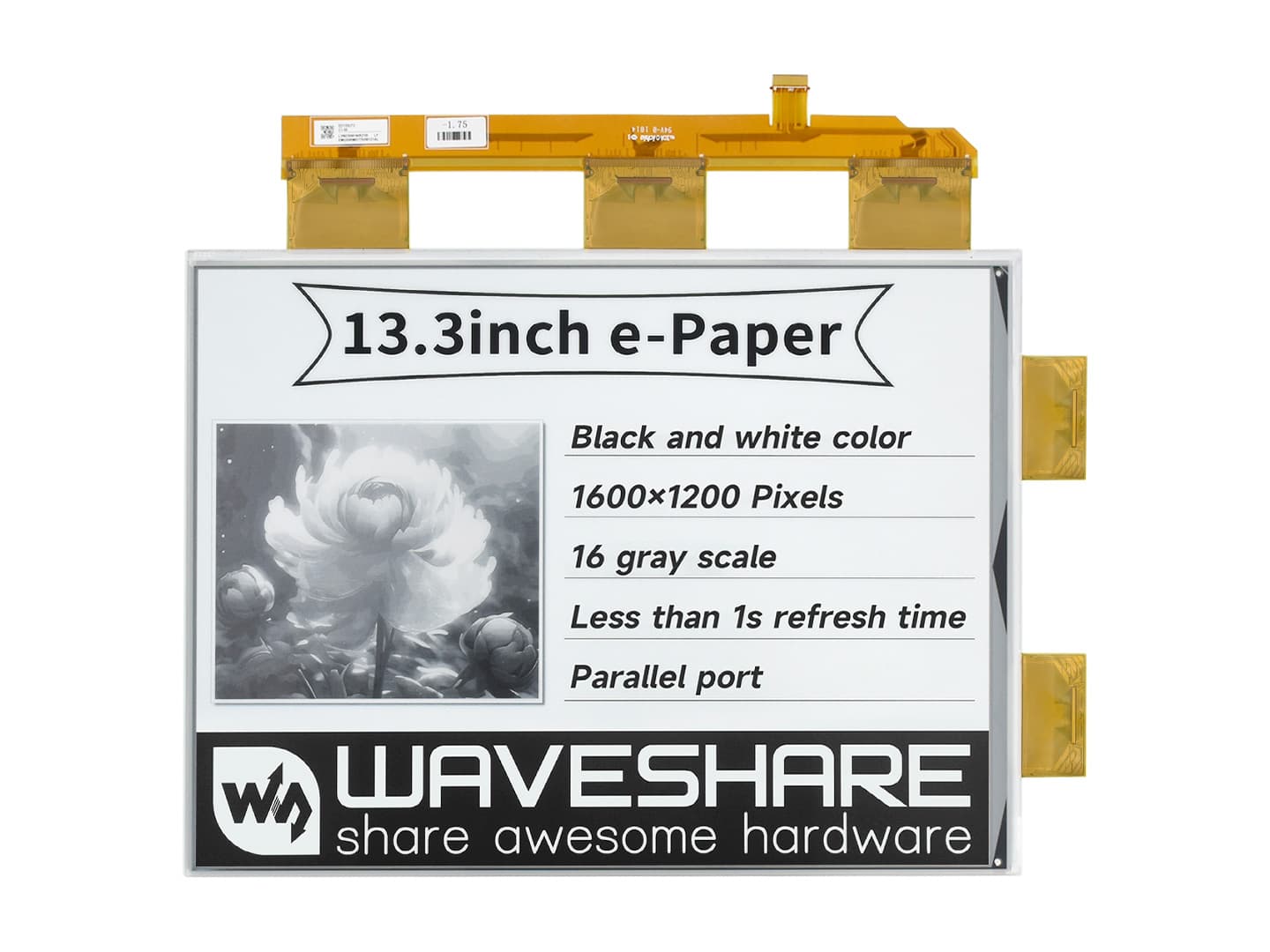
Estimated£120 – £250
Why research supports E-Ink benefits
Scientific and applied research helps explain why E-Ink performs well for reading and low-power signage. Studies in vision science and human factors compare reflective displays like E-Ink with emissive, backlit screens and show advantages in glare handling and visual comfort. Engineering analyses and power-consumption tests demonstrate that E-Ink uses energy only when the image changes, which delivers dramatically longer battery life for static content. Laboratory evaluations of contrast and reflectance show that modern high-resolution E-Ink panels provide crisp text at multiple viewing angles, supporting long reading sessions and public information displays. For beginners, the key takeaway is that E-Ink trades fast motion and full-motion video capabilities for superior static-image performance, low power use and readability in ambient light.
Reduced eye strain: Vision science studies and ergonomic tests frequently report that reflective displays produce less visual fatigue for prolonged reading compared with backlit LCD and OLED under similar lighting.
Low power: Engineering measurements show E-Ink consumes power mainly during updates, enabling days, weeks or months of battery life for static displays and labels.
Sunlight readability: Reflective technology maintains high contrast in bright ambient light, making E-Ink ideal for outdoor and well-lit indoor locations common in UK retail and transport hubs.
Environmental gains: Life-cycle assessments of low-power displays indicate lower operational energy use; combined with recyclable materials, this improves the sustainability profile for many E-Ink devices.
Limitations to consider: E-Ink has slower refresh rates and limited color and video capabilities compared with emissive displays, so it is best for text, images and slowly changing content.
Frequently Asked Questions
Which e-ink display should I buy for reading and notes?
Choose Kindle Scribe if you want built-in e-reading plus note-taking: it includes a pen to annotate books and create handwritten notes tied to pages, and it has an average rating of 4.4.
Does Visionect Place 32 support remote fleet monitoring and updates?
Yes—Visionect Place 32 E Ink Display is bundled with Visionect cloud management and scheduling software, with enterprise-grade connectivity and security for remote fleet monitoring and updates, and it’s rated 4.6.
How does Visionect Place 32 compare in value to Kindle Scribe?
Visionect Place 32 is positioned for enterprise deployments with managed cloud management and scheduling software, while Kindle Scribe focuses on the Kindle ecosystem for readers; both have ratings—4.6 for Visionect Place 32 and 4.4 for Kindle Scribe.
Which display is best for UK storefronts needing high visibility?
Visionect Place 32 E Ink Display is optimised for long battery life and high visibility in storefronts and public spaces, with an average rating of 4.6.
Conclusion
E-Ink displays now cover a wide range of use cases across the UK, from affordable e-readers to commercial shelf labels and large-format signage, offering strong benefits for readability, battery life and sustainability. We hope this guide helped you find the right E-Ink option for 2026. If you want to narrow results by size, resolution, connectivity or price, or expand to accessories and replacement parts, use the search to refine your selection.