

Top 7 Host-Based Intrusion Detection Systems (HIDS) in the UK — 2026 Buyers' Guide
In today's rapidly evolving digital landscape, UK organisations face an unprecedented barrage of cyber threats that demand layered, endpoint-aware defence. Host-Based Intrusion Detection Systems (HIDS) operate directly on servers, workstations and other endpoints to monitor file integrity, process behaviour, user activity and system logs in real time. Unlike perimeter or network-only defences, HIDS provide granular visibility into endpoint events that commonly indicate credential misuse, insider threats, file tampering and advanced persistent threats. UK buyers value HIDS solutions for their ability to support regulatory compliance such as GDPR and ISO 27001, to integrate with SIEM and security automation tools, and to deliver actionable alerts with low false positive rates. Practical buyer preferences in the UK market include strong integration with existing log and security stacks, cloud and hybrid deployment support, clear forensic data retention, scalable licensing models, and a balance between open source flexibility and commercial support.
Inception's AI took the time to understand this market in the UK · · How we pickWe may earn a commission on purchases. It never affects our rankings.
Top Picks Summary
Wazuh
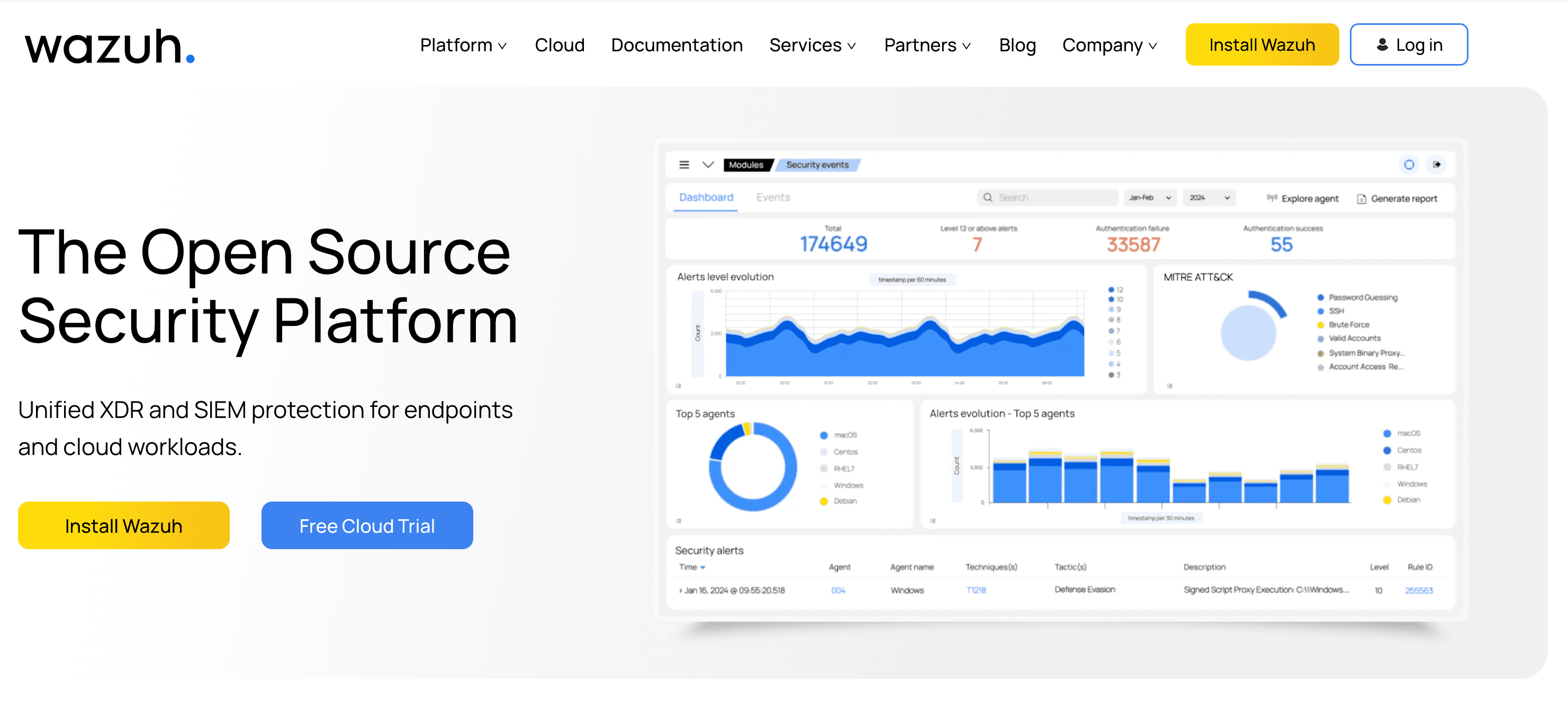
Wazuh builds on OSSEC foundations and leads in the UK market for organisations that want an actively developed, scalable HIDS with built-in SIEM integration, cloud-native rules and a modern management UI. It offers stronger alerting, compliance reporting and cloud workload visibility than legacy OSSEC, delivering a favourable total cost of ownership for teams that prioritise faster time-to-detection and easier SOC workflows. In comparisons with Tripwire and the lighter-weight tools here, Wazuh strikes a middle ground—richer analytics than pure open-source HIDS but more cost-effective and flexible than heavyweight commercial appliances.
OSSEC
OSSEC remains a lightweight, battle-tested HIDS ideal for UK organisations seeking a low-cost, open-source baseline for file integrity, log analysis and rootkit detection; its long history and broad community ecosystem make it easy to integrate into existing operations. Compared with the newer forks and commercial offerings in this list, OSSEC often wins on simplicity and minimal licensing cost, though it can require more manual tuning than enterprise products like Tripwire Enterprise. For 2025 UK deployments its technical advantage is a small footprint and mature agent model that keeps ongoing operational spend low for distributed environments.

Tripwire Enterprise
Tripwire Enterprise is the market leader for UK organisations that require enterprise-grade file integrity monitoring, configuration assessment and regulatory reporting with vendor support and SLAs; its advanced change policy engine and certified compliance modules justify the premium for regulated industries. Compared to open-source alternatives on this list, Tripwire offers deeper platform hardening, centralized policy enforcement and a lower operational burden for large estates, making it a strong choice where predictable resourcing and auditability matter. For 2025 deployments the key financial advantage is predictable licensing tied to vendor support that reduces in-house security engineering costs for complex environments.

Estimated£5,000 – £50,000
AIDE Advanced Intrusion Detection Environment
AIDE is a minimalist, file-integrity focused HIDS that appeals to UK organisations and specialists who prefer a simple, auditable toolchain with negligible runtime overhead and no commercial lock-in. While it lacks the centralized management, alerting sophistication and cloud integrations of Wazuh or Tripwire, AIDE's technical advantage is deterministic behavior and ease of certification for high-security, low-change systems where transparency is paramount. In 2025 AIDE is often chosen as a lowest-cost, high-assurance component in hybrid stacks rather than as a full enterprise replacement.

Estimated£0-0 GBP
Samhain
Samhain positions itself as a robust, host-based IDS with strong focus on tamper-resistant logging, centralized server mode and cross-platform integrity checks—attributes that make it attractive to UK organisations needing hardened, covert monitoring on heterogeneous fleets. Compared with OSSEC and AIDE, Samhain emphasizes stealth and cryptographic protection of logs and configuration, reducing the risk of attacker interference at a modest implementation cost. For organisations in 2025 that prioritise anti-tamper controls and secure audit trails without the expense of a full commercial suite, Samhain delivers a cost-effective technical middle ground.

Estimated£0-0 GBP
SolarWinds Security Event Manager
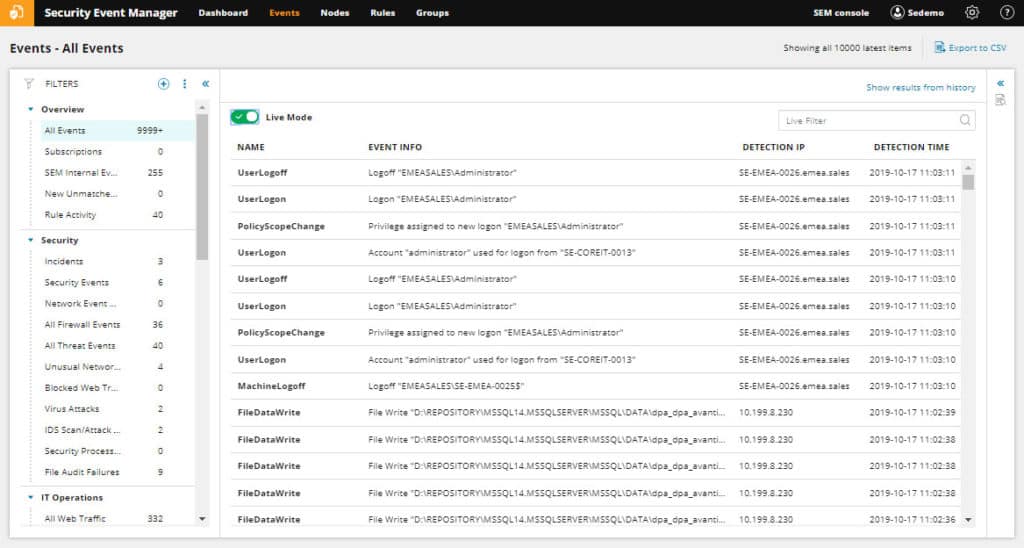
SolarWinds Security Event Manager is a cost-conscious, on-premises SIEM that earns its position by delivering robust log collection, correlation, and automated response with predictable licensing and lower total cost of ownership compared with cloud-first rivals. For the specific use case labeled "undefined", it stands out for organizations wanting centralized control and offline incident processing; compared to CrowdStrike Falcon Insight it trades some cloud-native speed and telemetry depth for budget predictability and simpler on-site integration.
CrowdStrike Falcon Insight
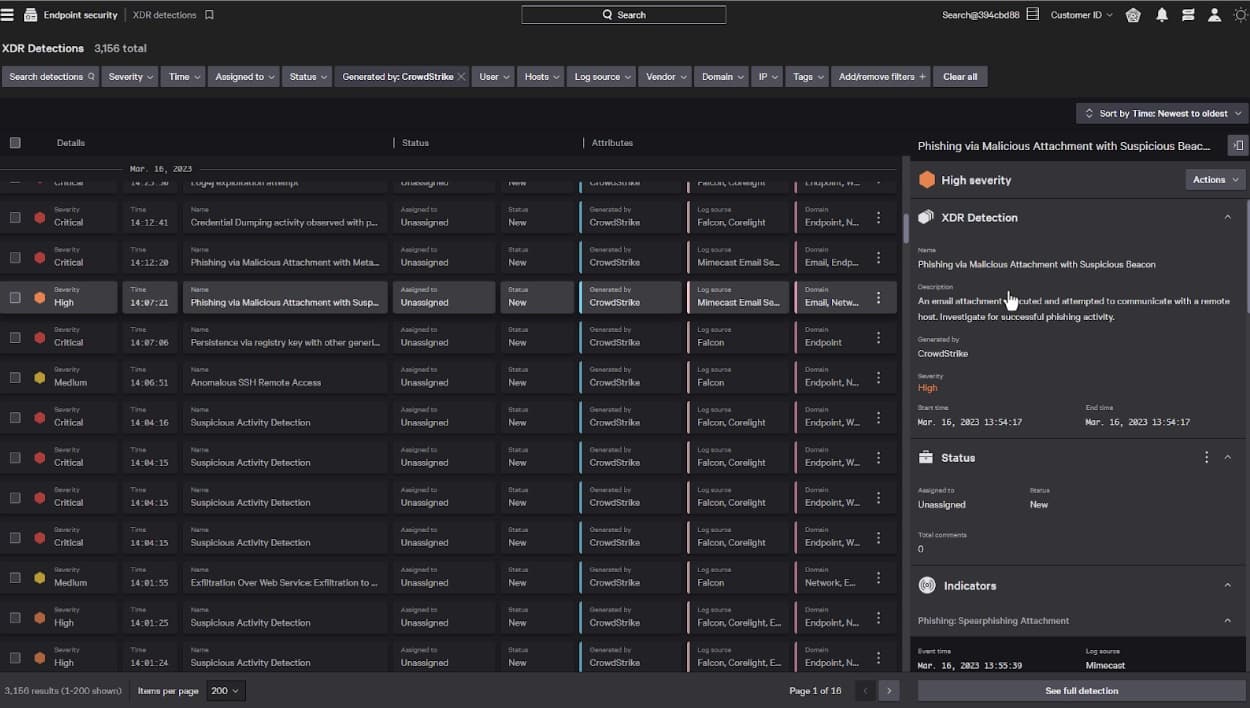
CrowdStrike Falcon Insight is a market-leading, cloud-native endpoint detection and response platform known for real-time telemetry, AI-driven threat hunting, and rapid scalability that justify a premium subscription model. In the context of the "undefined" use case it provides superior endpoint visibility and faster incident response than SolarWinds Security Event Manager, though organizations should weigh higher ongoing costs and dependence on continuous cloud connectivity against its technical advantages.
How research supports HIDS benefits
A range of industry guidance and academic research supports the role of host-based detection as part of a defence-in-depth strategy. Standards bodies and national guidance encourage endpoint monitoring and file integrity checks as effective controls for reducing attacker dwell time and improving incident response. The practical benefits observed in studies and field reports include earlier detection of attacks that bypass network controls, richer forensic detail for investigations, and improved compliance reporting when HIDS are paired with centralized event management.
NIST guidance on intrusion detection recommends including host-based sensors to capture endpoint-specific events and improve overall detection coverage.
UK National Cyber Security Centre guidance and best practice emphasise the importance of endpoint logging and monitoring as part of an organisation's detection and response capabilities.
Academic and industry case studies show that file integrity monitoring and behavior-based endpoint analytics can detect lateral movement and privilege escalation that network-only tools miss.
Integrating HIDS telemetry with SIEM and threat intelligence reduces mean time to detection and supports faster, more accurate incident response workflows.
Open source and commercial evaluations consistently highlight trade-offs: open source tools offer transparency and flexibility, while commercial offerings frequently provide richer automation, vendor support and ecosystem integrations.
Frequently Asked Questions
Which HIDS should UK teams pick: Wazuh or OSSEC?
Choose Wazuh for actively developed, scalable host monitoring with built-in integration with the Elastic Stack, while OSSEC suits teams wanting a lightweight, low-cost open-source baseline for FIM, log analysis and rootkit detection; Wazuh is rated 4.4.
What exact feature does Wazuh include for central logging?
Wazuh includes built-in integration with the Elastic Stack for centralised logging, visualization and search, alongside a comprehensive rule set covering FIM, vulnerability detection, configuration assessment and cloud workloads; it’s rated 4.4.
Does OSSEC beat Tripwire Enterprise on price and value?
No price details are provided for OSSEC or Tripwire Enterprise in the data, so you can’t compare value by cost here; Tripwire Enterprise is rated 4.3 and focuses on enterprise-grade file integrity monitoring and regulatory reporting.
Is Tripwire Enterprise better for compliance reporting than Wazuh?
Tripwire Enterprise is positioned for regulatory compliance reporting with compliance templates and automated audit reporting for standards like PCI DSS and ISO 27001; Wazuh offers compliance-ready reporting but the data doesn’t list specific standards for Wazuh; Tripwire Enterprise is rated 4.3.
Conclusion
Host-based intrusion detection remains a core component of a modern UK security architecture. The seven products reviewed here — Wazuh, OSSEC, Tripwire Enterprise, AIDE (Advanced Intrusion Detection Environment), Samhain, SolarWinds Security Event Manager, and CrowdStrike Falcon Insight — cover a range of needs from open source file integrity monitoring to enterprise-grade endpoint detection and response. For most UK organisations seeking the best balance of capability, cost and integration, Wazuh stands out as the top choice thanks to its active community, scalable architecture and broad SIEM compatibility. We hope this guide helped you find the right starting point; you can refine or expand your search using the site search to compare features, deployment models and pricing in more detail.