

Essential Concrete Reinforcement Solutions for British Construction — Steel Rebar, Synthetic Fibres & Wire Mesh Comparison 2025
Selecting appropriate concrete reinforcement is fundamental to delivering durable, structurally sound projects across the UK's diverse climate and regulatory landscape. Whether you're managing residential foundations, commercial floor slabs, or infrastructure developments, the reinforcement materials you specify directly influence long-term performance, maintenance costs and compliance with British Standards. Modern reinforcement extends well beyond traditional steel rebar — contemporary options include synthetic fibre systems, composite rods and advanced mesh configurations, each addressing specific structural demands and environmental exposures. UK construction professionals increasingly face complex decisions: balancing upfront material costs against lifecycle durability, ensuring compatibility with local Building Regulations and Eurocode standards, and selecting solutions that perform reliably through Britain's variable weather patterns including freeze-thaw cycles and salt spray exposure. This comprehensive guide examines five established reinforcement solutions that represent the current spectrum of engineered alternatives available to British builders and structural engineers. Each product addresses distinct project requirements — from straightforward slab reinforcement to specialist applications demanding superior corrosion resistance. Understanding the technical capabilities, installation practicalities and cost implications of each option empowers you to make informed specification decisions aligned with your project's structural, environmental and budgetary parameters.
Inception's AI took the time to understand this market in the UK · We may earn a commission on purchases. It never affects our rankings.
Top Picks Summary
Helix 5-25 Micro Rebar
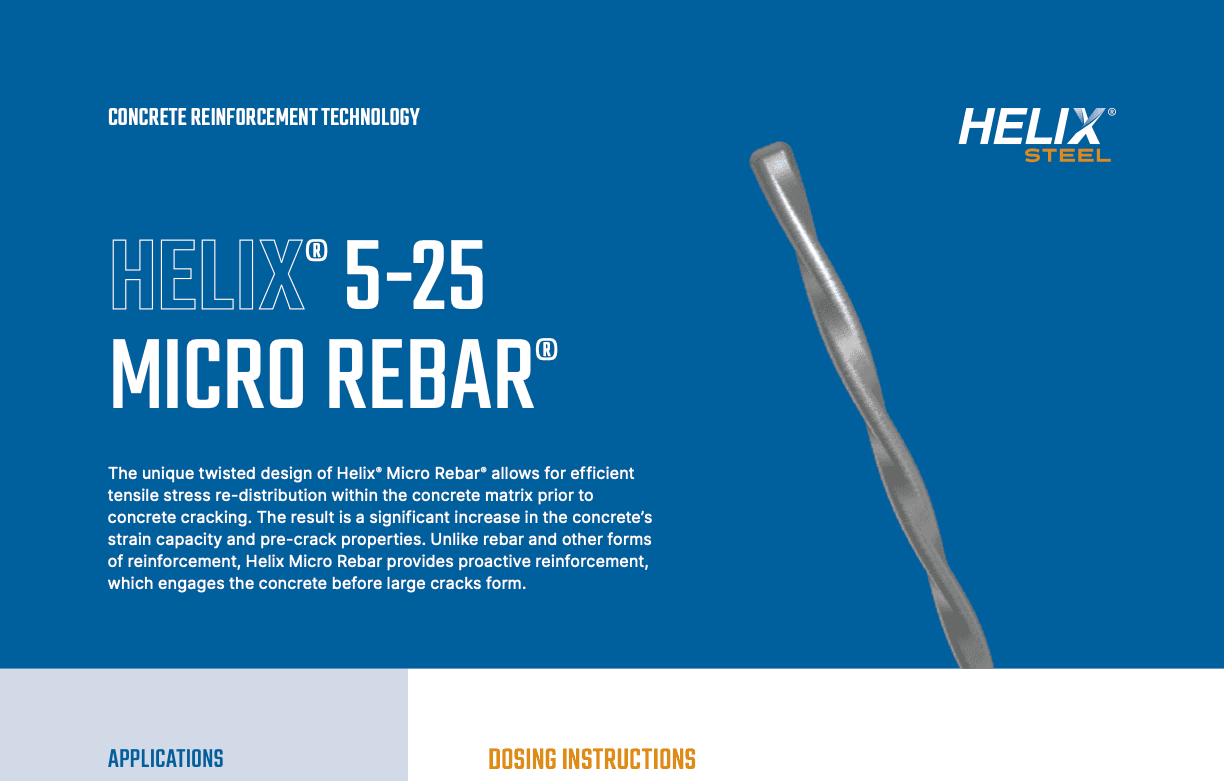
Helix 5-25 Micro Rebar is a market-leading engineered micro-reinforcement that provides distributed three-dimensional anchoring inside concrete, enabling thinner slabs, reduced conventional rebar, and superior crack distribution compared with standalone synthetic fibers. While more expensive per unit than Fibermesh 150, Helix often delivers better structural contribution and reduced long-term repair costs versus both conventional meshes and standard steel in slab-on-grade applications, making it attractive where performance and slab durability are priorities.
Where to buy Helix 5-25 Micro Rebar in UK: we track one retailer, Fortacorp, and show the price we last observed there; the price you see at checkout may differ.
We may earn a commission on purchases. It never affects our rankings.
£212 – £477
Fibermesh 150
Fibermesh 150 is a polymer macro-fibre system prized for rapid placement and reliable crack control in slabs and overlays, making it a cost-efficient alternative to traditional mesh for many UK builds. In this CSA-aligned, engineer-vetted selection it stands out for low installation labour and corrosion immunity compared with steel-based options, while offering a lower upfront price than specialty non-metallic rebar like basalt.

Where to buy Fibermesh 150 in UK: we track one retailer, Masco, and show the price we last observed there; the price you see at checkout may differ.
We may earn a commission on purchases. It never affects our rankings.
£45 – £90
A142 Steel Mesh Reinforcement
A142 Steel Mesh Reinforcement is the market-standard welded wire mesh used widely across the UK for consistent load distribution and simple, well-understood specification compliance. It remains the most economical choice for standard slab and wall applications, but relative to synthetic fibres and basalt rebar it requires more handling, fixing labour and corrosion protection—trade-offs engineers note when optimising lifecycle costs in this guide.

Where to buy A142 Steel Mesh Reinforcement in UK: we track one retailer, Nextdaysteel, and show the price we last observed there; the price you see at checkout may differ.
We may earn a commission on purchases. It never affects our rankings.
£65 – £140
Magmatech Basalt Rebar
Magmatech Basalt Rebar is a non-metallic, high-tensile reinforcement offering exceptional corrosion resistance and a superior strength-to-weight ratio that reduces long-term maintenance costs on marine or chemically aggressive UK sites. Although its upfront material cost is higher than steel mesh and polymer fibres, its engineer-vetted durability and CSA-aligned performance make it financially attractive over the asset life for critical, exposure-prone structures.

Where to buy Magmatech Basalt Rebar in UK: we track one retailer, Basaltsolutions, and show the price we last observed there; the price you see at checkout may differ.
We may earn a commission on purchases. It never affects our rankings.
£220 – £480
Bekaert Dramix Steel Fibers
Bekaert Dramix Steel Fibers are hooked-end micro-to-macro steel fibres engineered for high post-crack toughness, impact resistance and reduced jointing needs in structural slabs and precast elements. They outperform polymer fibres in residual load capacity and outlast welded mesh in ductility, but do require corrosion-aware detailing; their proven track record and specialist performance justify the premium where structural resilience is prioritized in this 2025 UK guide.

Where to buy Bekaert Dramix Steel Fibers in UK: we track one retailer, Archiproducts, and show the price we last observed there; the price you see at checkout may differ.
We may earn a commission on purchases. It never affects our rankings.
£60 – £120
These five reinforcement solutions represent the current engineering consensus for British construction, combining proven performance data with practical site application experience. Each addresses distinct project scenarios whilst maintaining compatibility with UK Building Regulations and Eurocode structural design standards.
Understanding Concrete Reinforcement Selection for British Projects
Concrete reinforcement serves critical structural functions whilst responding to environmental exposure pressures inherent in UK construction. Modern reinforcement systems must balance multiple competing demands: delivering adequate tensile strength to control cracking, resisting corrosion from deicing salts and coastal environments, facilitating installation efficiency on compressed site schedules, and ultimately optimising whole-life cost performance across 50+ year service lifecycles.
Steel rebar reinforcement provides familiar, cost-effective structural strength suitable for most general applications where concrete cover protects against corrosion
Synthetic fibre systems control early-age and plastic shrinkage cracking whilst eliminating metallic corrosion concerns entirely
Welded wire mesh delivers uniform, factory-controlled reinforcement distribution particularly valuable for slab-on-grade and ground floor construction
Composite rods including basalt and GFRP alternatives excel in aggressive exposure environments where traditional steel faces durability constraints
Micro-reinforcement systems provide engineered crack control specifically engineered for thin section slabs, overlays and specialist applications
British Standard BS 8110 and Eurocode 2 compliance requirements ensure specification consistency with UK structural design methodology
Environmental exposure classification determines reinforcement corrosion protection requirements across coastal, urban and marine applications
Whole-life cost analysis including initial purchase price, installation labour, maintenance requirements and service life durability informs optimal material selection
Frequently Asked Questions
Which reinforcement should I choose for thinner slabs UK?
For thinner slabs and better crack distribution, choose Helix 5-25 Micro Rebar, which uses twisted steel fibres for distributed three-dimensional anchoring inside concrete and has an average rating of 4.6.
What exact spec does Fibermesh 150 control in concrete?
Fibermesh 150 uses polypropylene micro-fibres engineered to control plastic shrinkage and surface cracking, and it’s rated 4.4 on average.
Is A142 steel mesh better value than fibres?
A142 Steel Mesh Reinforcement is described as the most economical choice for standard slab and wall applications, with an average rating of 4.2, while Fibermesh 150 is positioned as a cost-efficient alternative to traditional mesh for many UK builds.
Is A142 compatible with standard slab and wall uses?
Yes—A142 Steel Mesh Reinforcement is widely specified and readily available in standard sheet sizes for on-site use, designed for standard slab and wall applications, and it has an average rating of 4.2.
Conclusion
Navigating concrete reinforcement selection across contemporary UK projects demands careful consideration of performance requirements, environmental exposure categories and whole-life cost implications. The five products examined throughout this guide — Grip-Rite 10mm Rebar, Fibermesh 150 Micro Synthetic Fibres, Tree Island Steel Remesh Sheets, Basalt Rebar by Galen, and Helix 5-25 Micro Rebar — collectively represent the practical reinforcement options available to British construction professionals today. Grip-Rite 10mm Rebar delivers conventional structural reinforcement performance suitable for standard slab and frame applications; Fibermesh 150 offers practical crack control and surface durability enhancement for general concrete work; Tree Island Steel Remesh provides consistent, factory-produced mesh for uniform reinforcement distribution; Basalt Rebar by Galen excels in high-corrosion environments where non-metallic durability becomes paramount; and Helix 5-25 Micro Rebar provides engineered micro-reinforcement for overlay and specialist slab applications. For most general British slab and surface applications, Fibermesh 150 Micro Synthetic Fibres represents exceptional value through straightforward installation combined with proven crack control performance. Nevertheless, your final material specification should reflect project-specific structural loads, exposure classifications, site accessibility and long-term maintenance expectations. Explore detailed technical documentation, British Standard compliance certifications and local supplier availability information to refine your reinforcement strategy and ensure specification confidence across your build programme.