

Top Cat Carriers & Travel Solutions UK 2026
Quick answer: for most UK cat owners a rigid, top-opening carrier that can be belted onto the back seat covers the vet run, the train and the car; only a rigid IATA CR1-type container is accepted for flights, and a stroller or backpack is a comfort choice for city walks rather than a safety one. Travelling with a cat in the UK has different demands than in other markets: tighter public-transport connections, changeable weather, and frequent short hops between cities and countryside. This guide helps British cat owners choose carriers, strollers, car seats and must-have accessories designed for comfort, safety and real-world use in 2026. We focus on easy-to-clean materials that withstand damp conditions, breathable designs for summer heat, and compact formats that fit under aircraft seats or into commuter trains. Whether you need a featherlight carrier for quick vet visits, a sturdy soft-sided model for occasional flights, a stroller for long walks across parks and promenades, or a booster-style car seat for calmer rides on motorways and A-roads, this category covers practical options. Buyers in the UK prioritise clear size and weight limits in centimetres and kilograms, airline-compatibility notes, and multipurpose builds that double as home hideaways. We assess how each solution reduces feline stress—top-loading panels for gentle handling, secure fastenings, non-slip bases and removable, washable bedding. You’ll also find travel accessories geared to UK life: waterproof covers for wet seasons, compact collapsible bowls for on-the-go water stops, and carriers that meet many airlines’ cabin restrictions while staying roomy enough for medium and large cats. Read on for expert commentary and product uses to match your cat’s size, temperament and travel frequency.
Inception's AI took the time to understand this market in the UK · · How we pickWe may earn a commission on purchases. It never affects our rankings.
Top Picks Summary
The Savic Zephos 1 stands out for a modern, robust hard-shell construction and clever ventilation that keep small pets comfortable while remaining relatively lightweight. Technically it bridges the gap between budget carriers and heavy-duty kennels by offering improved materials and ergonomics over basic boxes like the Trixie Capri, yet it generally costs less and weighs less than full airline-style crates such as the Petmate Sky Kennel. For owners wanting a higher-spec daily travel carrier without the airline price or bulk, the Zephos 1 is a practical middle ground.
Show More Soft Sided Carriers for Cats
See price at Amazon
Pecute Pet Carrier Backpack is a market-leader for value, delivering a well-balanced combination of affordability, decent ventilation and ergonomic straps that make it an attractive entry-level pick for city dwellers. It undercuts the K&H's premium pricing and is more robust for everyday use than some lightweight competitors, though it lacks the heavier-duty materials and warranty protections of the K&H and the specialised features of the Texsens bubble model.
Show More Hard Shell Carriers for CatsThe HPZ Pet Rover Prime 3-in-1 Luxury Pet Stroller is the premium choice, offering superior finish, modular 3-in-1 flexibility (stroller, detachable travel carrier, car seat) and higher-grade fabrics that justify its price for owners wanting a long-term solution. It is also the highest-capacity model here at 22.7 kg (50 lb), which makes it the practical answer for a large cat or two cats travelling together. Pump-free foam-filled rubber tyres and front suspension give a refined ride, and it folds to about 33 cm deep for car boots. Compared to ibiyaya it opts for luxury, finish and capacity rather than the broader 5-in-1 configurability.
Show More Backpack Carriers for Cats
Estimated£260 – £420
The Clickit Sport is the best-documented car harness on the market: crash-tested at 30 mph in accredited labs and awarded a five-star rating by the US Center for Pet Safety. The certification is for dogs of 18 to 90 lb, and the harness is built around a dog's chest. It is listed here because owners searching for a certified cat restraint keep arriving at it, and it is worth knowing why it is not the answer — a cat is well below the tested weight range, and most cats can reverse out of a vest harness when frightened. If you have a dog as well, it is an excellent buy for the dog.
Show More Folding Travel Crates for CatsEstimated£120 – £170
Amazon Basics Two-Door Top-Load Hard-Sided Pet Travel Carrier
The Amazon Basics two-door top-load hard-sided carrier is the market leader for affordability and availability across the UK, offering a straightforward, robust crate with verified dimensions and two access points at a lower price than many branded alternatives. While heavier and less flexible for fitting under tight cabin seats compared with soft carriers like Sherpa or Pet Magasin, its consistent manufacturing, broad retail distribution and attractive price make it the best budget hard-sided option versus pricier models such as Petmate. For travellers who prioritise cost, durability, and easy replacement availability in the UK market, Amazon Basics represents the most economical, widely supported choice in 2025.
Show More Pet Strollers for Cats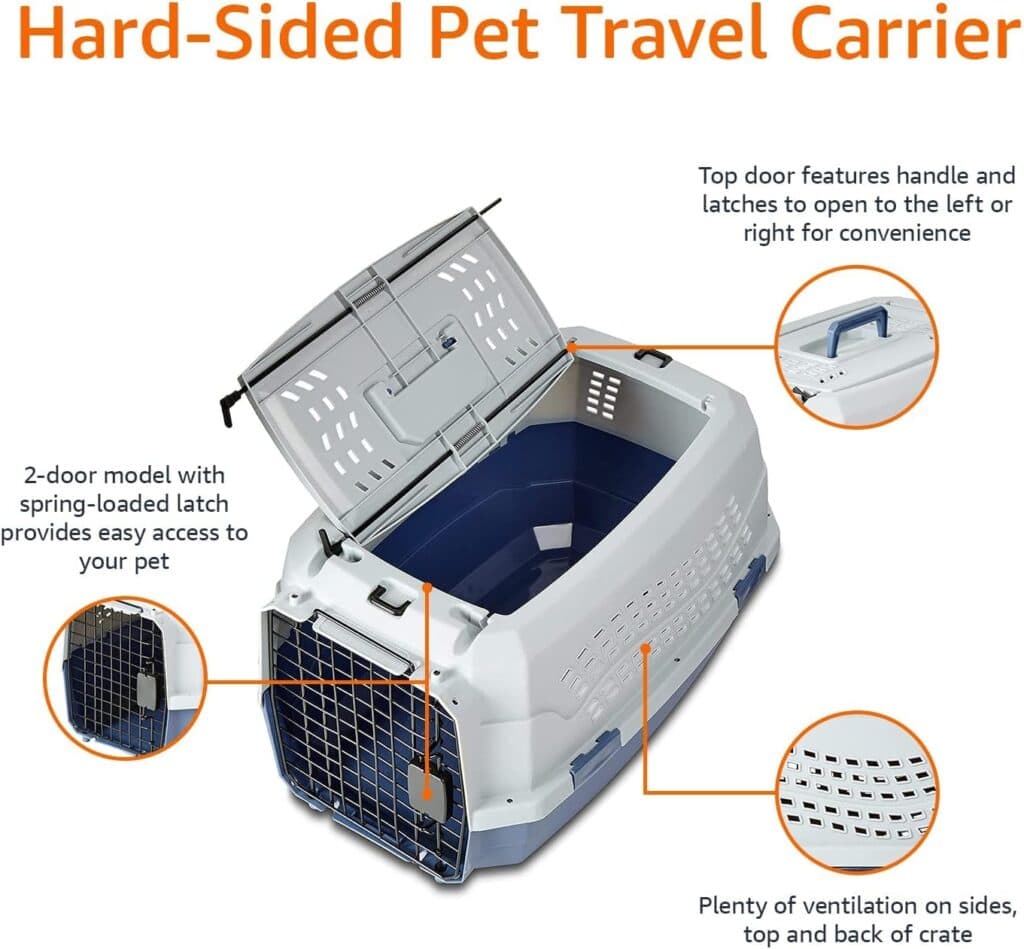
Estimated£45 – £85
Pet Remedy’s Calming Blanket is the category specialist for chemically supported calming, incorporating the brand’s botanical complex (valerian and vetiver extracts) to complement tactile comfort and reduce stress on journeys to the vet. On Boxing Day 2025 in the UK it appeals to owners who prefer a science-backed aroma approach over purely textural solutions, commanding a premium but often pairing well with sprays or diffusers for a combined therapeutic effect missing from most plain blankets here.
Show More Vehicle Restraints and Car Seats for Cats
Estimated£14 – £30
Top features to prioritise: secure fastenings and top-loading access, breathable mesh and good ventilation, washable inner pads, compact dimensions that meet many airlines' under-seat rules, weather-resistant outer fabric for UK conditions, and lightweight construction for frequent urban travel.
Why the Right Carrier Matters: Research and Expert Guidance
Choosing the right carrier or travel solution is not only a comfort decision but a safety and welfare decision backed by veterinary guidance and transport standards. Research and professional recommendations emphasize secure restraint during vehicle travel to reduce injury risk, carrier habituation to lower stress, proper ventilation and temperature control, and airline compliance for live-animal transport. Below are accessible, beginner-friendly points summarizing the scientific and regulatory reasoning you can rely on when selecting a product.
Safety and crash risk: Veterinary safety guidance and vehicle safety research consistently recommend restraining pets during car travel. Properly designed car seats, crash-tested carriers, or secured crates reduce the chance of injury to both pets and people in sudden stops or collisions.
Stress reduction through habituation: Behavioral research and veterinary behaviorists recommend gradual crate training and positive reinforcement. Cats accustomed to their carrier show lower stress signals during travel, which improves welfare and makes handling easier.
Air transport standards: Airline and international shipping of live animals follow IATA Live Animals Regulations and airline-specific rules. Choosing an airline-approved carrier and confirming airline requirements reduces the risk of refusal at check-in and helps ensure humane handling.
Ventilation and temperature management: Studies on thermal stress in pets highlight the importance of ventilation, breathable materials, and avoiding extreme temperatures. For British travel, consider carriers with insulated panels or weather-resistant covers for winter and breathable sides for summer.
Health and hygiene: Veterinary recommendations emphasize washable or replaceable bedding and easy-to-clean interiors to limit pathogen transfer and manage travel-related accidents.
Calming aids and enrichment: Research on feline anxiety shows pheromone products, familiar bedding, and small, safe enrichment items can reduce cortisol-linked travel stress when used as part of a broader acclimation plan.
Frequently Asked Questions
What does an airline-approved cat carrier actually have to meet?
Airlines work from the IATA Live Animals Regulations, where cats and dogs fall under Container Requirement 1 (CR1): a rigid, leak-proof container with adequate ventilation, a door that the animal cannot push open in transit, and enough room for the cat to stand up, turn around and lie down naturally. CR1 is only the floor. Each airline sets its own cabin dimensions, weight limit and booking rules, so confirm them before you book. Of the picks here, the Amazon Basics two-door top-load hard-sided carrier is the rigid-shell format airlines expect; soft backpacks and strollers are not.
What is the safest way to carry a cat in a car?
Put the cat in a hard-sided carrier and strap the carrier itself down, either seat-belted on the back seat or wedged in the rear footwell, rather than leaving it loose or on a lap. The Savic Zephos 1 and the Amazon Basics two-door carrier both have a rigid shell that holds its shape under load. Be aware that crash-tested harnesses sold as car restraints, including Sleepypod's ClickIt Sport, are certified and sized for dogs, not cats.
Top-loading or front-loading carrier for vet visits?
Top-loading. A cat that has braced itself against the back of a front-opening carrier has to be dragged out, which is where most of the stress and most of the scratches happen. With a top opening you or the vet can lift the cat straight up, and many vets will examine a calm cat in the base of the carrier with the lid off. The Savic Zephos 1 opens from the top; the Amazon Basics carrier has both a top and a front door, so you can load one way and unload the other.
Is a backpack carrier suitable for a cat?
For short urban trips, yes. A backpack such as the Pecute keeps the cat against your body and leaves your hands free, and the mesh panels matter far more than the bubble-window styling. Keep the journeys short, check the cat is not panting, drooling or vocalising, and do not put a cat in one for the first time on the day you need it. Leave the bag open at home with a familiar blanket and treats inside for a week or two first.
Conclusion
The right travel solution depends on your cat’s weight, how often you travel and whether you mainly use trains, cars or planes. For quick vet runs, a lightweight, top-loading carrier offers fast access and low stress; for longer journeys, a cushioned soft-sided carrier or a stroller can keep a nervous cat calmer; and a booster-style car seat helps maintain visibility and restraint on the road. Always double-check airline, train and ferry policies before you travel, measure your cat and the carrier in centimetres, and introduce new gear gradually with treats and short practice trips.
If you want to narrow results, use the site search to filter by size (cm), weight (kg), airline-compatibility, washable materials or price. You can also view accessory bundles and step-by-step training tips to help your cat adapt. We hope this UK-focused guide helps you pick a safe, comfortable travel solution for 2026—happy and safe journeys with your feline companion.