

Cat Car Restraints and Carriers in the UK: 7 Options, and What Rule 57 Actually Requires
Rule 57 of the Highway Code requires that dogs and other animals are suitably restrained in a vehicle, so they cannot distract you while driving or injure you or themselves if you stop quickly. The methods it names are a seat belt harness, pet carrier, dog cage or dog guard. For a cat, that means a carrier secured to the vehicle rather than a harness: the car harnesses that carry independent certification are sized and tested for dogs, not cats. Put the carrier in a footwell behind a front seat, or on the back seat with the seat belt passed through its belt loops or straps. Never place it on a front passenger seat with a live airbag. One point worth knowing before you compare prices: there is no UK or EU legal crash-test standard for pet restraints. The only widely recognised independent certification is the US Center for Pet Safety programme, and most of it covers dog products. The seven items below are not all the same kind of thing — a certified carrier, a booster, a tether, a plain carrier and a rigid car seat each solve a different part of the problem, and each entry says which it is.
Inception's AI took the time to understand this market in the UK · We may earn a commission on purchases. It never affects our rankings.
Top Picks Summary
Sleepypod Clickit Sport Cat Safety Harness
The Clickit Sport is the best-documented car harness on the market: crash-tested at 30 mph in accredited labs and awarded a five-star rating by the US Center for Pet Safety. The certification is for dogs of 18 to 90 lb, and the harness is built around a dog's chest. It is listed here because owners searching for a certified cat restraint keep arriving at it, and it is worth knowing why it is not the answer — a cat is well below the tested weight range, and most cats can reverse out of a vest harness when frightened. If you have a dog as well, it is an excellent buy for the dog.
Where to buy Sleepypod Clickit Sport Cat Safety Harness in UK: we track one retailer, Walmart, and show the price we last observed there; the price you see at checkout may differ.
We may earn a commission on purchases. It never affects our rankings.
£120 – £170
Sleepypod Mobile Pet Bed
The Sleepypod Mobile Pet Bed is a premium, crash-tested combination carrier and car bed designed to give cats a safe, familiar space on the road; its robust testing and padded, enclosed design make it the gold standard for owners prioritizing safety and comfort. Compared with the booster-style options in this list, the Mobile Pet Bed commands a higher price but provides superior structural protection and a true travel-ready containment solution that reduces feline stress during trips.
Where to buy Sleepypod Mobile Pet Bed in UK: we track one retailer, eBay, and show the price we last observed there; the price you see at checkout may differ.
We may earn a commission on purchases. It never affects our rankings.
£75 – £190
PetSafe Happy Ride Deluxe Booster Seat
The Happy Ride Deluxe is a quilted booster platform with a short tether, sold for small dogs in the 12 to 25 lb range. It raises a pet to window height and stops it wandering across the cabin, which is genuinely useful on a short trip with a settled cat. It is not a collision restraint: there is no independent certification behind it, and the tether clips to a harness rather than holding a cat directly. Treat it as a way of keeping a calm cat in one place, and use a belted carrier for anything longer than a local vet run.
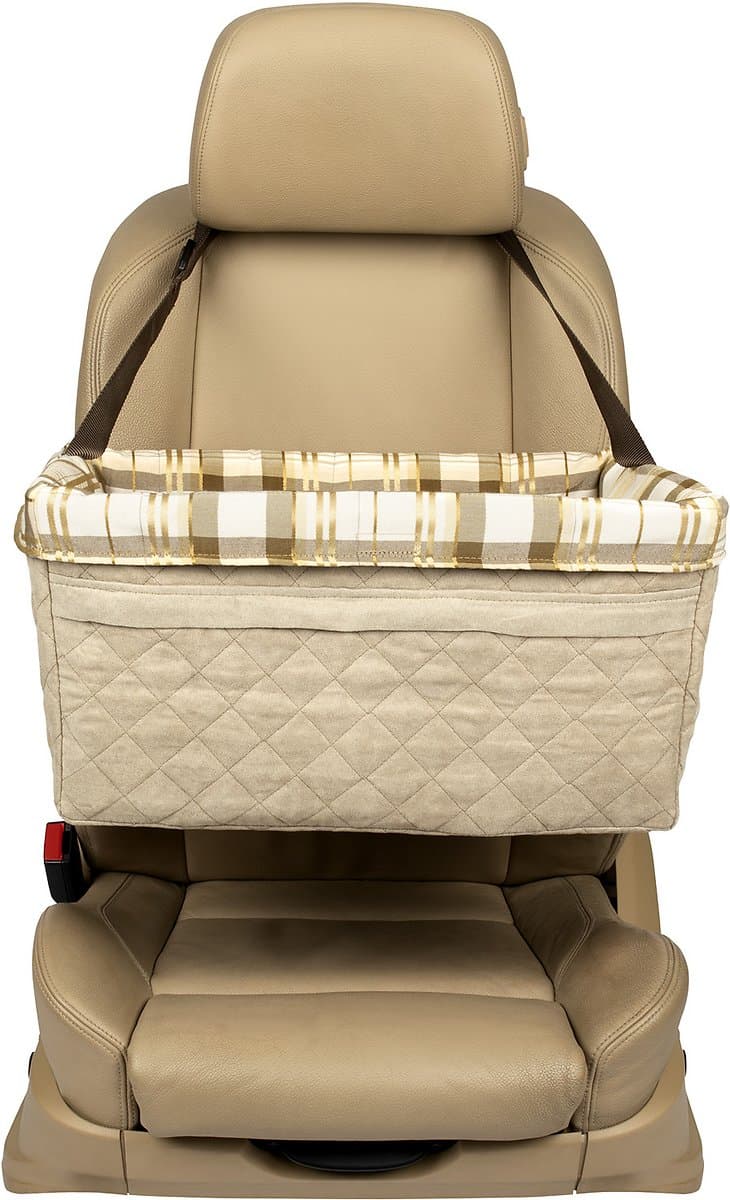
Where to buy PetSafe Happy Ride Deluxe Booster Seat in UK: we track one retailer, eBay, and show the price we last observed there; the price you see at checkout may differ.
We may earn a commission on purchases. It never affects our rankings.
£35 – £60
Kurgo Direct to Seatbelt Tether
The Kurgo Direct to Seatbelt Tether is a compact, cost-effective tether that secures a harness to your car belt attachment, offering flexible compatibility with many harnesses and carriers in this 2025 British Guide. It outshines bulkier options on price and versatility, making it a practical supplement to certified harnesses like the Sleepypod for owners on a tighter budget or those who already own a well-fitting harness. Technically it's simpler and lacks the full crash-lab certification of premium systems, but its rugged hardware and straightforward installation make it a widely trusted accessory for everyday trips.

Where to buy Kurgo Direct to Seatbelt Tether in UK: we track one retailer, Target, and show the price we last observed there; the price you see at checkout may differ.
We may earn a commission on purchases. It never affects our rankings.
£15 – £30
Petmate See Extend Pet Carrier
Petmate's See & Extend Carrier is a versatile travel carrier combining a pop-out extension for extra legroom with good ventilation and visibility—ideal for cats that prefer enclosed security during journeys. Compared with booster seats and harness systems, it is more of a multi-use carrier that doubles for vet visits and airline-compliant travel, offering financial and practical value for owners who need one product to do multiple jobs. While not a dedicated crash-tested car seat, its sturdy construction and ability to pair with seatbelts or tethers make it a convenient compromise for many British cat owners.
Where to buy Petmate See Extend Pet Carrier in UK: we track one retailer, Onbuy, and show the price we last observed there; the price you see at checkout may differ.
We may earn a commission on purchases. It never affects our rankings.
£60 – £100
Trixie Car Seat for Small Dogs and Cats
The Trixie Car Seat is a budget-friendly entry on the list that provides basic restraint and a cosy elevated perch for small cats, making it a sensible choice for short journeys and owners seeking an affordable option. It cannot match the crash-test claims of the Sleepypod or 4pets Caree, but its low price and broad availability across UK retailers give it strong financial appeal for owners experimenting with car travel aids. For those who prioritise cost and simple installation over certified impact protection, Trixie offers a practical stepping stone toward safer travel habits.
Where to buy Trixie Car Seat for Small Dogs and Cats in UK: the trusted retailers we track in this market, with the best price we have observed at each. Prices are checked regularly and can change, and the retailer confirms the final price at checkout.
We may earn a commission on purchases. It never affects our rankings.
£63.44GBP
4pets Caree Car Seat for Cats
The 4pets Caree is the premium European car seat on this 2025 British Guide, offering a rigid, crash-tested shell and tailored interior that balances certified safety with feline comfort—positioning it as the top continental alternative to US-made Sleepypod. Although it carries a higher price tag, its integrated safety engineering and compatibility with ISOFIX and belt systems deliver technical advantages for owners seeking a turnkey crash-compatible booster. Compared to cheaper carriers and tethers, the Caree is an investment in long-term travel safety and peace of mind for discerning cat owners.
Where to buy 4pets Caree Car Seat for Cats in UK: we track one retailer, eBay, and show the price we last observed there; the price you see at checkout may differ.
We may earn a commission on purchases. It never affects our rankings.
£140 – £215
What separates these seven: whether the product actually anchors to the vehicle, whether it was designed for a cat or adapted from a dog product, whether any independent body has tested it, and whether it fits a compact British car interior. Independent certification is rare — assume a manufacturer's own testing unless a certifying body is named.
What Rule 57 asks for, and what the certifications actually cover
Rule 57 is advisory rather than a "MUST" rule, so there is no direct fine for breaching it on its own. It still matters: an unrestrained animal that distracts the driver can support a careless driving charge, and insurers can reduce or refuse a claim where a loose pet contributed to a collision. On the product side, "crash-tested" is not a regulated term in the UK. Testing is voluntary, protocols differ between brands, and only a handful of products have been through independent certification. Read the claim, then check who did the test.
Rule 57 names a seat belt harness, pet carrier, dog cage or dog guard as ways of restraining an animal. A carrier that is simply set loose on a seat is not restrained.
Cats are restrained by securing the carrier, not by harnessing the cat. Independently certified car harnesses are rated for dogs by weight — the Sleepypod Clickit Sport, for example, is certified for dogs of 18 to 90 lb.
Position matters as much as the product: a footwell behind a front seat, or the back seat with the belt through the carrier's loops. A front seat with an active airbag is the one place a carrier should never go.
No UK or EU legal crash-test standard exists for pet restraints. The US Center for Pet Safety runs the best-known independent certification programme; anything else described as crash-tested is usually the manufacturer's own testing.
A tether or booster is only as strong as what it attaches to. A tether restrains a harness, not a cat, and a booster with a short strap limits movement without offering collision protection.
Let a nervous cat sit in the carrier at home for a few days before a long journey. Familiarity does more for travel stress than padding does.
Frequently Asked Questions
What does UK law say about carrying a cat in a car?
Rule 57 of the Highway Code says dogs and other animals must be suitably restrained in a vehicle so they cannot distract you while you are driving, or injure you or themselves if you stop quickly. It names a seat belt harness, pet carrier, dog cage or dog guard as ways of doing this. Rule 57 is advisory, so it carries no penalty by itself, but an animal loose in the car can support a careless driving charge and insurers can reduce or refuse a claim.
Should a cat wear a car harness instead of travelling in a carrier?
No. For cats the accepted restraint is a secured carrier. The car harnesses that hold independent certification are rated for dogs by weight — the Sleepypod Clickit Sport is certified by the US Center for Pet Safety for dogs of 18 to 90 lb, and no equivalent certification exists for cats. A cat can also back out of most harnesses under stress.
Where should a cat carrier go in the car?
In the footwell behind a front seat, where it cannot move far in any direction, or on the back seat with the seat belt passed through the carrier's belt loops or straps. Never put a carrier on a front passenger seat with an active airbag. An unsecured carrier on a seat is not a restraint.
Are any of these products crash-tested to a UK standard?
No, because no UK or EU legal crash-test standard for pet restraints exists. The Sleepypod Mobile Pet Bed carries independent certification from the US Center for Pet Safety, which is the recognised programme in this field. Other crash-test claims on this page come from the manufacturers' own testing and have not been independently certified, so treat them as a design intent rather than a verified rating.
Conclusion
Of the seven listed here, the Sleepypod Mobile Pet Bed is the one that answers Rule 57 most directly for a cat: an enclosed carrier that belts into the vehicle and carries independent Center for Pet Safety certification. The 4pets Caree is the rigid alternative, heavier and dearer, and better suited to an estate or SUV than a small hatchback. The Petmate See & Extend and the Trixie car seat are comfort-led choices that still need the seat belt run through them to count as restrained. The Kurgo tether and the PetSafe Happy Ride booster are dog products in origin and are included as partial solutions, not cat restraints in their own right — the tether needs a harness you buy separately, and the booster limits movement without offering collision protection. Whichever you choose, the fitting is what makes it work: footwell or belted back seat, never a front seat with a live airbag.