

Top 7 Synthetic Close Contact Training Saddles in the UK — 2026
Synthetic close contact training saddles have become a practical and performance-driven choice for British riders who need reliable equipment for varied schooling and jumping work. In the UK climate, riders often prioritise saddles that combine a tactile feel for precise communication with shock-absorbing technology that cuts impact during intense sessions and across uneven terrain. Synthetic designs are valued for being significantly lighter than leather, easier to clean and maintain in damp conditions, and more affordable while still offering advanced features such as interchangeable gullets and adjustable flocking. These qualities make synthetic close contact saddles especially attractive for everyday schooling, jump preparation, and cross-country practice, from highland gallops in Scotland to showgrounds in the south and home yards across Wales and Northern Ireland. British consumers tend to favour clear fitting information, modular adjustability, and demonstrable pressure relief for horses showing early signs of back sensitivity, which is why modern synthetic close contact models have gained strong acceptance among trainers, amateur competitors, and professionals alike.
Inception's AI took the time to understand this market in the UK · · How we pickWe may earn a commission on purchases. It never affects our rankings.
Top Picks Summary
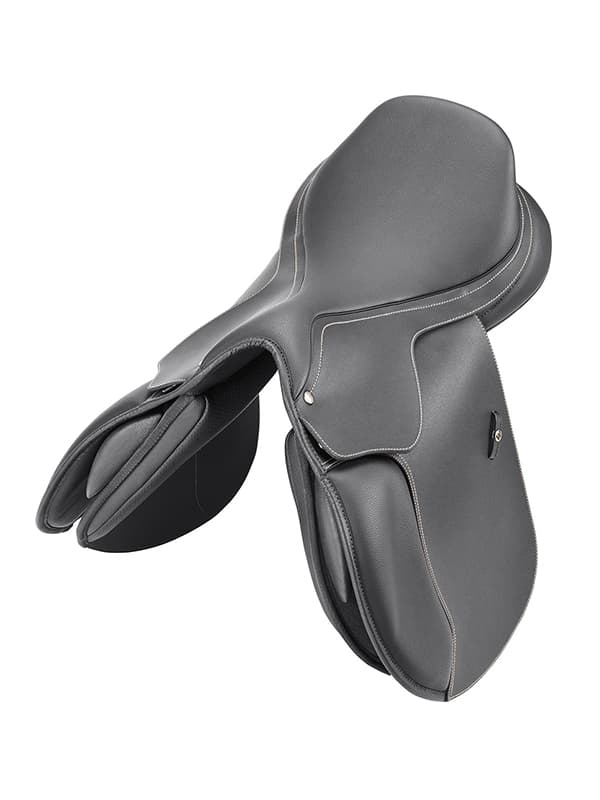
Wintec 500 Close Contact Saddle
The Wintec 500 Close Contact Saddle is a lightweight, mid‑market synthetic designed for riders who want a close feel and built‑in shock‑absorbing panels without the premium price. It earns its spot for offering a reliable blend of comfort and durability that undercuts higher‑end rivals like the Bates Elevation+ and Wintec 2000 on cost, while delivering a noticeably lighter feel than many Thorowgood and Collegiate options. For UK riders prioritising everyday training value, it represents the strongest price-to-performance balance in this list.
We may earn a commission on purchases. It never affects our rankings.
£749.00GBP
Thorowgood T4 Close Contact Saddle
The Thorowgood T4 Close Contact Saddle is a British-made, straightforward synthetic close‑contact model built around dense foam, low-maintenance shock‑absorbing panels and a rider‑friendly seat. Its technical simplicity and durable finish make it a very cost‑effective choice for schools and club riders, frequently undercutting premium models like the Bates Elevation+ and Wintec 2000 while offering better longevity than some budget Collegiate alternatives. Where it differs from Thorowgood's T8 and Kent & Masters S-Series is in broad usability rather than a specialised fit or higher-end finishing.

Estimated£400 – £550
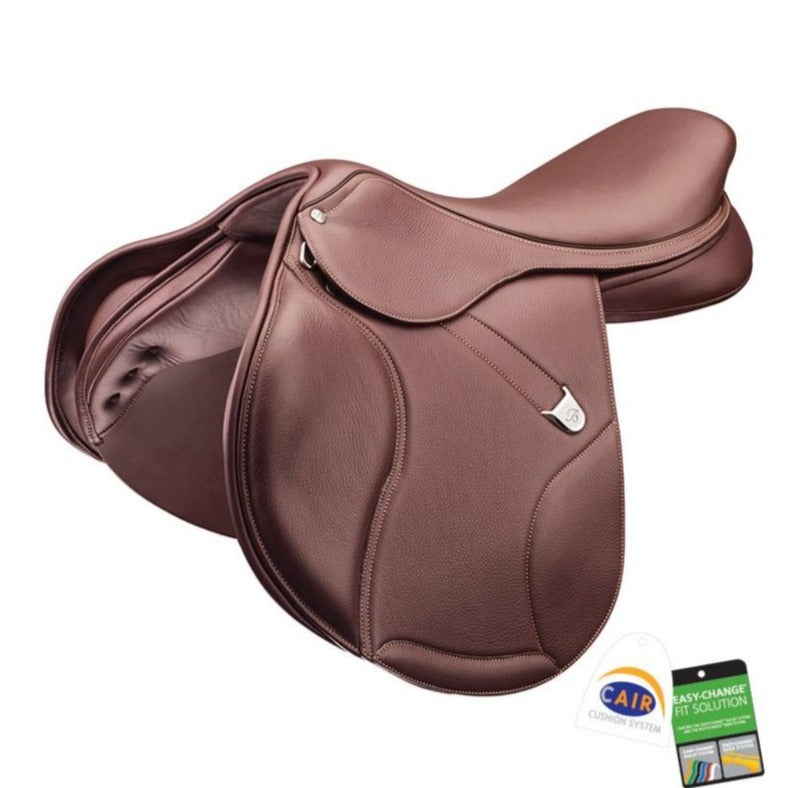
Bates Elevation+ Close Contact Saddle
The Bates Elevation+ Close Contact Saddle is the market leader for riders seeking high‑end synthetic engineering, pairing an anatomically shaped close‑contact seat with advanced shock‑absorbing panel technology and precision fit features. It is typically the most expensive option in this group, but justifies the cost with superior rider biomechanics, specialist fitting options and long‑term cushioning that outperform mid‑range synthetics like Wintec 500 and Thorowgood T4. For UK trainers who prioritise engineered support and bespoke fit, the Elevation+ represents the technical benchmark.
Estimated£900 – £1,200
Kent & Masters S-Series Close Contact Saddle
The Kent & Masters S-Series Close Contact Saddle delivers a premium UK‑designed synthetic with refined shock‑absorbing panels and a close, secure seat profile that competes with higher‑priced continental offerings. It strikes a middle ground technically and financially: more sophisticated and better finished than basic Thorowgood and Collegiate models, yet generally more affordable than the top‑tier Bates Elevation+ and comparable to the Wintec 2000 in long‑term value. For riders wanting a British‑sourced, well‑balanced synthetic saddle, the S‑Series is a compelling alternative to imported premium options.

Estimated£200 – £350
Thorowgood T8 High Wither Close Contact Saddle
The Thorowgood T8 High Wither Close Contact Saddle is a specialist synthetic crafted for horses with pronounced withers, pairing a high‑withers tree shape with reinforced shock‑absorbing panels to protect sensitive toplines during close‑contact work. It is priced above the T4 but typically below the most expensive Bates and some Wintec 2000 configurations, offering targeted technical value for riders whose horses struggle with standard trees. Compared with more generalist models in this list, the T8's bespoke fit for high‑withered shapes is its defining advantage for problem backs.

Estimated£450 – £650
Wintec 2000 Close Contact Saddle
The Wintec 2000 Close Contact Saddle sits at the top of the Wintec line with an upgraded close‑contact seat, refined shock‑absorbing panel construction and an adjustable gullet system for a more precise fit across horses. It commands a premium over the Wintec 500 and most Thorowgood and Collegiate models, but that extra cost buys noticeably better rider alignment and longer‑term panel resilience—making it a go‑to for amateur competitors and professional trainers who need tech‑forward synthetic performance without the bespoke price of some Bates models. In short, it offers near‑premium technical features with synthetic convenience.

We may earn a commission on purchases. It never affects our rankings.
Estimated£700 – £900
Collegiate Convertafit Close Contact Saddle
The Collegiate Convertafit Close Contact Saddle focuses on value and adaptability thanks to its convertible gullet and pragmatic shock‑absorbing panel design, making it an excellent entry point for riders needing a range of fits at modest cost. While its panel technology is less sophisticated than the Bates or Wintec 2000 offerings, its lower street price and user‑friendly conversion system make it the best budget option for multi‑horse yards and newcomers to close‑contact work. Compared with premium Kent & Masters or Bates models, it sacrifices refinement for broad, wallet‑friendly utility.

Estimated£350 – £600
What the evidence says: benefits of modern synthetic close contact saddles
A range of applied studies and biomechanical assessments supports the main practical advantages of contemporary synthetic close contact saddles. Research using pressure-mapping and motion analysis has shown that properly fitted close contact saddles with shock-absorbing panels or inserts can reduce peak forces on the horse's back, improve rider stability, and help distribute load more evenly. Materials testing and field trials also confirm that synthetic materials retain shape in wet conditions, resist abrasion, and reduce routine maintenance time versus leather. The combination of adjustable gullets and customizable flocking has been demonstrated in fit-assessment studies to lower localized pressure points, improving comfort for horses with early back sensitivity and making iterative fitting simpler for busy riders.
Pressure-mapping studies indicate shock-absorbing padding and properly adjusted panels reduce peak pressure under the saddle during jumping and faster work.
Gait and balance assessments show close contact designs improve rider-seat feedback and allow faster correction of position without compromising horse comfort.
Materials testing demonstrates synthetic saddles are more dimensionally stable in damp or variable climates, reducing the need for frequent restorative conditioning.
Adjustable gullet systems and customizable flocking allow more consistent redistribution of pressure across the back compared with fixed-fit models.
Economic analyses and user trials highlight lower initial cost and lower routine maintenance time, delivering better value for everyday training use.
Frequently Asked Questions
Which synthetic close contact saddle should I buy for schooling and jumping?
Choose the Thorowgood T4 Close Contact Saddle if you want a British-made, straightforward synthetic built for both schooling and jumping, with an integrated shock-absorbing paneling system and an average rating of 4.4.
What shock-absorbing tech is on the Wintec 500 saddle?
The Wintec 500 Close Contact Saddle uses a CAIR air-panel system to help reduce impact and encourage even weight distribution, and it has an average rating of 4.3.
How does the price of Bates Elevation+ match its features?
The Bates Elevation+ Close Contact Saddle is described as typically the most expensive option, and it pairs Elevation+ style impact-absorbing panel technology with an easy-change gullet/fit system; average rating is 4.1.
Is the Thorowgood T4 saddle adjustable for different horse backs?
Yes—the Thorowgood T4 Close Contact Saddle includes interchangeable gullet/fit plates to adapt to varying back shapes and widths, plus integrated shock-absorbing paneling, with an average rating of 4.4.
Conclusion
These seven synthetic close contact training saddles represent reliable options for UK riders seeking a balance of tactile connection, shock absorption, and everyday practicality. The Wintec 500 Close Contact Saddle stands out as the best overall choice for most riders thanks to its proven EQ-balanced fit, integrated shock-absorbent features, and approachable price. Other strong options include the Thorowgood T4 Close Contact Saddle, Bates Elevation+ Close Contact Saddle, Kent & Masters S-Series Close Contact Saddle, Thorowgood T8 High Wither Close Contact Saddle, Wintec 2000 Close Contact Saddle, and the Collegiate Convertafit Close Contact Saddle. We hope you found what you were looking for; you can refine or expand your search using the site search to compare specific features, sizes, and fit options.