Top 5 Wearable Balance Sensors and Smart Insoles in the UK 2025 | Clinical-Grade Fall Prevention & Rehabilitation
Published on Monday, 25 August 2025
Smart insoles and wearable balance sensors have transformed how physiotherapists, occupational health professionals, and community care teams approach balance rehabilitation and fall prevention across the United Kingdom. These sophisticated devices integrate pressure-sensitive technology, inertial measurement units, and real-time feedback software to capture precise gait patterns, weight distribution anomalies, and postural stability metrics. For NHS rehabilitation departments, private physio clinics, care homes, and individuals managing post-stroke recovery or age-related balance decline, these systems deliver objective clinical data that informs treatment planning and tracks measurable progress. UK healthcare providers increasingly prioritize insoles that combine laboratory-grade sensor accuracy with practical everyday usability, dependable battery performance, secure NHS-compatible data handling, and integration with existing digital health infrastructure. Cost-effectiveness, clinically validated outcome reporting, and responsive local customer support remain critical factors for procurement decisions across the British care sector. Whether you're a physiotherapist seeking remote monitoring capabilities, a care coordinator implementing fall prevention programmes, or an individual requiring balance rehabilitation support, the devices reviewed here represent the most clinically relevant and accessible options currently available in the UK market.
Top Picks Summary
Orpyx SI Sensory Insoles
Orpyx SI Sensory Insoles are clinically oriented pressure-sensing insoles offering continuous, high-resolution plantar pressure mapping and remote alerting, originally validated in diabetic-foot care and highly applicable to balance rehab where safety and clinical evidence matter. They typically carry a premium price but bring reimbursement- friendly pathways and richer pressure detail than consumer products like Nurvv and Digitsole, while focusing more on medical outcomes than ARION's coaching features or Moticon's lab-centric instrumentation.
Moticon OpenGo Sensor Insoles
Moticon OpenGo Sensor Insoles earn a top spot for clinic-grade pressure mapping and long-duration wireless logging, making them a go-to choice for balance assessment and fall-risk monitoring in rehab settings. Technically they offer high sensor density and robust onboard processing compared with lighter consumer-focused insoles, and financially they remain competitive for multi-patient deployment because of durable hardware and lower per-use servicing costs. In a UK 2025 rehab context they pair well with clinician workflows where objective gait and centre-of-pressure data are prioritized over solely activity coaching features found in some rivals.

Strive PressureVest Smart Insoles
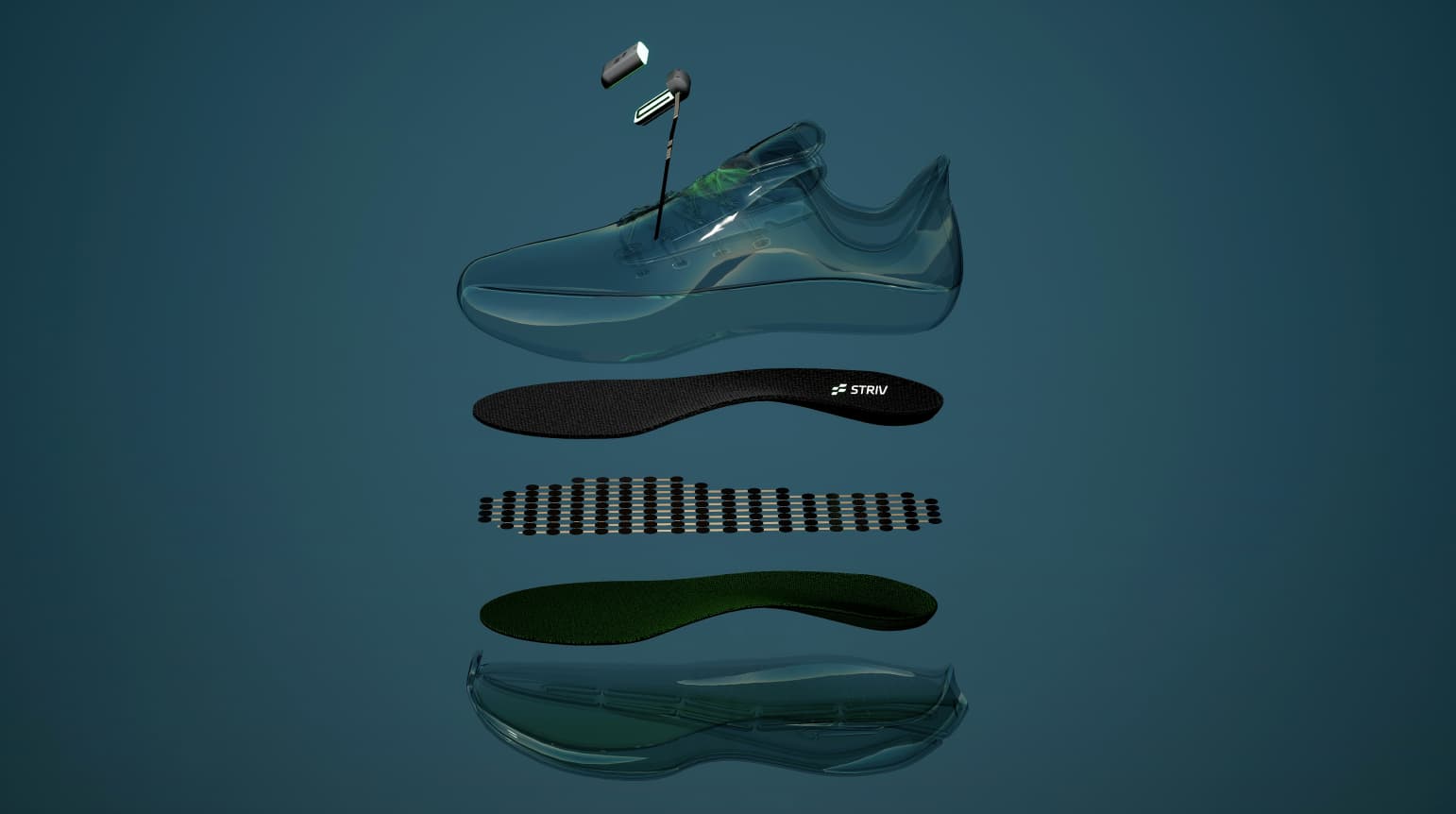
Strive PressureVest Smart Insoles stand out for their targeted pressure-redistribution algorithms that support real-time balance corrections, offering a cost-effective option for community fall-prevention programmes. Unlike higher-priced research platforms, Strive focuses on streamlined integration with rehab apps and lower subscription fees, which helps clinical commissioners scale trials across care homes. For UK practitioners they provide an attractive middle ground—better clinical fidelity than basic fitness insoles but with a price point more accessible than some enterprise-grade systems.
Nurvv Run Smart Insoles
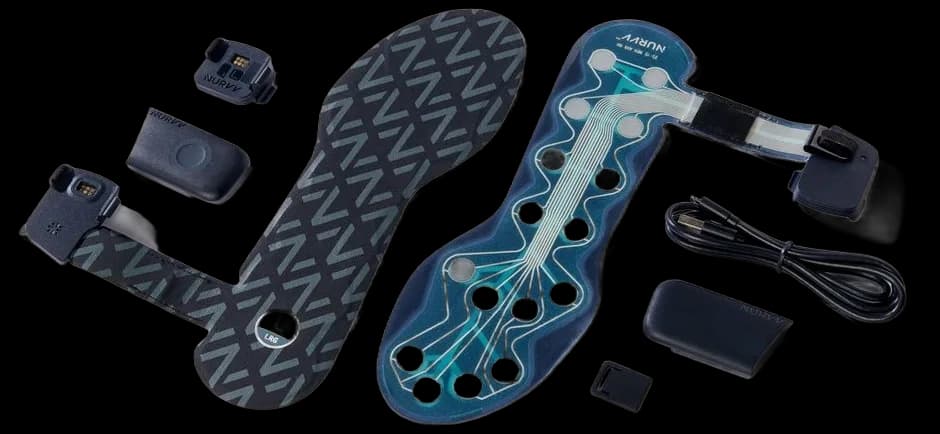
Nurvv Run Smart Insoles are market leaders for gait analytics and sensor fusion, delivering highly granular stride and balance metrics with mobile-friendly coaching that excels in patient engagement. Technically they combine multiple high-frequency sensors and advanced biomechanics models to detect subtle asymmetries earlier than many competitors, while their consumer-oriented pricing and app ecosystem lower the barrier for home-based rehabilitation. In the UK balance and fall-prevention space Nurvv is particularly useful for outpatient programmes that need scalable, patient-led monitoring alongside clinician review.
FeetMe Monitor Insoles
FeetMe Monitor Insoles are prized for their clinical validation and regulatory-ready platform aimed at therapeutic use, providing clinicians with regulatory-compliant metrics and seamless EMR integration. They differentiate from purely consumer devices by offering validated outcome measures and support for reimbursement pathways—making them a financially sensible choice for hospitals and specialist clinics. For UK providers focused on evidence-backed interventions and long-term patient tracking, FeetMe offers the strongest pathway from bedside assessment to documented rehab outcomes.
Advanced pressure mapping for objective gait analysis, wireless Bluetooth connectivity for remote clinician monitoring, NHS data security compliance, extended battery performance for all-day clinical assessment, integration with telehealth and electronic patient record systems, evidence-based balance rehabilitation protocols, real-time user feedback for engagement and motivation.
What the research says about wearable sensors and smart insoles
A growing body of peer-reviewed research supports the use of wearable IMUs and pressure-sensing insoles for measuring gait, postural sway, and weight distribution, and for delivering biofeedback that supports balance rehabilitation. Studies comparing wearable systems to laboratory motion-capture and force-plate standards generally show that modern sensor insoles and IMU arrays provide clinically useful accuracy for temporal-spatial gait measures, centre-of-pressure approximations, and sway metrics. Clinical trials and pilot studies also report improved patient engagement, objective tracking of functional gains, and feasibility of remote monitoring in telerehabilitation models. While device performance varies, the overall evidence indicates these technologies can meaningfully support assessment, therapy personalization, and fall risk management when used alongside professional clinical judgment.
Validity and reliability: Systematic reviews and validation studies report that modern IMU-based systems and pressure insoles approximate lab-grade gait and sway metrics closely enough for clinical decision making, especially for temporal-spatial measures (step time, cadence, step length) and centre-of-pressure trends.
Clinical outcomes: Randomized and quasi-experimental trials suggest sensor-guided balance training and real-time feedback can reduce postural sway, improve gait symmetry, and increase adherence to home exercise programs in older adults and neurologic populations.
Fall prevention and risk stratification: Longitudinal studies show objective gait and sway measures derived from wearables can help identify individuals at higher risk of falls earlier than self-report alone, enabling targeted intervention.
Remote monitoring and telerehab: Feasibility studies demonstrate secure cloud reporting and clinician dashboards enable remote assessment and outcome tracking, supporting continuity of care and reduced clinic visits without loss of key clinical information.
Limits and best use: Evidence emphasizes that device selection should match the clinical question — pressure insoles excel at load distribution and plantar pressure, IMUs better capture trunk sway and dynamic balance, and combined systems provide the most comprehensive picture.
Frequently Asked Questions
Which wearable balance sensor is best for clinical rehab safety?
Orpyx SI Sensory Insoles are a strong choice for clinical rehab safety because they provide medical-grade, high-resolution plantar pressure mapping with continuous monitoring and real-time alerts, with an average rating of 4.3.
What exact pressure-sensing capability does Moticon OpenGo provide?
Moticon OpenGo Sensor Insoles offer research-grade wireless pressure insole mapping with validated accuracy for gait and balance studies, plus on-board data logging and Bluetooth streaming for long-duration measurements.
How does Strive PressureVest compare on price value?
No UK price is provided for Strive PressureVest Smart Insoles, but they’re described as an affordable pressure-sensing option with Bluetooth app visualisation and an average rating of 3.9.
Do these smart insoles include real-time alerts or haptics?
Yes: Orpyx SI Sensory Insoles include real-time alerts plus vibration nudge feedback, while Strive PressureVest Smart Insoles provide real-time haptics (a gentle nudge) and simple Bluetooth-based alerts; warranties are not listed.
Conclusion
For British healthcare settings and home users alike, wearable balance sensors and smart insoles represent a practical advancement in balance rehabilitation delivery, fall risk mitigation, and extended clinical oversight through remote assessment. The five systems featured here — ARION Smart Insoles, Digitsole Smartshoe, Orpyx SI Sensory Insoles, Moticon ReGo Sensor Insoles, and Nurvv Run Insoles — each address distinct clinical and user requirements. ARION Smart Insoles lead the field for NHS physiotherapy departments and private rehabilitation clinics with comprehensive analytics dashboards and evidence-based balance protocols. Digitsole Smartshoe delivers seamless footwear integration ideal for everyday wear compliance. Orpyx SI Sensory Insoles excel in pressure relief applications and neuropathic feedback for vulnerable populations. Moticon ReGo Sensor Insoles provide fully wireless, clinical-specification sensing without tethered limitations. Nurvv Run Insoles serve runners and active individuals pursuing gait optimisation and injury prevention through intuitive mobile feedback. Explore comparative feature breakdowns, verify current UK stock availability, confirm NHS Trust compatibility, and investigate funding pathways or commissioning support via our advanced search function.